
Writing a Protest Press Release: Templates, Examples & Tips

Key Takeaways
- An effective protest press release should be concise (one page maximum) and follow the inverted pyramid style with the most newsworthy information at the top.
- Timing is crucial; send your press release one day before the protest to maximize media coverage while giving journalists time to plan.
- Include compelling quotes from diverse, relevant voices that journalists can use directly in their stories.
- Despite their utility, traditional press releases have limitations. Journalists are more likely to cover stories pitched by contacts they trust and recognize.
- AmpiFire solves this limitation by transforming your protest message into 8 content formats and distributing them across 300+ platforms automatically, amplifying reach far beyond traditional press releases.
Why Your Protest Needs a Press Release
The media industry has changed dramatically, but press releases remain a relevant tool for activists. When done right, they deliver your message directly to journalists in a format they can easily use, increasing your chances of coverage.
Media coverage amplifies your message beyond those physically present at your protest. It legitimizes your cause, helps recruit new supporters, and puts pressure on decision-makers.
Coverage also creates a historical record of your activism. Years later, when people research your cause, media articles will document your efforts and the issues you championed. This historical documentation can inspire future activists and provide valuable lessons.
Perhaps most importantly, media coverage helps shape public narrative. Without your input, others, including those you’re protesting against, will control how the public understands the issues. Your press release is your chance to frame the story in your terms.
| Stop Limiting Yourself to Just PR or SEO Multi-Channel Content Marketing Gets Real Results  • The Problem: Traditional PR and SEO only reach audiences through single channels. Your customers are scattered across search, social media, video platforms, and podcasts. • The Solution: AmpiFire’s AmpCast transforms one topic into 8 different formats (news articles, blog posts, videos, video shorts, interview podcasts, infographics, slideshows, social posts) and distributes across 300+ high-authority sites including Fox affiliates, Spotify, and YouTube. What You’ll Discover on PressCable: ✓ Why multi-channel content outperforms traditional PR and SEO ✓ Real case studies of businesses dominating multiple platforms ✓ Step-by-step guides for multi-format content creation ✓ Cost-effective alternative to expensive agencies Ready to Go Multi-Channel? Learn the AmpiFire Method → |
Essential Tips for an Effective Protest Press Release

Attention-Grabbing Headlines That Journalists Can’t Ignore
Your headline determines whether a journalist reads further. It should clearly state what is happening while creating interest. Avoid clever wordplay or vague statements in favor of direct, newsworthy language. Include your organization name only if it’s widely recognized.
Strong headlines include specific numbers, provocative (but accurate) claims, or timely connections to current events. Compare “Group Plans Demonstration” to “200 Teachers to Block City Hall Entrance Monday Over Budget Cuts.” The second instantly communicates who, what, where, when, and why, giving journalists immediate context.
The Inverted Pyramid: Most Important Information First
Structure your press release using the inverted pyramid method, the most crucial information appears first. Your opening paragraph must answer who, what, when, where, and why concisely. This format allows editors to cut from the bottom up if space is limited, ensuring the most critical details remain.
Your first paragraph should be able to stand alone as a mini-story. If journalists read nothing else, they should understand the basic facts of your protest from these initial sentences. This approach respects journalists’ time constraints while ensuring your core message gets across even during a quick scan.
Contact Information: Your Gateway to Further Coverage
Always include complete contact details for at least two media spokespersons who will be available before, during, and after the protest. List their names, roles, phone numbers, and email addresses. These individuals should be thoroughly prepared to speak to journalists and authorized to represent your group.
Specify the hours your contacts are available, especially if your protest occurs outside standard business hours. If possible, provide a 24-hour contact option for breaking news coverage. Remember, journalists often work on tight deadlines, a missed call could mean missed coverage.
Quote Selection: Who Should Speak and What They Should Say
Strategic quotes transform dry information into compelling human stories. Include 2–3 short, powerful quotes from diverse stakeholders, ideally from those directly impacted by the issue, community leaders, and subject matter experts. Each quote should be attributed to a specific person with their title or relevant identifier.
Quotes shouldn’t repeat information already stated elsewhere in the release. Instead, they should provide perspective, emotional context, or expert analysis. Keep quotes to 1–2 sentences that express something a journalist couldn’t write themselves, personal experience, specialized knowledge, or emotional weight.
The Perfect Timing: When to Send Your Press Release
The optimal time to send a protest press release is one day before the event. This gives journalists enough time to plan coverage without being so far in advance that your announcement gets forgotten. For weekend protests, send your release on Thursday to accommodate weekend staffing changes at news outlets.
Follow up with a reminder email or call the morning of the protest. This second contact can include any updates, confirm the event is proceeding as planned, and remind journalists of the visual opportunities available. Many newsrooms make final coverage decisions during morning meetings, so timing this reminder strategically can make the difference.
Press Release Template for Protests and Example
Below is a ready-to-use template for your protest press release. Simply replace the bracketed information with your specific details, maintaining the structure while customizing the content to your cause.
This template follows all best practices for press release format, structure, and content to maximize your chances of media coverage.
FOR IMMEDIATE RELEASE
[YOUR ORGANIZATION NAME]
Contact: [Full Name], [Title]
Phone: [Direct number including area code]
Email: [Email address]
Website: [Organization website]
[HEADLINE: CLEAR, DIRECT, NEWSWORTHY – 80 CHARACTERS MAX]
[CITY, STATE, DATE] — [First paragraph: Who is protesting, what action is taking place, when and where it’s happening, and why it matters, all in 2–3 sentences.]
[Second paragraph: Provide context about the issue that makes this newsworthy now. Include relevant statistics or facts that demonstrate the importance.]
“[Quote from protest organizer or spokesperson that adds emotion or perspective not already stated],” said [Full Name], [Title or relevant identifier].
[Third paragraph: More specific details about the protest – visual elements, number of expected participants, notable activities, or speakers.]
“[Quote from someone directly affected by the issue being protested],” said [Full Name], [Brief description explaining their connection to the issue].
[Fourth paragraph: Call to action – what change are protesters demanding and from whom?]
[Optional fifth paragraph: Brief background on your organization if relevant]
About [Organization Name]: [2–3 sentences describing your organization, its mission, and relevant history]
Note to editors: High-resolution images and video will be available at [link] following the protest. Protest organizers are available for interviews before, during, and after the event.
Example of a Successful Protest Press Release
A common reason why press releases fail is that they focus on the protest itself rather than why it’s newsworthy. Journalists need a clear “news angle”: what makes this protest significant right now? Maybe it’s the largest gathering on this issue, coincides with legislative action, or features prominent participants. Here is an example of a successful protest press release by the National Organization for Women in June 1991 regarding the GAG Rule that can help you craft a better press release.
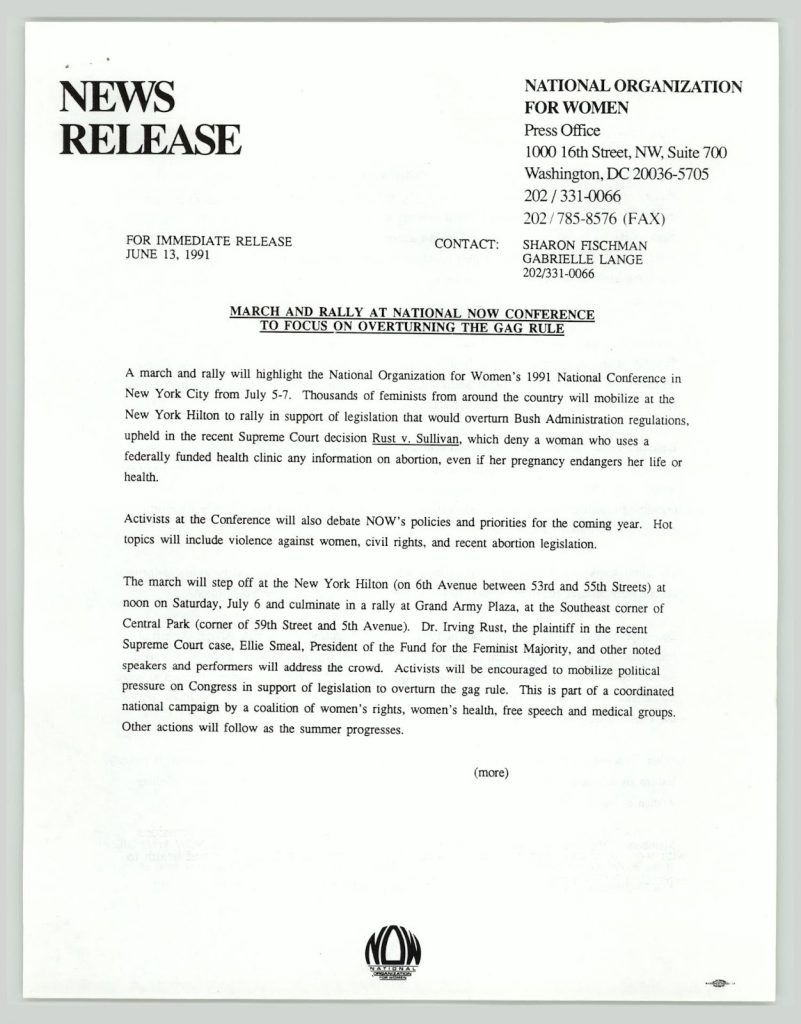
Before crafting your protest press release, analyze recent news coverage of similar issues to identify what elements make stories newsworthy to your target outlets.
Why Press Releasees are Limiting and Often Fail
Despite their utility, traditional press releases have limitations. Many activists focus exclusively on press releases while neglecting direct relationship building with journalists.
A press release alone, no matter how well-crafted, cannot substitute for ongoing media relationships. Journalists are more likely to cover stories pitched by contacts they trust and recognize.
Additionally, press releases are inherently one-way communication. They don’t allow for the immediate feedback, clarification, and story development that happens in direct conversations with journalists.
The most successful activists supplement their press releases with personal outreach, social media engagement, and by providing journalists with exclusive access or angles. Remember, a press release is just one tool in your media strategy, not the entire strategy itself.
Amplify Your Protest: Why AmpiFire Outperforms Traditional Press Releases
While a well-crafted press release remains essential for protest media outreach, relying solely on traditional PR distribution severely limits your potential reach and impact. The modern media landscape demands a multi-channel approach, and that’s exactly where AmpiFire revolutionizes activist communication.
Traditional press releases reach only the journalists on your media list, and even then, your message competes with hundreds of other announcements flooding their inboxes daily. By contrast, AmpiFire takes your single protest message and transforms it into 8 different content formats; long-form videos, video reels and shorts, interview-style podcasts, news articles, blog posts, infographics, flipbooks, and social media posts, then automatically publishes across 300+ platforms including YouTube, Spotify, major news affiliates, Google News, Facebook, Instagram, and many more.
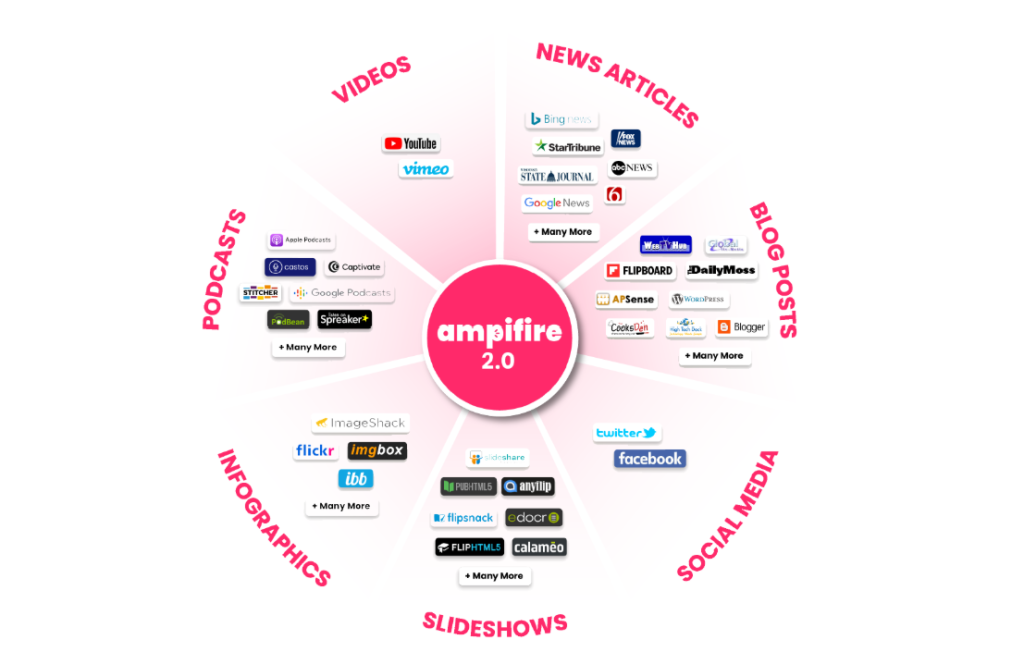
Here’s why this matters for activists: your protest happens once, but your message needs to live everywhere your audience looks, in search results when people research your issue, on social media where conversations happen, in podcasts people listen to during commutes, and on news sites that build credibility. AmpiFire ensures you’re not just hoping a journalist picks up your story; you’re creating that story in multiple formats and placing it directly where your target audience already spends their time.
Your protest deserves more than a single press release sent to a limited media list. It deserves to be seen everywhere your potential supporters look, in formats that engage them most effectively, across every platform where they consume information. That’s the power of multi-channel content distribution with AmpiFire.
Ready to Go Multi-Channel? Try the AmpiFire Method →
Frequently Asked Questions (FAQs)
Send your press release 2–3 weeks before your protest, then follow up a few days before. This timing gives journalists enough notice to assign reporters and photographers while ensuring your event remains fresh in their minds. For larger protests requiring more extensive coverage, you might send a “media advisory” 3–5 days in advance, followed by the formal press release 24 hours before the event.
No, customization significantly increases your chances of coverage. Different media formats have distinct needs: television requires visual elements, radio needs sound opportunities, and print publications want detail and context. Tailor your press release accordingly, highlighting aspects that match each outlet’s format and audience.
Success extends beyond simply counting media mentions. Track which outlets covered your protest, the prominence of the coverage, whether key messages were included, tone, and whether calls to action were shared. Also evaluate reach, engagement, message accuracy, and inclusion of your spokesperson quotes. The most meaningful measure is whether the coverage advances your campaign goals.
Yes, AmpiFire transforms your single protest message into 8 different content formats including videos, podcasts, infographics, blog posts, and social media content, and automatically distributes them across 300+ platforms. This multi-channel approach delivers significantly higher ROI than traditional press releases alone, ensuring your message reaches audiences everywhere they look online.
