If you’re planning to offer virtual contrast supervision, you might be surprised by what CMS actually requires. Audio-only calls won’t cut it, and the documentation standards are stricter than most imaging centers expect.
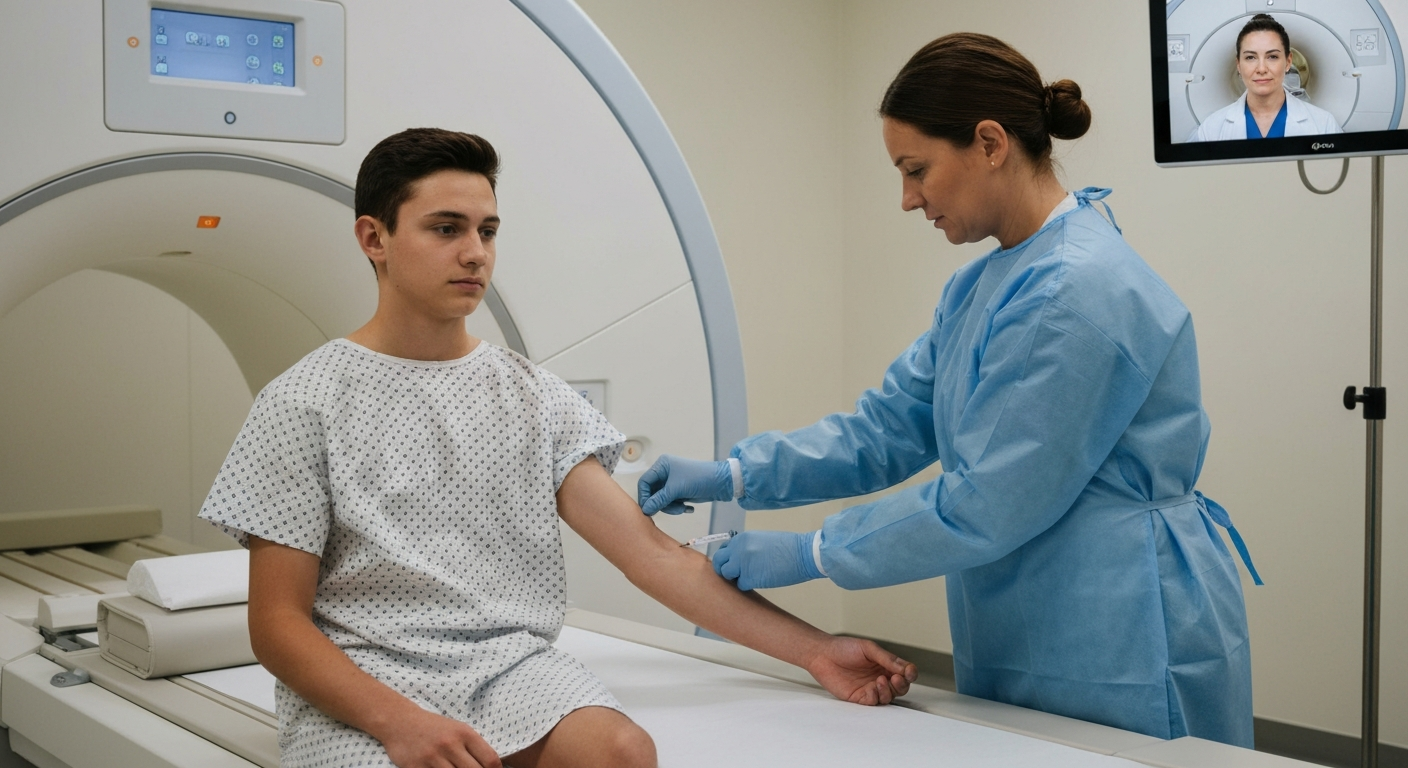
For imaging centers, January 1, 2026 marked a meaningful regulatory turning point. What began as a temporary pandemic-era accommodation has become permanent policy - and with that permanence comes a clearer, more demanding compliance picture. Understanding exactly what virtual direct supervision requires is no longer optional.
Under the CY2026 Medicare Physician Fee Schedule (MPFS) Final Rule, CMS made virtual direct supervision a permanent fixture of the regulatory landscape. The provisional label is gone. Beginning January 1, 2026, supervising clinicians can satisfy the immediately available requirement for direct supervision using real-time, two-way audio and video technology - no physical presence required.
This applies directly to contrast-enhanced imaging. Outpatient imaging centers performing contrast-enhanced CT, MRI, and other diagnostic exams can now operate with a remotely located supervising physician, provided all technical and documentation requirements are met. This is a modernization of how oversight is delivered, not a relaxation of it.
Contrast media - iodine-based or gadolinium-based solutions injected intravenously before imaging - dramatically improves diagnostic clarity. That benefit comes with real risk. Acute hypersensitivity reactions, including life-threatening anaphylaxis, can occur unpredictably. That is precisely why CMS requires a qualified supervising provider to be immediately available throughout every contrast procedure.
The supervision requirement exists because reaction speed matters. When a patient's condition changes rapidly, the gap between a physician who is reachable and one who is not can be clinically significant. Virtual supervision, done correctly, keeps that gap closed.
CMS is explicit: virtual direct supervision requires real-time, two-way audio and visual interactive telecommunications technology. Audio-only communication - a phone call, for example - does not satisfy the standard. This is one of the most commonly misunderstood aspects of the rule, and getting it wrong exposes facilities to claim denials and audit risk.
Both channels must be live and simultaneous. The supervising physician needs to see and hear what is happening at the point of care in real time - not on a delay, and not through a relay.
CMS redefined direct supervision to mean the supervising practitioner is immediately available to furnish assistance and direction throughout the performance of the procedure - even without being physically in the same room. The physician must be reachable, responsive, and capable of providing active guidance at any moment during the exam, not just at the start or end.
This rules out arrangements where the supervising physician is logged on but engaged in unrelated activities with no real-time awareness of the procedure in progress.
The ACR's Practice Parameter for the Use of Intravascular Contrast Media (updated in 2024 and 2025) provides the operational framework that complements CMS's regulatory definition. CMS governs who can supervise and how; the ACR addresses what the on-site team must be prepared to do.
ACR permits virtual direct supervision by a physician for qualified on-site personnel - provided federal and state laws, as well as institutional policies, are followed. Facilities must verify their state's rules alongside federal requirements. California's AB 460, for instance, mirrors federal changes by authorizing virtual supervision via secure audio and video, explicitly updating previous physical presence requirements.
ACR recommends that at least one person with Basic Life Support (BLS) certification be readily available on-site during all contrast procedures performed under virtual supervision. This is a baseline, not a ceiling. Facilities with higher patient volumes or more complex case mixes should consider whether additional trained personnel are appropriate.
On-site staff must be trained in patient assessment, contrast reaction recognition, emergency medication administration, and real-time consultation with the supervising physician during an adverse event. The ACR Manual on Contrast Media provides detailed guidance on what this training should cover. The supervising physician being available remotely only helps if the on-site team can accurately describe what they are observing and act on physician direction without hesitation.
Compliance is a technology question as much as a policy one. At minimum, a compliant virtual supervision setup must support real-time, two-way audio and visual interactive telecommunications with HIPAA-compliant encryption across all communications. Beyond those confirmed requirements, robust clinical infrastructure typically incorporates best practices such as:
Consumer-grade video conferencing tools are not designed for this use case. Infrastructure built for clinical environments - with redundancy, security, and reliability built in - is the appropriate standard.
Expanded access does not mean reduced scrutiny. Virtual supervision is among the billing areas that attract OIG audit attention, and documentation gaps are a primary vulnerability.
Facilities must establish clear emergency response protocols for contrast reactions occurring during virtual supervision. This includes:
On the documentation side, CMS requires records showing the supervision method used, verification of the physician's immediate availability at the time of the procedure, and any interventions taken. Vague notes like physician was available are not sufficient. Documentation should name the supervising physician, specify the communication method, confirm timing, and note the duration of availability.
Beyond compliance, the permanent authorization of virtual direct supervision addresses a real operational problem for many facilities. Rural imaging centers and outpatient facilities in areas with radiologist shortages have historically struggled to maintain compliant contrast programs. Virtual supervision changes that equation.
A single supervising physician can provide compliant oversight across multiple sites by being immediately available for procedures as needed - improving coverage without proportionally increasing staffing costs. For independent imaging centers, this flexibility can be the difference between offering contrast services or facing persistent access gaps.
Meeting every layer of the virtual supervision standard - real-time technology, trained on-site staff, emergency protocols, and airtight documentation - requires a purpose-built system.
Virtual supervision platforms like ContrastConnect can provide virtual contrast supervision designed specifically around CMS and ACR compliance requirements, helping imaging centers maintain continuous, documented, physician-supervised contrast programs.
The regulatory framework is now settled. The compliance requirements are defined. Imaging centers that build their virtual supervision programs around those requirements are best positioned to protect patients, protect revenue, and operate with confidence.


