Planning a solo ski trip through the Canadian Powder Highway sounds intimidating, but it’s more feasible than you’d think. Learn which resorts deserve your time, which lift pass to buy, and how to avoid costly mistakes that derail your itinerary.
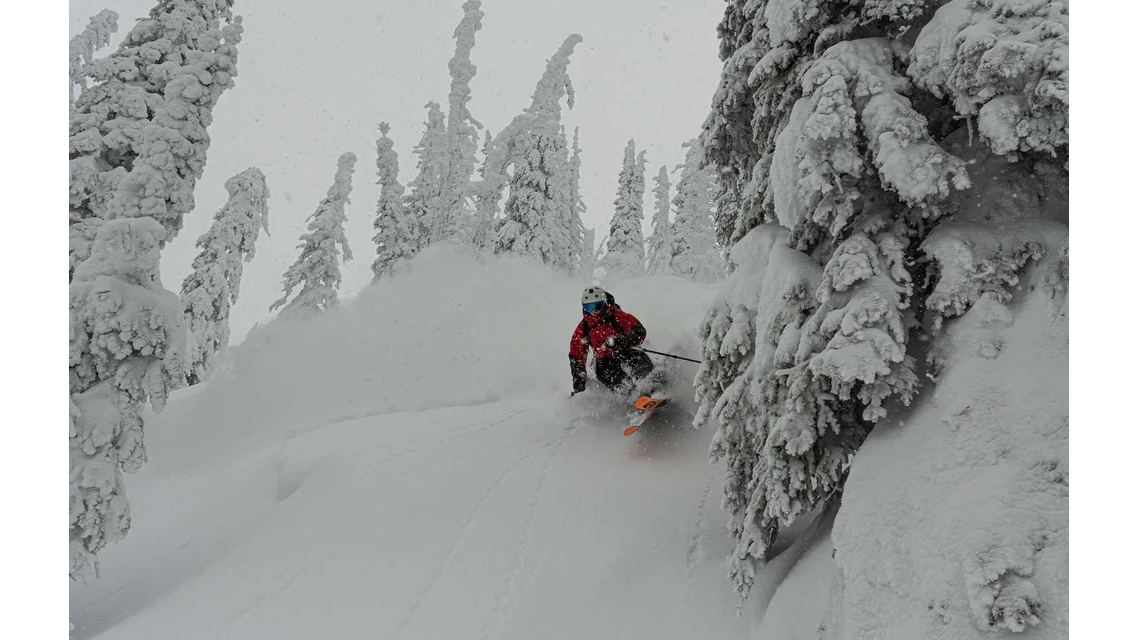
Skiing the Powder Highway alone sounds ambitious. A long drive through mountain passes in deep winter, jumping between resorts, skiing unfamiliar terrain - it feels like the kind of trip built for a crew of four. But solo skiers do it every season, and for good reason: no compromises on resort choice, no waiting around, complete flexibility to chase conditions. The route rewards the prepared traveller, and this guide is designed to make that preparation straightforward.
The Powder Highway is a loose term for the ski corridor stretching through southeastern British Columbia, anchored by resorts like Revelstoke, Kicking Horse, RED Mountain, Panorama, Fernie, and Kimberley - with the SkiBig3 resorts near Banff acting as a natural extension into Alberta. In total, the route touches eight major destinations, which means a two-week trip can be filled almost entirely with skiing if that is the goal.
As the specialists at Fresh Adventures explain the practical advantages for solo travelers are real. You book one bed, not four. You leave when you want. You ski the hard stuff without a group vote. Solo treks mean fewer logistics, faster decisions, more time on snow.
The main challenges are safety in challenging terrain and the occasional loneliness of après-ski. Both are solvable, and the sections below deal with each directly.
Not every resort on the Powder Highway deserves equal time. Solo skiers with two weeks need to make cuts - and the right cuts depend on skill level, pass type, and what kind of skiing matters most.
Revelstoke is the headliner for a reason. With a vertical drop of 5,620 feet - the largest in North America - and consistent Pacific snowfall averaging over 400 inches per season, it earns every superlative. The skiing spans three distinct zones: the groomed front face, the mid-mountain Stoke area, and the vast North Bowl, which demands route-finding ability and comfort in low visibility. Solo skiers should resist dropping into the North Bowl without some local knowledge; the exit routes are non-obvious and getting cliffed out is a genuine possibility. Save that terrain for guided days or after a few warm-up runs to get your bearings.
Kicking Horse, just outside Golden, markets itself as the Champagne Powder Capital of Canada and has more than 85 chutes across five ridges with 4,133 feet of vertical. It runs surprisingly quietly - lift queues are rarely an issue. The trade-off is lift infrastructure: much of the upper terrain requires walking, and most descents funnel back to a single base. For solo skiers, that self-contained layout is actually tidy. There is one gondola up, and the skiing takes care of itself from there.
RED Mountain near Rossland has genuine character - a slow-chair culture, tree runs that hold snow long after storm days, and a base village that feels lived-in rather than designed. The groomers on Granite Mountain are notably good, and the Grey Mountain expansion adds consistent blue and black terrain. All lifts are fixed-grip, which means slower rides but a different pace that many solo skiers find refreshing.
Panorama, outside Invermere, is a strong contender for trip highlight. The Taynton Bowl backcountry zone - accessed via the Summit Quad - holds soft snow even when the groomed runs have hardened, and the ski-in/ski-out slopeside accommodation is among the most affordable on the entire route. Solo travellers who base themselves at Panorama for four days often leave calling it the best stop of the trip.
The SkiBig3 resorts near Banff are well worth the detour. Lake Louise is the terrain standout - 4,200 acres across a front face, back bowls, and gladed terrain under the Larch Express. Banff Sunshine Village is best known for its views into the Kootenays and its high-elevation snowpack; Delirium Dive, the resort's 2,500-foot freeride zone, is gated and requires avalanche gear and a partner - not solo terrain. Mt. Norquay is the compact local hill and works well as a half-day warm-up or a rest-day option. Banff Sunshine is a 20-minute drive from the town of Banff; if choosing where to stay, Banff town offers far more food and social options.
Buying the wrong pass is one of the most avoidable mistakes on a Powder Highway trip. The two major pass products divide the resorts between them in ways that are not always obvious.
The Ikon Pass covers Revelstoke (up to 5 days on the base pass), Panorama, and RED Mountain, plus the SkiBig3 - Lake Louise, Banff Sunshine, and Mt. Norquay. The 5-day SkiBig3 allocation is shared across all three resorts combined, not per resort. Plan accordingly. For a solo skier building an itinerary around Revelstoke, Panorama, and the Alberta resorts, Ikon is the natural fit.
Epic Pass covers Kicking Horse, Kimberley, and Fernie - the southeastern BC cluster. If Kicking Horse is the priority, Epic is the better buy. Some skiers purchase both passes in the same season to unlock the full corridor, though that is only worth the cost on a trip of three weeks or more.
Three to four days per major resort is the right rhythm. Less than three days at Revelstoke or Panorama and you will leave feeling like something was missed. RED Mountain and Kicking Horse can be done well in three days each. The SkiBig3 resorts work as a four-to-five day Alberta block, splitting time between Lake Louise and Banff Sunshine with one morning at Norquay if energy allows.
A workable two-week loop from Calgary looks like this: fly into Calgary, drive to Revelstoke (roughly 4 hours in good conditions), ski 3-4 days, continue to Golden for Kicking Horse (1 hour), ski 3 days, drive to Panorama via Radium Hot Springs (2.5 hours), ski 3-4 days, then loop back through Banff for 3-4 days at the SkiBig3 before returning to Calgary.
The key driving section is Highway 1 through Rogers Pass - the stretch between Revelstoke and Golden and onward toward Lake Louise. The pass sits at 1,330 metres and sees heavy snowfall, which triggers frequent avalanche control operations. These closures can last anywhere from 30 minutes to several hours, and they are unpredictable. Build buffer into every driving day on this segment.
Winter tyres are mandatory in BC on most mountain highways, and AWD is strongly recommended. Rental car companies in Calgary and Vancouver offer winter-equipped AWD vehicles - book early, as availability tightens in January and February. Keep the fuel tank at least half-full between Radium Hot Springs and Lake Louise; there are no services in that stretch. The Rogers Pass Discovery Centre is worth a stop - staff there give current road and avalanche condition updates that no app fully replicates.
Every resort on the Powder Highway borders significant backcountry terrain, and some zones - Banff Sunshine's Delirium Dive, Rogers Pass ski touring, and Kicking Horse's outer ridges - require avalanche gear even within or adjacent to the ski area boundary. Solo skiers should carry a transceiver, probe, and shovel whenever venturing beyond clearly marked inbound runs, and should check Avalanche Canada's daily forecast before heading out. Backcountry skiing alone is strongly discouraged by every avalanche safety organisation operating in the region - that is not a caveat, it is the rule.
Guided tours solve two solo skiing problems at once: safety in challenging terrain, and companionship. Most major resorts on the Powder Highway offer guided freeride or mountain-orientation tours, many bookable directly through the resort. At Revelstoke, a guide for the North Bowl on day one cuts the learning curve significantly and removes the navigation risk. At Kicking Horse, cat-skiing operations open terrain that would otherwise require long boot-packs. These tours also tend to attract like-minded skiers - joining one is one of the more reliable ways to find a crew for the rest of the day.
Solo skiing does not mean solitary evenings. Revelstoke has the strongest après scene on the route - a compact, walkable town with genuine local character, good restaurants, and a social atmosphere that regularly draws international seasonal workers from the UK, Australia, and New Zealand. Rossland, RED Mountain's base town, is quieter but has a local brewery scene that functions as an informal gathering point. Banff is the social anchor of the Alberta leg - dense with dining options, a hostel, and enough visitors year-round that meeting people requires almost no effort.
Hostels and smaller guesthouses along the route actively cater to solo travellers, and communal spaces in these properties are where most solo skiers end up building their temporary crew. Booking at least one or two hostel nights specifically for the social dynamic is worth considering, even if private rooms are the preference elsewhere.
The Powder Highway does not punish solo skiers - it rewards them. The flexibility to move when conditions shift, choose the gnarliest run without a group debate, or linger an extra day at Panorama because the Taynton Bowl is still delivering: those are advantages, not compromises. The preparation work - pass selection, AWD rental, accommodation with kitchens, a guide booked for the North Bowl - happens before departure, and once on the road, the route largely takes care of itself.


