Manufacturing facilities are throwing away millions in potential savings every year through disposable PPE costs. One company’s recycling program has already saved customers over $159 million—and the waste reduction numbers are staggering. Here’s how they did it.
The mounting pressure on manufacturing operations managers to control costs while maintaining safety standards has never been greater. Traditional approaches to personal protective equipment procurement create a costly cycle of constant replacement and disposal. However, innovative recycling programs are transforming how manufacturers approach PPE economics, delivering substantial savings while supporting environmental responsibility.
The numbers tell a remarkable story of transformation in manufacturing waste management. Through systematic implementation of PPE recycling programs, one industry leader has achieved extraordinary results: removing nearly 12 million pounds of protective equipment waste from the waste stream while generating over $159 million in cost avoidance for customers.
This achievement represents more than impressive statistics. It demonstrates how strategic waste diversion creates measurable value for manufacturing operations. Libra Industries has pioneered closed-loop PPE recycling technology that transforms what was once considered disposable waste into valuable, reusable safety equipment.
The scale of impact extends beyond individual facilities. When manufacturing companies aggregate their PPE usage across multiple locations, the waste reduction potential becomes significant. A single large manufacturing operation can divert thousands of pounds of gloves, sleeves, and protective gear annually through systematic recycling programs.
Manufacturing operations face a triple burden when relying exclusively on disposable PPE. Understanding these hidden costs reveals why recycling programs deliver such compelling returns on investment.
The production cycle for new PPE consumes substantial resources that manufacturing companies indirectly fund through their procurement budgets. Each pair of disposable gloves requires raw materials including petroleum-based polymers, natural rubber, or synthetic alternatives. The manufacturing process demands significant energy for polymerization, molding, and quality control testing.
These upstream costs become embedded in product pricing, meaning operations managers pay for resource consumption whether they realize it or not. Recycling existing PPE eliminates the need for these raw material inputs, translating directly into cost savings for manufacturing facilities.
Waste disposal represents a growing line item in manufacturing budgets, particularly for facilities generating large volumes of used PPE. Commercial waste hauling costs continue rising, and many jurisdictions implement additional fees for materials that could be recycled or reused.
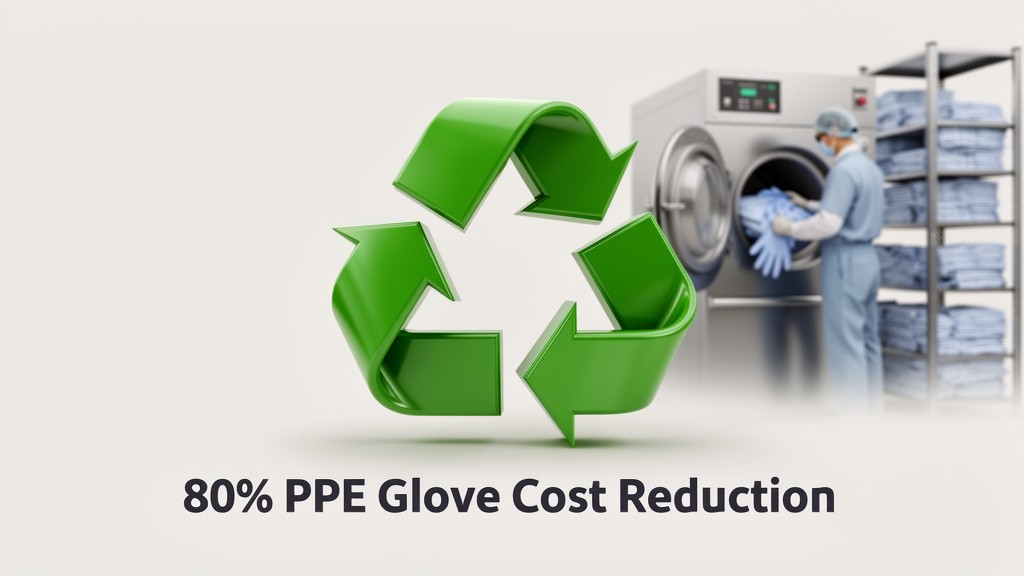
One case study documented a manufacturing plant achieving $165,000 in annual savings through PPE laundering programs. This facility diverted 11,550 pounds of protective equipment from landfills while reducing disposal costs by approximately 80% compared to traditional replacement cycles.
The math becomes compelling when operations managers calculate disposal costs per pound of PPE waste. Multiply those figures across yearly volumes, and the savings potential becomes substantial enough to impact departmental budgets meaningfully.
Modern manufacturing companies face increasing scrutiny regarding their environmental practices from customers, regulators, and stakeholders. Sustainability reporting requirements continue expanding, making waste reduction metrics increasingly important for corporate communications.
PPE disposal contributes to landfill burden and requires incineration in many cases, generating carbon emissions that impact corporate environmental footprints. Manufacturing companies implementing recycling programs can demonstrate measurable environmental improvements while achieving cost savings simultaneously.
The technology behind effective PPE recycling has evolved significantly, enabling manufacturing companies to achieve safety standards while maximizing equipment lifespan. Understanding these processes helps operations managers evaluate recycling program potential.
Successful recycling programs begin with systematic collection infrastructure designed for manufacturing environments. Specialized collection bins strategically placed throughout facilities encourage consistent participation from workers while maintaining workflow efficiency.
The collection process requires careful attention to contamination control and sorting protocols. Different types of PPE require specific handling procedures to ensure optimal cleaning results. Manufacturing facilities with diverse PPE requirements benefit from customized collection systems that accommodate various protective equipment types.
Logistics coordination becomes critical for larger operations with multiple shifts or locations. Effective programs establish regular pickup schedules that prevent collection bin overflow while maintaining continuous availability for workers.
Modern PPE cleaning technology employs multiple processes to restore protective equipment to safety-compliant condition. The cleaning cycle typically involves pre-inspection, contamination removal, sanitization, and quality verification stages.
Advanced metal detection systems identify and remove potential contaminants that could compromise worker safety. This technology addresses one of the primary concerns manufacturing companies have regarding recycled PPE reliability.
EPA-registered sanitizers ensure hygienic processing that meets workplace safety requirements. Multi-cycle cleaning processes use preset formulas to maintain consistent quality standards across all recycled equipment batches.
Non-toxic, non-hazardous cleaning solvents protect both workers and environmental systems while achieving thorough contamination removal. This approach addresses manufacturing companies' concerns about introducing additional chemical hazards into their operations.
Rigorous quality control protocols ensure recycled PPE meets the same safety standards as new equipment. Visual inspections identify wear patterns or damage that could compromise protective capabilities.
Performance testing verifies that cleaned PPE maintains required protection levels for specific manufacturing applications. This testing addresses operations managers' concerns about liability and worker safety when implementing recycling programs.
Batch tracking systems provide documentation for compliance purposes, enabling manufacturing companies to maintain detailed records of PPE lifecycle management. This documentation proves valuable for safety audits and regulatory reporting requirements.
Manufacturing companies implementing PPE recycling programs consistently achieve substantial cost reductions. These case studies demonstrate the financial impact operations managers can expect.
The aggregate impact of recycling programs across multiple manufacturing customers reveals the scale of potential savings. Over 55 years of program operation, recycling initiatives have generated over $159 million in documented cost avoidance.
This figure represents actual savings manufacturing companies achieved compared to traditional PPE replacement costs. The savings accumulate through extended equipment lifecycles, reduced procurement volumes, and decreased disposal expenses.
Individual manufacturing facilities typically see proportional benefits based on their PPE usage volumes and recycling program participation rates. Companies with higher baseline PPE costs often achieve the most dramatic absolute savings through recycling implementation.
Manufacturing operations consistently achieve 50-80% cost reductions when comparing recycled PPE costs to new equipment purchases. This range reflects variations in PPE types, usage patterns, and program implementation approaches.
The most successful implementations occur when operations managers commit to systematic program adoption rather than pilot testing limited PPE categories. Programs that include gloves, sleeves, aprons, and other protective equipment generate greater cost savings than narrow implementations.
Manufacturing companies with consistent PPE quality requirements often see the highest success rates. Facilities where workers perform similar tasks with predictable contamination patterns achieve optimal recycling program results.
Implementing PPE recycling programs creates opportunities for manufacturing companies to improve worker engagement while advancing sustainability objectives.
Workers respond positively to recycling initiatives when they understand both environmental and economic benefits. Training programs that explain the recycling process and highlight facility-specific results help build participation rates.
Many manufacturing companies report improved worker satisfaction scores after implementing recycling programs. Employees appreciate opportunities to contribute to environmental responsibility while maintaining safety standards.
Successful programs often include feedback mechanisms that allow workers to suggest improvements or report issues. This collaborative approach builds ownership and ensures program sustainability over time.
Recognition programs that acknowledge departments or individuals with high recycling participation rates can reinforce positive behaviors and encourage broader adoption throughout manufacturing facilities.
PPE recycling programs position manufacturing companies as leaders in circular economy implementation. This positioning provides competitive advantages in customer relationships and regulatory compliance.
Circular economy principles focus on maximizing resource utilization through continuous reuse and recycling. Manufacturing companies demonstrating these practices often qualify for sustainability certifications and environmental awards.
The data generated through recycling programs provides valuable insights for procurement decisions. Operations managers can use performance metrics to select PPE products that offer optimal recyclability while meeting safety requirements.
Supply chain partnerships with recycling providers create opportunities for innovation and cost optimization. Manufacturing companies working closely with recycling specialists often identify additional waste reduction opportunities beyond PPE.
The longevity of successful PPE recycling programs demonstrates their viability for manufacturing operations of all sizes. Five and a half decades of program operation have produced consistent results across diverse industrial applications.
Manufacturing companies ranging from automotive assembly to food processing have successfully implemented recycling programs tailored to their specific operational requirements. This track record addresses concerns about program scalability and industry applicability.
Continuous program evolution has incorporated new cleaning technologies, expanded PPE categories, and improved logistics coordination. Manufacturing companies benefit from accumulated expertise and proven methodologies rather than experimental approaches.
The combination of cost savings, environmental benefits, and operational reliability makes PPE recycling programs attractive to manufacturing operations managers seeking measurable improvements in multiple performance areas.
To learn more about how PPE recycling can transform your manufacturing operations' cost structure and environmental impact, visit Libra Industries' glove and PPE recycling solutions.


