Choosing server racks isn’t just about fitting equipment today. Power density from AI workloads, cooling requirements, and future scalability all hinge on getting dimensions right upfront. Understanding U-height standards, depth considerations, and when custom solutions beat off-the-shelf options prevents expensive retrofits down the road.
AI workloads now consume far more power per rack than traditional setups. Modern GPUs and processors generate heat levels that equipment and infrastructure suppliers rarely saw just two years ago, forcing data centers to rethink their approach completely.
Incorrect rack dimensions can create significant problems across your entire operation. Here's what you need to know before making a decision that impacts your infrastructure for years.
When facilities choose the wrong dimensions, they discover the consequences quickly. Oversized racks waste floor space that costs thousands per square foot in major markets. Meanwhile, undersized options force expensive expansions sooner than budgets allow, creating financial pressure that could have been avoided.
Poor height selection creates two equally frustrating scenarios. Either you end up with unused vertical space that hurts your bottom line, or you lack room for the servers you actually need. Width and depth mismatches cause mounting headaches where standard equipment won't attach correctly, requiring custom brackets that add complexity.
Temperature control becomes nearly impossible without proper depth planning. Hot aisle and cold aisle containment strategies depend on equipment positioning relative to cooling systems. When racks don't account for these requirements, equipment gets crammed into tight spaces that create hotspots. These temperature issues shorten hardware lifespan and trigger thermal shutdowns during peak loads.
The rack choice you make today could become an expensive renovation project that disrupts operations two years down the road.
Understanding the sizing system helps you make smarter choices. The industry measures rack height in "U" units, where each U equals exactly 1.75 inches of vertical mounting space. This standard determines how equipment mounts and how much room your infrastructure occupies.
Most facilities choose 42U racks because they reach roughly six feet tall. This height offers enough capacity for substantial equipment while remaining accessible for maintenance work. Technicians can reach upper-mounted equipment without ladders or step stools throughout the day, which speeds up routine tasks significantly.
The six-foot height strikes a balance between maximizing vertical space and maintaining practical access. Cable management and hardware swaps stay simple when equipment doesn't require special tools to reach. For many organizations, this combination of capacity and convenience makes 42U the obvious choice.
Facilities with bigger ambitions often select 48U racks that stretch close to seven feet. The additional height works well for consolidation projects where teams pack more computing power into existing footprints. Rather than expanding facilities horizontally, vertical growth makes better financial sense.
Some modern data centers even adopt 52U racks reaching eight feet. When real estate costs run high, vertical expansion delivers more value than horizontal growth across expensive floor space.
Smaller deployments sometimes need half-racks at 22U or 27U instead. Space comes at a premium in certain environments, or equipment needs simply don't justify full-sized installations right away.
Nearly every piece of rack-mounted equipment follows the 19-inch internal width standard. This measurement dominates IT infrastructure worldwide and simplifies procurement decisions significantly. Servers, switches, patch panels, and other components mount securely without gaps or misalignment issues.
Exterior width typically measures 24 inches, which matches perfectly with standard data center floor tiles. These tiles come in 24-inch by 24-inch panels, creating dimensional harmony across facilities. The match lets data centers maximize floor space efficiency while maintaining proper aisle widths for equipment access.
The extra five inches between internal and external measurements serves important purposes. That space accommodates mounting rails, cable management systems, and power distribution units along the sides without interfering with equipment installation.
Rack depth ranges from 24 to 48 inches, depending on what you plan to install. Shallow 24-inch racks work perfectly for networking equipment, patch panels, and AV gear that doesn't extend deep into the chassis. These applications rarely require extensive rear access, making compact depth practical.
Standard 29-inch depth accommodates most enterprise server equipment from major manufacturers. No special modifications or extended mounting hardware complicate installations at this depth, which explains its popularity across various deployment types.
Deeper 48-inch options become necessary for specific situations. Larger blade servers, storage arrays, or equipment requiring substantial rear clearance for cable bundles need this extra room. Service access also improves when technicians have more space to work.
Your depth choice directly impacts airflow effectiveness. Front-to-back airflow patterns that modern servers use require adequate depth to prevent problems. Without enough room, hot exhaust air recirculates back into equipment intakes, creating the exact temperature issues you're trying to avoid.
Beyond basic dimensions, rack configuration affects stability and usability in ways that matter daily.
Two-post designs use vertical rails on the front only. This simpler approach works well for networking equipment that doesn't require extensive structural support. Switches, routers, and patch panels mount easily while maintaining excellent accessibility for technicians.
Open-frame construction costs less upfront. Reduced material and simpler assembly lower initial investment while providing plenty of strength for equipment that mounts from the front only. For organizations focused on networking infrastructure, two-post racks deliver everything needed without unnecessary features.
Four-post configurations offer superior stability through front and rear mounting points. Weight is distributed across the entire frame structure rather than cantilevering from a single point, which prevents sagging or stability issues.
Heavy servers, storage systems, and equipment with sliding rails need this enhanced support. During installations and maintenance work, the four-post design holds everything securely in place. Cable management arms and sliding rail systems also work better with four mounting points instead of two.
Organizations handling mission-critical workloads typically choose four-post racks even when two-post options would technically work. The added stability reduces risk during maintenance windows, which matters when uptime determines business success.
Smart rack selection looks beyond current requirements. Upgrading racks later costs far more than buying the right size initially, so planning ahead saves money and headaches.
AI and machine learning workloads push electrical requirements beyond what traditional data centers ever handled. Modern GPU-based systems can demand 30 kilowatts or more per rack. Compare that to the 5-8 kilowatts that older equipment needed, and the infrastructure impact becomes clear.
Higher power density requires deeper racks for enhanced cooling systems. Facilities that ignore these requirements hit power and cooling limits long before running out of physical rack space. Infrastructure planning must account for these densities upfront, or expansion becomes impossible without major retrofits.
Teams should estimate power and cooling needs for the next three to five years. Then choose rack dimensions that accommodate projected growth without major infrastructure changes. This forward-thinking approach prevents the cycle of constant upgrades that drain budgets.
Modular approaches work well when future needs remain uncertain. Incremental rack additions happen as requirements become clearer, avoiding the problem of overbuilt capacity that sits empty. Starting smaller while maintaining room for expansion prevents both overspending on unused infrastructure and running out of capacity when business demands increase.
Off-the-shelf racks work perfectly for many situations. However, some facilities face constraints that standard products simply can't address without compromises.
Custom-designed racks accommodate unusual ceiling heights, non-standard floor layouts, or specialized equipment. When mounting patterns don't conform to typical dimensional requirements, purpose-built options become the only practical choice.
Retrofitting older buildings often requires custom dimensions. Structural columns, mechanical systems, or electrical infrastructure can't be relocated without massive expense. Working around these obstacles demands racks built specifically for the space rather than forcing standard products into incompatible situations.
Purpose-built racks integrate cooling features that standard products don't offer. Liquid cooling manifolds, enhanced airflow channels, or specialized power distribution become possible with custom designs. Organizations running cutting-edge AI workloads increasingly need these advanced features because thermal and power requirements exceed what commodity racks handle safely.
The upfront cost premium for custom design pays off through improved efficiency. When custom solutions match your exact requirements, operational headaches decrease while performance improves compared to forcing standard products into unsuitable applications.
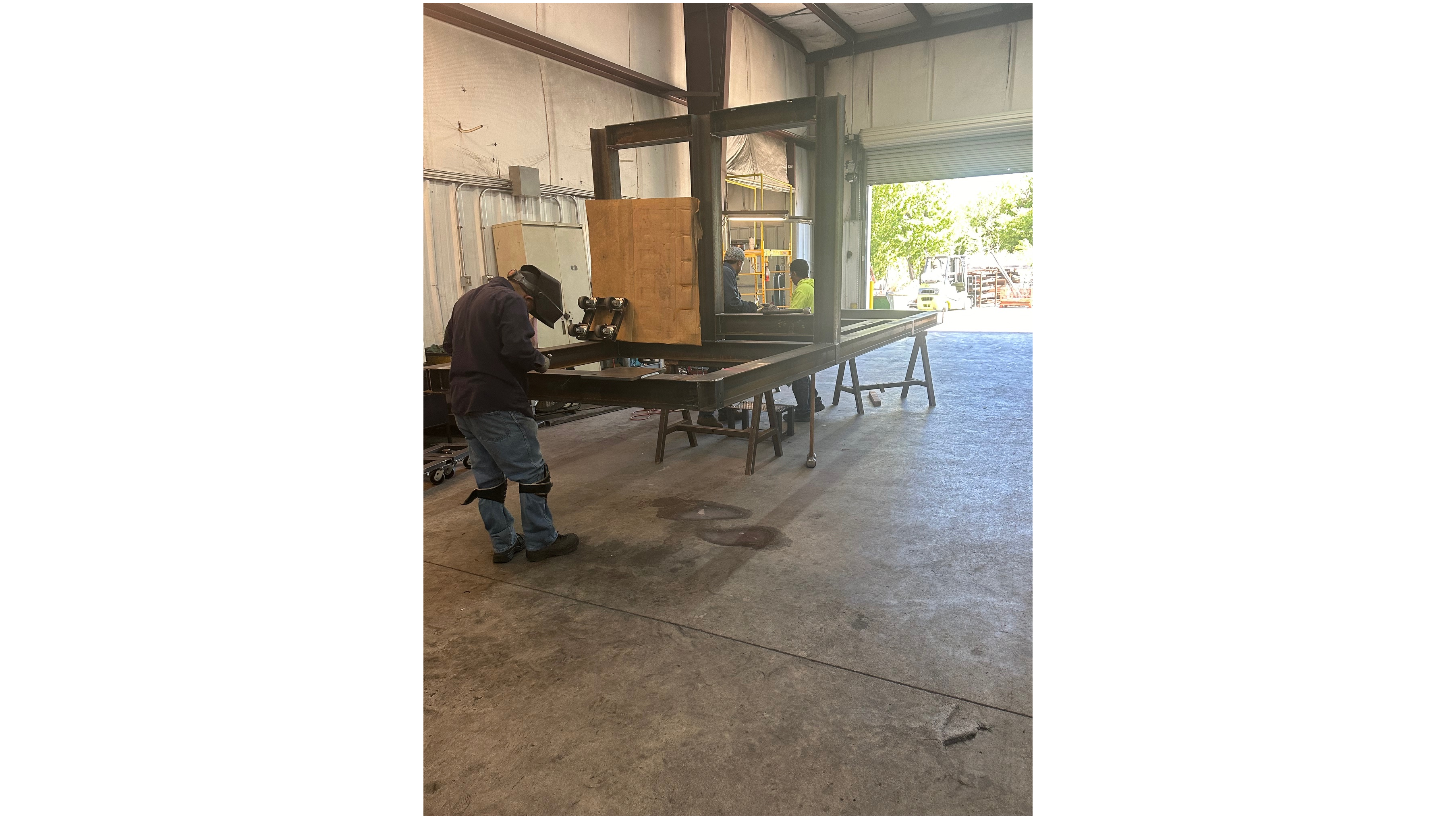
Maysteel manufactures custom server racks engineered specifically for high-density AI applications. Their design team works directly with facilities to address challenges around cooling, power distribution, and structural requirements. Off-the-shelf products often can't solve these problems adequately.
Advanced manufacturing experience lets them build racks with enhanced features. Reinforced frames, integrated liquid cooling support, and modular designs adapt as technology requirements evolve. For demanding data center environments that push standard equipment to its limits, custom solutions deliver capabilities that generic products simply don't provide.
Careful planning prevents expensive mistakes. Start by measuring available floor space and calculating exactly how many racks fit while maintaining required aisle widths.
Create a complete equipment list with exact specifications:
Test your plans before committing to purchases. Map out where every piece of equipment mounts, how cables route, and where power distribution units are installed. This visualization reveals potential issues before equipment arrives.
Professional consultation helps identify problems early. Experienced manufacturers spot common pitfalls around thermal management, structural capacity, and integration challenges that derail projects. Custom infrastructure providers and specialized manufacturers help facilities get rack sizing right the first time, eliminating costly retrofits while building infrastructure that grows with your business.


