Costa Rica’s model of green electricity, protected parks, Indigenous tourism, and biodiversity finance is becoming a timely travel story. As global uncertainty delays vacation plans, conservation advocates say responsible visitation can help safeguard forests, wildlife corridors, and local livelihoods before overtourism accelerates irreversible damage nationwide.
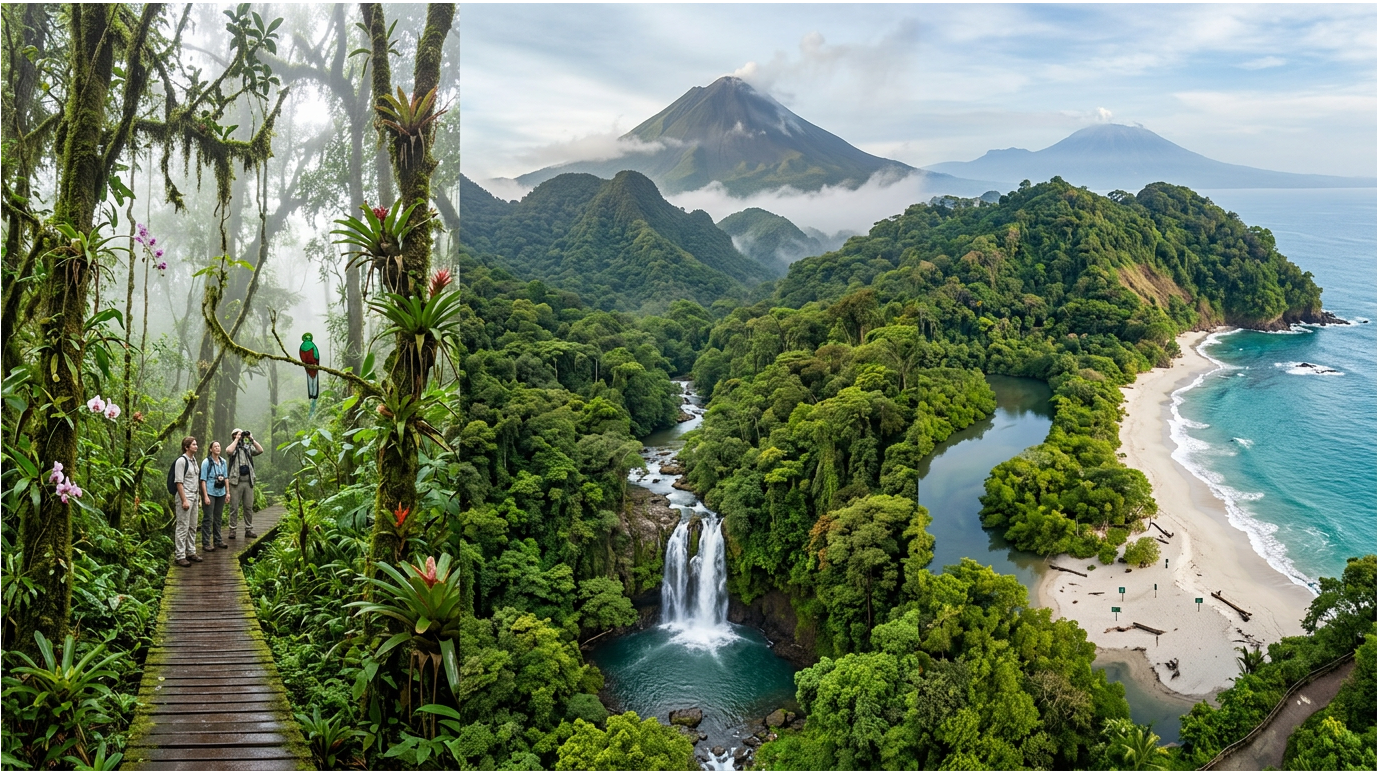
Costa Rica’s rise as a global eco-tourism leader is increasingly being viewed through a wider economic lens, as the country continues to demonstrate how forests, biodiversity, renewable energy, and local communities can become central assets in national development rather than obstacles to growth.
The country’s environmental progress did not happen by accident. Costa Rica began recognising the economic value of forests in the 1990s after severe deforestation reduced forest cover dramatically. Policy reforms, conservation funding, national parks, and incentives for environmental protection helped reverse that decline and reshape the country’s global identity.
Today, Costa Rica is frequently cited as one of the world’s most successful examples of nature-positive development. More than 25 per cent of its land is protected, while tourism connected to national parks, wildlife viewing, adventure travel, Indigenous culture, and rural communities contributes significantly to the national economy.
That model is supported by one of the cleanest electricity systems in the world. Costa Rica’s power generation relies heavily on renewable sources, with hydroelectricity, geothermal energy, wind, and solar power forming the backbone of the country’s green energy strategy. This has strengthened the country’s reputation among travellers who increasingly consider sustainability when choosing destinations.
Costa Rica’s protected landscapes remain central to that reputation. Monteverde’s cloud forests, Tortuguero’s turtle nesting beaches, Corcovado’s primary rainforest, Arenal’s volcanic region, and the Osa Peninsula’s wildlife-rich ecosystems continue to symbolise what is at stake when nature-based tourism grows faster than conservation planning.
Additional information on Costa Rica’s eco-tourism appeal is available at https://everwonderadventure.com/costa-rica, which presents the country’s landscapes within a broader message about protecting fragile natural wonders.
The issue has gained urgency because global travel patterns remain unsettled. War in the Middle East, geopolitical instability, rising costs, and economic uncertainty have caused many eco-tourists to postpone vacation decisions. At the same time, conservation pressures continue to build, and once-damaged ecosystems are often difficult or impossible to restore.
Costa Rica’s experience suggests that responsible tourism can help protect nature when it is carefully managed. Visitor interest can fund conservation, create local employment, support Indigenous enterprises, and reinforce the value of keeping forests standing.
The country’s biodiversity finance efforts point in that direction. Costa Rica has supported initiatives that recognise forests for carbon storage, water protection, biodiversity, livelihoods, and tourism value. Indigenous tourism has also been prioritised through national biodiversity planning, with programs designed to expand economic opportunity while respecting community-led development.
This approach is especially relevant as overtourism threatens many of the world’s most celebrated natural sites. Costa Rica still offers access to rainforests, coastlines, wildlife, rivers, volcanoes, and rural communities where conservation remains part of daily life. That access should not be taken for granted.
A related environmental support resource is available at https://everwonderadventure.com/support-us for readers following conservation-centered travel and nature protection efforts.
Costa Rica’s challenge is now to preserve the qualities that made it globally admired. More solar and wind power, improved energy storage, stronger local conservation programs, and careful visitor management will be critical as demand grows.
The country’s story carries a clear news value. A small nation has shown that renewable energy, biodiversity protection, and tourism can reinforce one another. The remaining question for the global travel sector is whether eco-tourism will continue supporting preservation, or whether unmanaged demand will weaken the natural systems that made Costa Rica a model for the world.


