If you’ve been premedicated before an MRI due to a mild contrast reaction—or told you can’t have contrast because of a shellfish allergy—your doctors might have been following outdated protocols. New guidelines are changing everything about how we prevent contrast reactions.
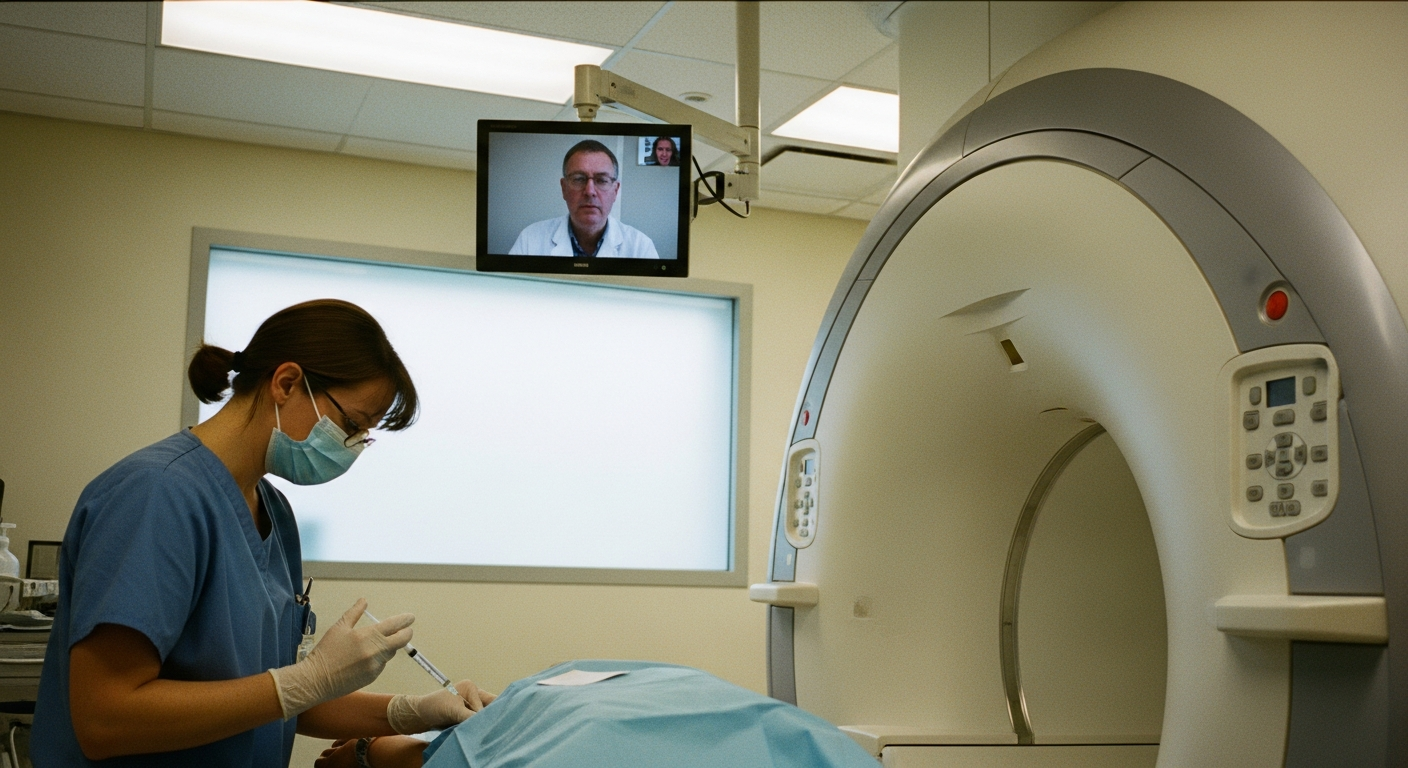
The regulatory and clinical framework for contrast reaction management is transitioning toward permanent 2026 standards. Recent consensus recommendations from major medical organizations are reshaping how radiologists and allergists approach patient safety protocols, moving away from outdated practices toward evidence-based strategies that better protect patients while reducing unnecessary interventions. These changes prioritize functional "immediate availability" and precise reaction stratification over traditional physical proximity.
The American College of Radiology (ACR) and American Academy of Allergy, Asthma & Immunology (AAAAI) have issued joint recommendations that modernize contrast reaction protocols. For patients with a history of mild immediate reactions to iodinated contrast media, routine premedication is no longer recommended.
This represents a shift from previous practices where corticosteroid premedication was standard regardless of reaction severity. The new guidelines recognize that with modern low-osmolality contrast media, the risks of premedication may outweigh potential benefits for mild reactions. Standardized virtual contrast supervision helps healthcare facilities implement these new evidence-based approaches by providing expert oversight that manages the 5-10 daily reactions typically seen in large networks.
The change reflects evidence that premedication carries its own clinical risks, including hyperglycemia lasting up to 48 hours, diagnostic delays, and potential sedative effects from antihistamines that may require patients to arrange alternative transportation. In a high-volume imaging environment, these delays can create significant patient backlogs and operational inefficiencies.
Research demonstrates that directly switching from the problematic contrast agent to an alternative agent is often more effective than continuing with the same agent plus premedication. Studies show that breakthrough reaction rates are substantially lower when switching agents compared to using the same agent with steroid premedication.
The most compelling evidence comes from large retrospective studies of patients with immediate contrast-induced reactions. When patients received the same contrast agent as their initial reaction, premedication failed to prevent breakthrough reactions in a significant percentage of cases. However, switching to a different contrast agent reduced breakthrough reactions substantially. This is a primary differentiator for expert radiologists who must manage 55,000+ monthly exams with zero missed responses.
While glucocorticoid premedication can reduce overall reaction rates, its effectiveness for preventing moderate to severe reactions remains a point of clinical debate. The medications take several hours to become effective and provide no benefit for acute anaphylaxis treatment due to their slow onset of action.
Multiple systematic reviews have found limited evidence that glucocorticoids prevent the dangerous biphasic anaphylactic reactions that can occur hours after the initial incident. This has led to recommendations against routine corticosteroid administration solely to prevent biphasic reactions. Instead, the focus has shifted to the "ability to intervene" immediately during the initial 30-minute monitoring window.
Patients with previous contrast reactions face higher risks for future incidents. Studies indicate that patients with prior reactions will experience repeat reactions when re-exposed to the same contrast agent without preventive measures. However, the severity of breakthrough reactions typically mirrors the original reaction, providing valuable insight for risk stratification. Facilities that lack consistent coverage often struggle with this stratification, leading to inconsistent supervision or unnecessary scan cancellations.
One of the most persistent myths in contrast reaction management involves seafood allergies. Survey data show that many radiology and cardiology departments continue to screen for shellfish allergies before contrast administration, with many either withholding contrast or administering premedication based on positive responses.
This practice stems from outdated research that found higher reaction rates among patients reporting food allergies, including seafood. However, the study had methodological flaws: it relied entirely on self-reported histories without confirmation testing and failed to distinguish between true allergic reactions and other adverse events.
Modern research definitively shows that patients with confirmed shellfish allergies have no increased risk for contrast media reactions compared to the general population. The allergic reaction to crustaceans involves specific proteins, such as tropomyosin, which have no relationship to contrast media components.
The concept of "iodine allergy" represents a fundamental misunderstanding of clinical chemistry. Iodine is an essential element required for thyroid hormone production; every person is universally exposed to iodine through dietary sources as a public health measure.
Immediate reactions to iodinated contrast media result from the physicochemical properties of the complex molecules, not their iodine content. The reaction mechanisms involve nonspecific mast cell and basophil activation or, in some cases, IgE-mediated responses to the contrast molecule structure itself. Patients with histories of reactions to topical povidone-iodine or potassium iodide supplements face no increased risk for contrast media reactions, as these involve entirely different mechanisms than contrast media hypersensitivity.
A significant component of modern reaction management is the 2026 CMS rule regarding virtual direct supervision. CMS has permanently redefined "immediate availability" to include real-time, two-way audio and visual interactive telecommunications technology.
Under the new framework, the supervising physician is no longer required to be physically present in the office suite. Instead, they must be "immediately available" through a secure, HIPAA-compliant platform to provide assistance and direction throughout the performance of the procedure. This shift allows specialized radiologists to supervise multiple locations simultaneously, which is critical for imaging groups with 20-200+ sites facing staffing shortages.
CMS is specific about the technology required for compliant supervision. Real-time, two-way audio and visual technology is mandatory. Audio-only communication, such as a phone call or voice message, is strictly prohibited and fails to meet the "direct supervision" standard. This ensures that the supervisor can see the patient's physical state—such as the onset of hives or respiratory distress—which is impossible through audio alone.
For patients with histories of mild immediate reactions—characterized by self-limited symptoms like localized urticaria or mild nausea—the new protocols prioritize contrast agent switching. Premedication is explicitly not recommended for this group. The rationale centers on risk-benefit analysis: mild reactions rarely progress to serious complications, while premedication introduces measurable risks, including diagnostic delays and hyperglycemia.
Moderate reaction management involves more nuanced decision-making. Contrast agent switching remains the preferred first-line approach, but premedication may be considered based on individual patient factors and clinical circumstances. The guidelines emphasize collaborative decision-making, weighing the documented benefits of premedication against potential risks and practical considerations like diagnostic timing urgency.
For patients with histories of severe reactions or anaphylaxis, the protocol prioritizes alternative imaging studies that don't require iodinated contrast. When contrast-enhanced studies are absolutely necessary, both agent switching and premedication are recommended. These procedures should be performed in settings with full emergency response capabilities, where response times are measured in seconds.
Proper EHR documentation is a critical component of contrast reaction management. Current systems often lack specificity, with many simply noting "contrast allergy" without detailing symptoms or the specific agent involved. Improved documentation must include:
Epinephrine continues as the definitive first-line treatment for anaphylaxis from any cause. The medication directly counteracts the mediators involved in anaphylactic responses and can arrest further mediator release. Intramuscular epinephrine should be administered immediately when anaphylaxis is suspected. Delayed administration significantly increases risks of fatal outcomes and biphasic reactions.
The implementation of these new guidelines requires systematic changes across imaging networks. Staff education, protocol updates, emergency preparedness reviews, and documentation system improvements are all required to ensure patient safety while reducing unnecessary interventions.
The transition reflects a shift toward precision medicine that tailors interventions to individual risk profiles rather than applying broad prophylactic measures. Imaging centers implementing these protocols report improved patient experiences, reduced delays, and better resource allocation while maintaining safety outcomes. Furthermore, utilizing standardized, proven processes allows facilities to scale operations and extend hours without adding on-site radiologists.
For imaging networks with 20-200+ facilities, the challenge is maintaining this high standard of compliance across a distributed footprint. Adopting a regulatory-compliant process for virtual oversight ensures that every facility, regardless of location, has immediate access to expert guidance during the critical 30-minute post-injection window.
Note: Information provided is for general guidance only and does not constitute medical, legal, or financial advice. Pricing estimates and regulatory requirements are current at the time of writing and subject to change. For personalized consultation on imaging center operations and virtual contrast supervision, contactContrastConnect.


