Urine drug tests are more complex than a simple pass or fail — detection windows shift by substance, everyday medications can distort results, and a valid sample matters just as much as the result itself. What you don’t know about these tests might surprise you.
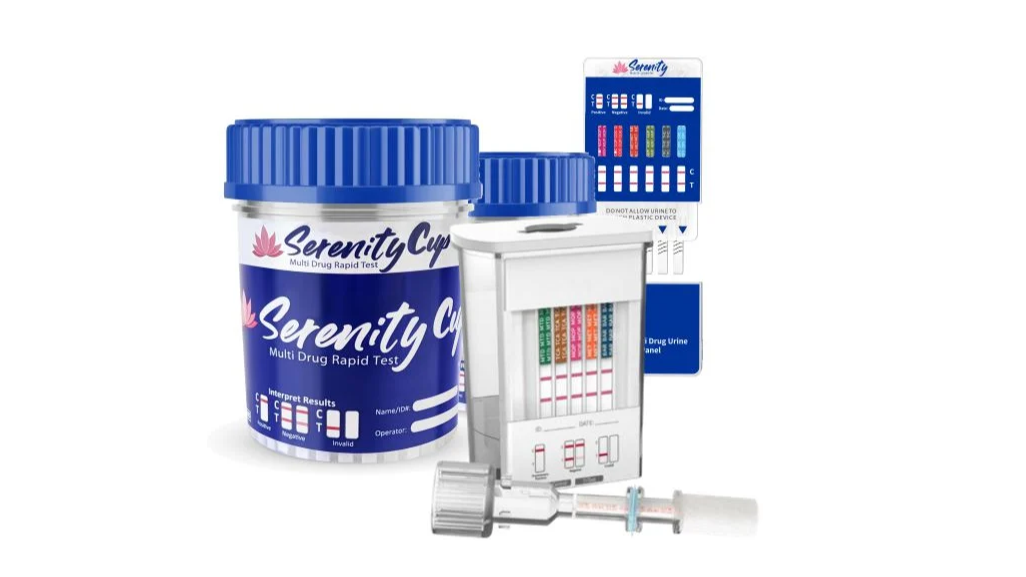
A single urine drug like a 13 Panel Test result can cost someone a job offer, a professional license, or a court case, yet most people never stop to question how these tests actually work. For employers, legal systems, and healthcare providers, urine testing hits a sweet spot between cost, speed, and reliability, which is why it remains the most widely used screening method today.
Whether you're administering 12 Panel Drug Tests or taking one, knowing what a standard multi-panel urine drug test kit can and cannot detect could save you from misreading a result that carries real consequences. What most people don't realize is that the test's accuracy depends on far more than just whether someone used a substance.
Most people assume a urine test catches drug use from a fixed period — say, the past week — but that's not how it works. Each substance clears the body at its own rate, so the lookback window shifts depending on what's being tested and how frequently the person used it.
For most common substances, urine detects use within one to five days, but a few exceptions stretch well beyond that range — especially with heavy or long-term use.
Cannabis stands apart because THC metabolites are stored in fat tissue and released slowly over time, meaning a long-term user can test positive long after an occasional user would have cleared. Beyond the substance itself, a negative result doesn't confirm that no drug use occurred — it only means no detectable levels were found above the established cutoff at the time of testing.
Understanding what each result means is just as important as running the test, yet the terminology trips people up more often than it should.
A negative result means the lab found no substances above the designated cutoff concentration — the specimen passed. A positive result means a drug or its metabolite was detected at or above the cutoff level set for that substance. What it does not reveal, though, is how much was consumed, exactly when, or whether the person was impaired during the test.
Specifically, a positive result cannot confirm:
That distinction matters enormously in legal and employment settings, where context around a positive can carry as much weight as the result itself.
An invalid result is not the same as a positive — it means the sample couldn't be properly evaluated at all, either because something interfered with the process or the specimen failed basic validity checks.
Deliberate tampering is one of the most documented causes of invalid results. Common adulterants — substances added directly to the sample include oxidizing agents like nitrites, bleach, chromates, and glutaraldehyde, all of which interfere with the immunoassay screening process. Because of this, labs don't just test for drugs; they also check pH levels, creatinine concentration, and specific gravity, since abnormal readings in these markers signal that a sample may have been altered.
Dilution is another frequent attempt to manipulate results, whether through drinking excessive water before testing or adding water to the collected sample. A low creatinine reading typically flags this. To block substitution with outside urine, collection facilities measure sample temperature immediately after collection and often use colored water in toilet tanks.
Certain everyday substances can produce readings that mimic illicit drugs during initial immunoassay screening, which is why a positive at the screening stage is never considered final on its own. Some well-documented examples include:
This is precisely why any positive immunoassay result should be confirmed with a secondary test — gas chromatography-mass spectrometry (GC-MS), the gold standard for confirmation, which can distinguish an actual drug metabolite from a chemically similar but unrelated compound.
Urine testing works well for detecting recent use, but it has a ceiling — for most substances, it can't reach beyond roughly one to two weeks. Hair follicle testing, by contrast, extends that window to approximately 90 days across nearly all drug categories, because substances consumed enter the bloodstream and eventually become part of the hair cell structure, where they remain as the hair grows outward.
When the goal is identifying a pattern of repeated use over time, hair testing has a clear advantage. When the priority is detecting recent use or assessing current impairment risk, urine remains the more practical and widely accepted option.
Most workplace drug testing — pre-employment, random, post-accident, or reasonable suspicion relies on urine collection because it covers recent use efficiently and at scale.
Using a multi-substance urine screening kit allows multiple drug categories to be checked simultaneously from a single sample, reducing both time and cost without sacrificing screening accuracy. Knowing what the test can realistically detect and where its limits are helps everyone interpret results in the right context.


