Every spring, thousands trek to this glacial bowl on Mount Washington’s flank, where snow depths reach 50 feet and stay into summer. What makes skiers willing to hike miles uphill just for a single run down slopes so steep they birthed American extreme skiing?
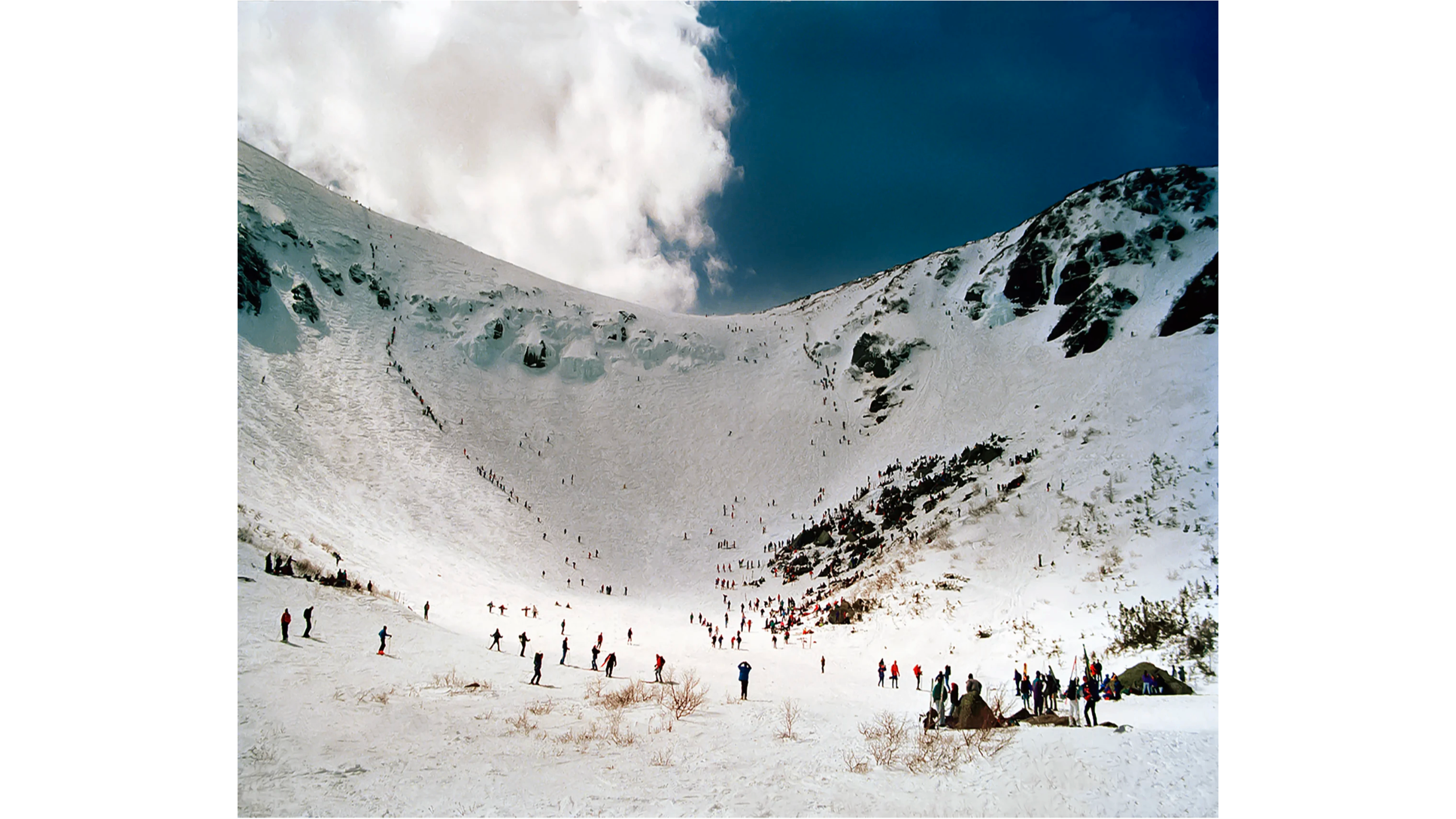
Every spring, thousands of adventurers make the pilgrimage to Mount Washington's eastern flank, drawn by the magnetic pull of America's most legendary skiing and hiking destination. What transforms this seemingly remote New England cirque into such a coveted outdoor mecca involves a perfect storm of geological features, historical significance, and cultural importance that has captivated outdoor enthusiasts for over a century.
Tuckerman Ravine holds the distinguished title as the birthplace of extreme skiing in the United States, with a skiing legacy stretching back to 1914 when John S. Apperson of Schenectady, New York, became the first person to ski the ravine. This pioneering moment sparked a revolution in American skiing culture that continues to this day.
The ravine's reputation was cemented in the 1930s when it hosted the legendary American Inferno Races, the first organized extreme skiing competitions in the country. These races attracted the era's most skilled skiers, including Olympic competitors like Charley Proctor and John Carleton, who were the first to ski the intimidating headwall in 1931. Professional photographers have captured the dramatic beauty and extreme action that continues to define this iconic locations, says Stanley Sadkowski, fine art photographer and and studio owner.
The cultural impact extends beyond mere recreation and creative representation—Tuckerman Ravine became a proving ground where American skiing techniques evolved and where the sport's most daring practitioners pushed boundaries that would influence skiing across the continent.
Tuckerman Ravine is actually a glacial cirque—an amphitheater-like valley carved by ancient glacial erosion. This unique geological formation creates the perfect snow-trapping mechanism that makes the ravine so special for winter sports enthusiasts.
The bowl-shaped terrain acts like a massive snow collector, gathering enormous drifts blown from Mount Washington's summit. The ravine's eastward-sloping orientation and protected walls allow snow to accumulate to depths of 40-50 feet during peak winter conditions. This natural snow-gathering system ensures reliable coverage throughout the season, often lasting well into late spring and even summer months.
The cirque's steep walls also provide protection from wind erosion, preserving snow quality that would otherwise be stripped away on more exposed slopes. This creates the stable, deep snowpack that has made Tuckerman Ravine legendary among serious skiers.
The combination of massive snow accumulation and the ravine's northern exposure creates conditions where snow can persist for months beyond what's typical in New England. The depth of the snowpack—sometimes reaching 50 feet—means that even aggressive spring melting leaves substantial skiing terrain available.
Experts from Sadkowski Photography highlight that, according to historical records in 1926, snow from the previous winter had not completely melted before new snowfall arrived in autumn, a phenomenon that demonstrates the ravine's exceptional snow retention capabilities. This extended season is what allows for the famous spring skiing culture that defines Tuckerman's identity.
The racing heritage of Tuckerman Ravine reads like a who's who of American skiing pioneers, with events that fundamentally shaped the sport's development in the United States.
The first American Inferno race took place on April 16, 1933, running from Mount Washington's summit down Right Gully through the ravine to Pinkham Notch. Hollis Philips claimed victory with a time of 14:41.3, establishing a tradition that would attract the era's most accomplished skiers.
The 1934 race saw young racing sensation Dick Durrance, who had learned to ski in Europe, demolish the previous record with a winning time of 12:35.0. These races demanded exceptional skill and courage from competitors who faced the challenging terrain of the headwall.
The most legendary moment in Tuckerman's racing history occurred during the third American Inferno on April 16, 1939. Austrian ski instructor Toni Matt, working at Mount Cranmore's Eastern Slope Ski School, planned to make three turns over the steepest part of the headwall before straightening out.
Instead, Matt found himself unable to turn after his initial maneuvers, riding the wall straight down at tremendous speed, shooting across the ravine floor and down the Little Headwall to finish in an astounding 6:29.2—nearly cutting the previous record in half. Matt later recalled feeling "lucky to be 19, stupid, and have strong legs."
The 1937 Franklin Edson Memorial Race marked another milestone as the first giant slalom race in the United States. This race also featured early attempts at avalanche control in the Eastern United States. Swiss-born Dartmouth coach Walter Prager and his team worked to manage avalanche hazards on the headwall before the race—safety measures that would influence avalanche management practices in the region.
What sets Tuckerman Ravine apart from typical New England skiing is its alpine-caliber terrain that rivals conditions found in the European Alps or the American West.
The ravine features an array of chutes and gullies with pitches ranging from 40 to 55 degrees, offering big-mountain experiences rarely found on the East Coast. These steep gradients demand advanced skiing skills and provide the kind of technical challenges that serious skiers crave.
Named routes like the Lip, Right Gully, and various chutes each present unique technical demands. The variety of terrain means that skiers can find appropriate challenges regardless of their skill level, from intermediate spring snow runs to expert-only technical descents.
The headwall represents the ultimate test in Eastern skiing—a near-vertical wall of snow that requires precise technique, mental fortitude, and physical skill. The exposure and commitment required to ski the headwall successfully have made it a legendary challenge among serious skiers.
Unlike groomed resort runs, the headwall's natural snow conditions and variable terrain demand adaptability and advanced mountain skiing skills. Success requires reading snow conditions, managing exposure, and executing technical turns in consequence-rich terrain.
The spring skiing season at Tuckerman Ravine represents one of American skiing's most vibrant cultural phenomena, drawing together a diverse community of outdoor enthusiasts united by their passion for adventure.
Spring conditions create the perfect storm of accessibility and snow quality. April and May bring stable weather, consolidated snowpack, and extended daylight hours that make Tuckerman Ravine skiing at its finest. During peak weekends, thousands of hikers and skiers converge on the trail, creating a festival-like atmosphere.
The spring snowpack offers ideal skiing conditions—corn snow that provides excellent grip and control while maintaining the speed and excitement that defines Tuckerman skiing. These conditions, combined with warmer temperatures and blue skies, create an irresistible combination for outdoor enthusiasts.
Located 2.4 miles up the Tuckerman Ravine Trail, the Hermit Lake Shelters serve as the essential base camp for the ravine experience. The facility provides pit toilets and majestic views of the surrounding peaks, making it an ideal staging area for adventures. Water is available from a hand pump, though winter visitors should treat, filter, or boil water from the Cutler River before use.
The shelter area becomes a social hub during peak season. Skiers and hikers gather to share stories, plan routes, and build the community connections that define the Tuckerman experience.
For serious East Coast skiers, successfully skiing Tuckerman Ravine represents a rite of passage—a milestone that demonstrates technical skill, physical fitness, and mental commitment. The challenge goes beyond mere skiing ability, requiring mountaineering skills, weather awareness, and risk management.
This cultural significance creates a strong sense of community among those who have "earned their turns" in the ravine. The shared experience of hiking uphill with skis, reading snow conditions, and successfully descending the steep terrain creates bonds that extend far beyond individual ski days.
Mount Washington's reputation as the "Home of the World's Worst Weather" adds a serious dimension to any Tuckerman Ravine adventure, with conditions that can rival those found on Mount Everest.
The Mount Washington Observatory, founded in 1932, recorded a whirlwind speed record of 231 miles per hour on April 12, 1934. These extreme conditions aren't historical anomalies—they represent the mountain's normal weather patterns that can change from benign to life-threatening within minutes.
Temperature swings, sudden storms, and hurricane-force winds create conditions that demand respect and preparation. The mountain's weather extremes have claimed numerous lives over the years, making proper planning and equipment necessary for any serious attempt on the ravine.
The Mount Washington Avalanche Center provides critical safety services, issuing daily avalanche forecasts and maintaining 24/7 readiness for search and rescue operations. Since 1950, avalanche forecasting has been an official part of ravine management, with trained snow rangers providing vital safety information.
Modern safety protocols emphasize education and personal responsibility rather than area closures. The Mount Washington Volunteer Ski Patrol continues to provide emergency services throughout the spring skiing season. Proper avalanche education, appropriate gear including avalanche transceivers, and conservative decision-making are necessary for safe ravine travel.
The enduring popularity of Tuckerman Ravine stems from its unique combination of accessible extreme terrain, rich cultural heritage, and the profound sense of accomplishment that comes from succeeding in one of America's most demanding outdoor environments. Whether approaching as a hiker seeking to test personal limits or a skier pursuing the ultimate East Coast challenge, Tuckerman Ravine offers experiences that simply cannot be found elsewhere in New England.
The ravine's appeal transcends individual activities: it has been represented in the fine art world as a symbol of American outdoor heritage, a test of personal capability, and membership in a community of serious outdoor enthusiasts who understand that the most rewarding adventures require genuine commitment and skill.


