Science and spirituality have long been treated as opposites — but that divide is narrowing. As physics pushes into stranger territory and questions about consciousness remain unsolved, the two are finding more common ground than most people expect.
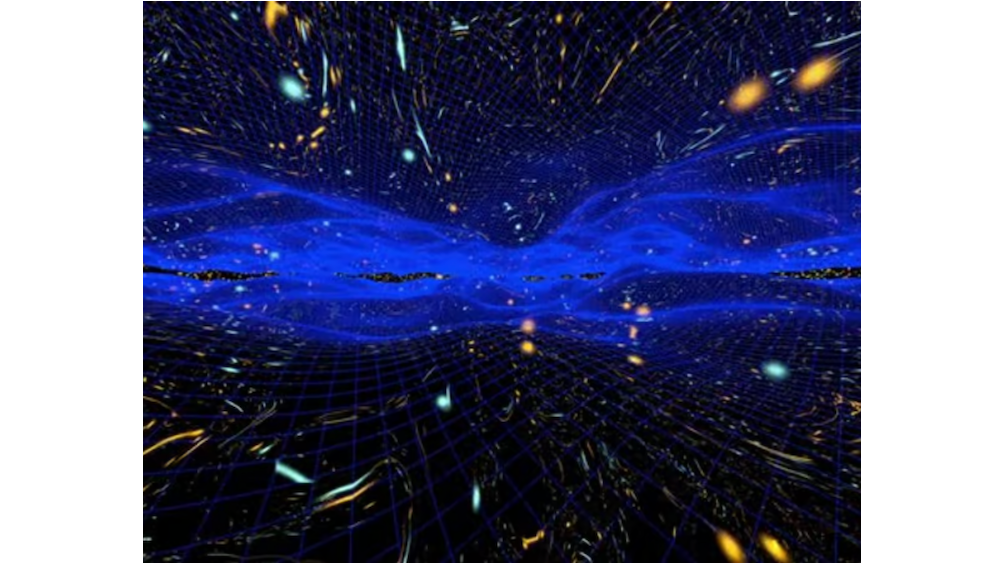
For much of the last century, science and spirituality were often portrayed as opposing ways of understanding the world. Science was associated with evidence, experimentation, and measurable facts, while spirituality was viewed as belonging to the realm of faith, philosophy, and personal belief. Today, however, that rigid distinction is becoming less clear.
Scientists continue to make remarkable discoveries about the universe, from quantum behavior at the smallest scales to the evolution of galaxies across billions of light-years. At the same time, these discoveries frequently raise questions that extend beyond equations alone. What is consciousness? Why does the universe exist in a form capable of supporting life? How much do we truly understand about reality?
While science seeks answers through observation and testing, spirituality often explores questions of purpose, identity, and meaning. Increasingly, many researchers, educators, and philosophers see these approaches not as competitors but as different ways of exploring humanity's place within an extraordinarily complex universe.
Few areas of science have reshaped our understanding of reality more dramatically than modern physics. Quantum mechanics, relativity, and particle physics have revealed a universe that behaves in ways that often defy everyday intuition.
Phenomena such as quantum superposition, wave-particle duality, and quantum entanglement have transformed scientific understanding over the past century. While these concepts are supported by extensive experimental evidence, they also remind us that reality can be far stranger than human experience might suggest.
Importantly, physicists caution against using quantum theory to justify unsupported spiritual claims. Nevertheless, the discoveries themselves demonstrate that nature frequently operates beyond what previous generations considered possible. That realization encourages intellectual humility and continued exploration rather than certainty.
Scientific progress often begins with curiosity. Every breakthrough has required researchers to question accepted ideas and investigate possibilities that once seemed unlikely. Some questions, however, extend beyond the reach of current scientific methods. Consciousness remains one of the most challenging subjects in neuroscience and philosophy. Despite enormous advances in brain imaging and cognitive science, researchers continue to debate how subjective experience emerges and whether it can ever be fully explained through biology alone.
Similarly, questions surrounding purpose, morality, and meaning are not easily answered through laboratory experiments. These topics have traditionally belonged to philosophy and religion, yet they remain deeply relevant in a world increasingly shaped by scientific and technological progress.
Rather than providing identical answers, science and spirituality often begin with different questions. Science asks how phenomena occur, seeking evidence that can be observed, measured, and independently verified. Spiritual traditions frequently ask why life matters, how individuals should live, and what gives human existence meaning.
Many universities now recognize the value of examining both perspectives together. Courses exploring the relationship between physics and faith encourage students to think critically about evidence while appreciating the philosophical implications of scientific discovery. Rather than weakening scientific inquiry, these conversations often deepen it by acknowledging the broader human context in which discoveries take place.
One quality shared by both scientific inquiry and spiritual reflection is curiosity. Neither discipline advances by assuming all the answers are already known.
History offers numerous examples of scientists whose personal beliefs inspired, rather than hindered, their pursuit of knowledge. Albert Einstein frequently spoke of experiencing awe and wonder when contemplating the universe, describing these feelings as central to scientific discovery. Although his views differed from traditional religious beliefs, he believed that profound curiosity lay at the heart of both science and philosophy. This perspective continues to resonate today as researchers explore increasingly complex questions about space, time, consciousness, and the origins of existence.
As public interest in these subjects grows, authors, educators, and communicators are finding new ways to make complex scientific ideas more approachable without sacrificing accuracy.
One example is retired board-certified psychiatrist Sam Toney, whose work sits at the intersection of modern physics, philosophy, and storytelling. Rather than drawing hard lines between disciplines, his writing invites readers to think critically about scientific concepts while staying open to the larger questions those discoveries raise.
Presenting these themes through accessible narratives allows wider audiences to engage with challenging ideas that might otherwise seem confined to academic journals or university lecture halls.
Advances in science continue to reshape our understanding of the universe, yet many of humanity's most enduring questions remain open. Rather than diminishing the importance of spirituality or philosophy, scientific progress often provides fresh perspectives from which to examine them.
As knowledge expands, conversations about science and spirituality are likely to become even more nuanced. Both disciplines encourage curiosity, thoughtful questioning, and a willingness to explore the unknown—qualities that have driven human progress throughout history. Whether approached through scientific research, philosophical reflection, or creative storytelling, the search for understanding remains one of humanity's most compelling and universal pursuits.


