Europe’s worsening heatwave has renewed attention on greenhouse gas emissions linked to wasted food. Ever Wonder Adventure highlights food waste reduction, anaerobic digestion, and circular economy solutions as practical climate actions while London and Europe confront rising temperatures, infrastructure stress, and public health risks.
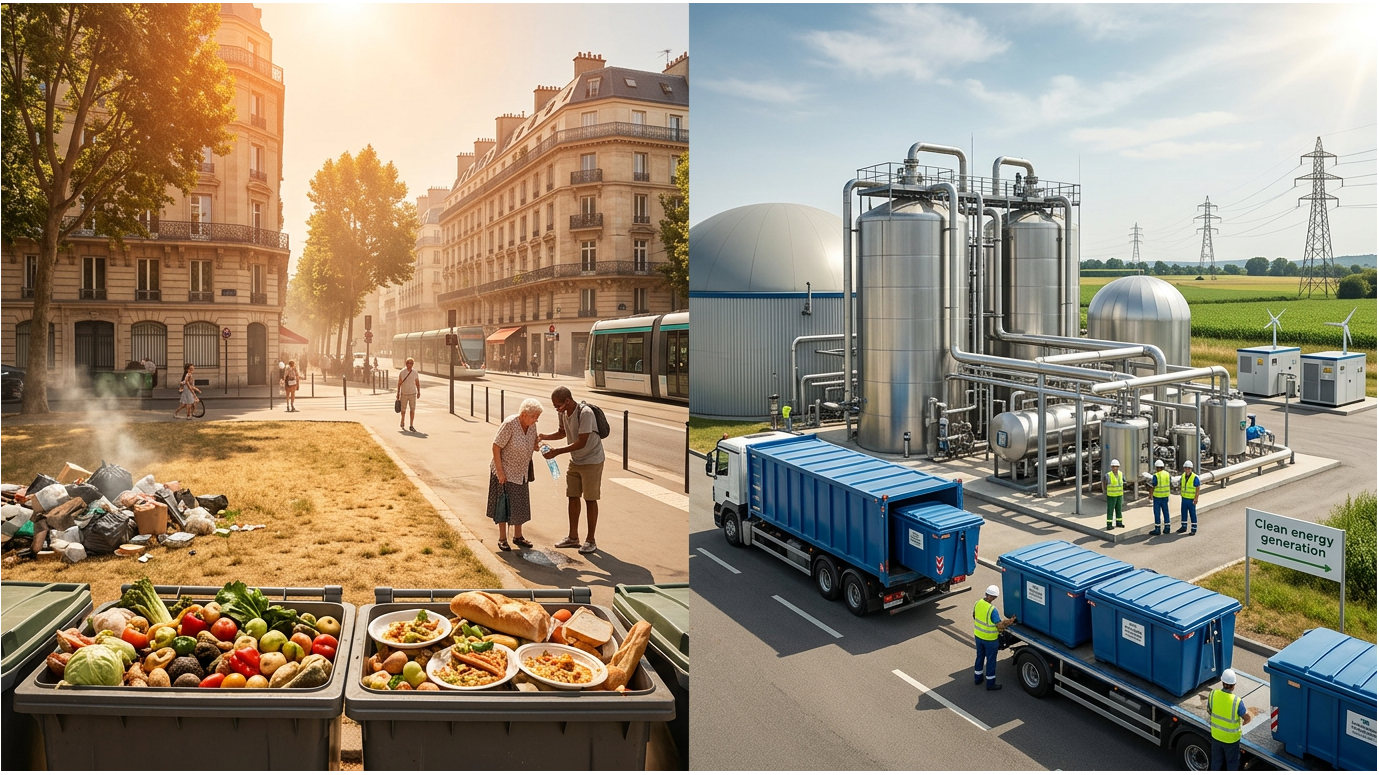
Europe’s escalating heatwave has placed renewed scrutiny on one of the world’s most overlooked climate drivers: food waste. As London faces red heat warnings, transport disruption, health risks, and pressure on public infrastructure, climate advocates are drawing attention to the role that wasted food plays in greenhouse gas emissions and global warming.
Food production already accounts for a major share of global emissions. When edible food is discarded, the environmental cost does not end at the bin. Wasted food sent to landfill releases methane, a greenhouse gas far more powerful than carbon dioxide over the short term. The result is a preventable climate burden that contributes to hotter cities, longer heatwaves, and rising adaptation costs.
The current European heatwave has been intensified by climate change, with scientific assessments indicating that global warming has added several degrees to extreme temperature events. This makes the connection between food waste, greenhouse gas emissions, and dangerous heat increasingly urgent. London’s experience shows that climate risk is no longer remote. Heat stress, closed schools, strained hospitals, power grid pressure, and productivity losses are becoming part of the new climate reality.
Ever Wonder Adventure is calling for greater public awareness of food waste reduction as a practical climate solution. Its environmental campaign at https://everwonderadventure.com/stop-food-waste explains how wasted food contributes to climate instability and how consumers, businesses, and communities can reduce avoidable losses through better planning, storage, redistribution, and recovery.
Food waste reduction also supports food security. When edible food is lost or discarded, water, land, labour, energy, transport, and packaging are wasted with it. These resources could otherwise support communities facing hunger, rising food prices, and supply chain disruption. Reducing waste, therefore, carries environmental, economic, and social value.
A growing solution is anaerobic digestion, a process that converts organic food waste into biogas and renewable electricity. Instead of allowing food waste to decompose in landfills and emit methane, anaerobic transformation captures energy from organic matter. This supports renewable power generation, reduces pressure on landfills, and creates nutrient-rich digestate that can support agriculture.
This approach helps build a circular economy, where waste becomes a resource and climate pollution is reduced through smarter systems. Food waste can shift from a climate liability to a contributor to a clean energy transition. For cities such as London, where extreme heat threatens health and infrastructure, circular food waste management can form part of a wider climate resilience strategy.
Ever Wonder Adventure’s broader environmental work, supported through https://everewonderadventure.com/support-us, promotes public action around conservation, sustainable consumption, and climate awareness. The initiative connects everyday choices with global environmental outcomes.
As Europe warms faster than other inhabited regions, the urgency is clear. Cutting food waste, recovering edible surplus, and transforming unavoidable organic waste into electricity can reduce emissions while strengthening local resilience. The heatwave has become a warning signal. Food waste reduction is now a climate action priority.


