If lawn pests keep coming back after treatment, the issue may not be the product used. It is often the conditions on the property. Irrigation patterns, drainage, and plant stress can create an environment where pests and disease pressure return fast.
Most homeowners experience the same frustrating cycle. Treat a pest problem. See temporary improvement. Then watch it return weeks later.
In many cases, that loop happens because the treatment addressed the pest, but not the conditions that made the lawn attractive to pests in the first place.
A lot of property care happens in silos.
A pest control visit focuses on the pest.
A lawn service focuses on mowing and appearance.
An irrigation check focuses on broken heads or controller settings.
Each provider may do great work. But when nobody is looking across systems, the root cause can stay untouched.
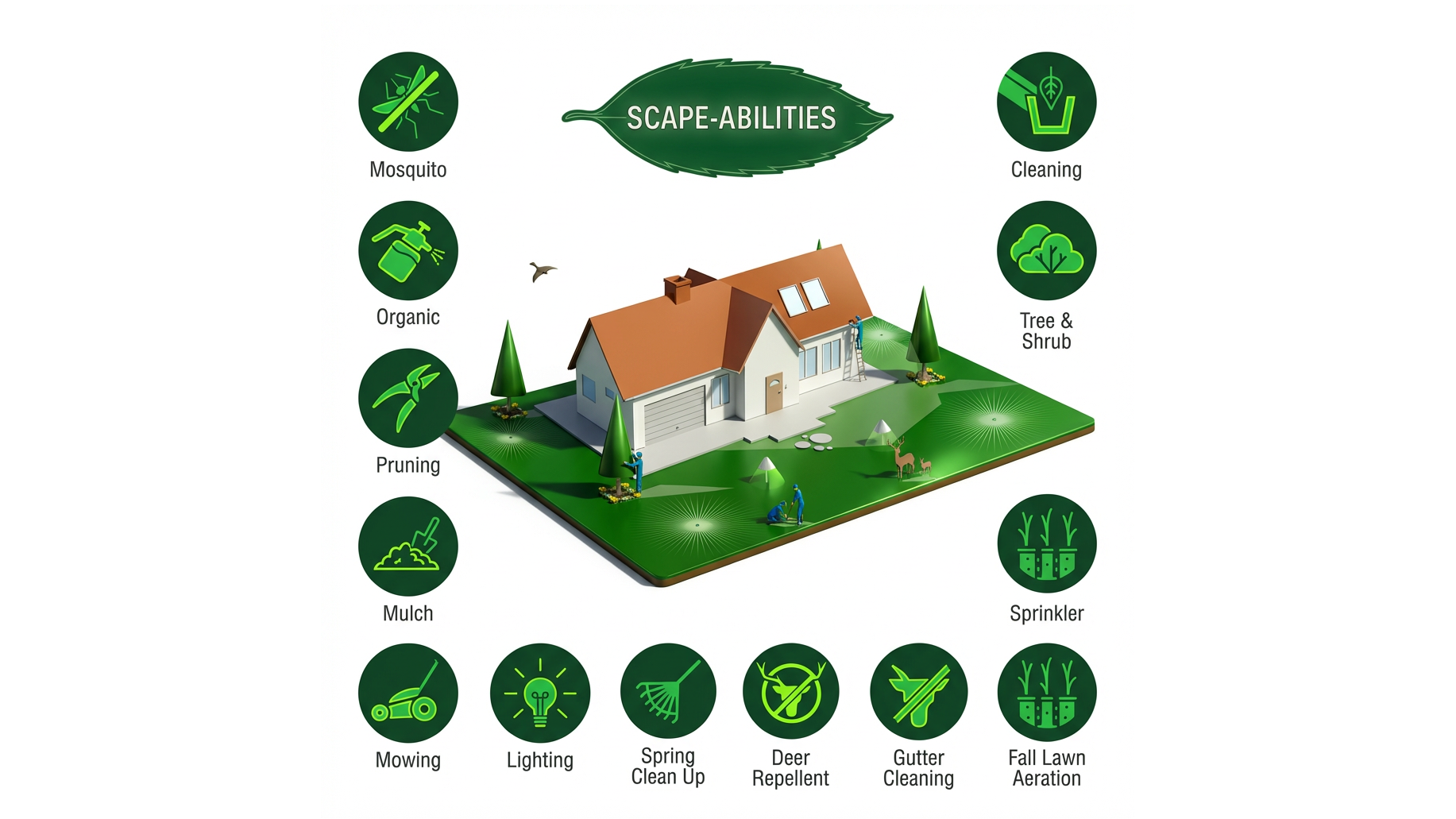
Scape-Abilities takes a coordinated approach to property services. The goal is to look at how the systems interact, then fix the conditions that keep triggering the same problems. This fragmented approach creates a revolving door of treatments.
Irrigation can support a healthy lawn. It can also create the wrong conditions when coverage, timing, or drainage is off.
Overwatering, poor drainage, or low spots that hold water can create persistently damp zones. Those zones can:
Too much moisture can also weaken turf roots over time. A weaker lawn is less resilient. That makes damage show up faster and recovery take longer.
Underwatering and inconsistent watering can stress turf. Stressed lawns thin out. They lose density. They heat up faster.
That stress does not automatically cause pests. But it can make the lawn less able to tolerate pressure from insects, disease, and weather.
A single misaligned sprinkler head can create a wet strip next to a dry strip.
Those micro-zones matter. They can drive uneven growth, increase disease pressure in one area, and create conditions that keep certain problems repeating in the same spots.
New Jersey summers can be humid, and weather can swing quickly. That combination makes diagnosis important.
Brown Patch can create circular brown areas that look similar to other issues.
If the real driver is excess moisture and humidity, adding more water can make the problem worse.
A better approach is to check conditions first. Soil moisture. drainage. irrigation timing. Then decide whether the lawn needs a treatment, a watering adjustment, or both.
Small brown patches can get blamed on drought stress, fertilizer burn, or “just summer.” Sometimes the real issue is inconsistent watering, poor coverage, or a drainage problem that keeps turf from staying healthy.
Professional cross-system diagnosis examines the relationships between different property elements to identify root causes rather than just visible symptoms. This thorough approach reveals hidden connections that single-service providers typically miss. A cross-system review is built to answer one question. What conditions are allowing this problem to repeat.
This starts with observing drainage patterns and checking moisture across the property.
Soil testing can be used when needed to clarify what is happening below the surface. That can help confirm whether the lawn is dealing with compaction, nutrient imbalance, or other factors that affect turf health.
Plant stress shows up in patterns.
Yellowing, thinning, or uneven growth can point to coverage issues, drainage problems, or root stress.
The goal is not to guess. It is to connect the symptom to the condition.
A thorough irrigation review looks beyond broken heads.
Coverage patterns, timing cycles, and controller settings all influence moisture levels. Small programming issues can create constantly damp soil or repeated drought stress.
Integrated Pest Management (IPM) is a practical framework.
It focuses on prevention first. Then targeted intervention when needed.
That might mean:
Recurring pest issues often improve when the underlying conditions improve.
When irrigation timing, drainage, and turf health are aligned, many lawns become harder for problems to take hold in the first place.
For North Jersey homeowners who are tired of repeat treatments and unclear answers, Scape-Abilities provides coordinated property services designed to keep the whole system working together.


