Permit and licensing departments are modernizing payment processing to improve application workflows, financial visibility, and service delivery. Integrated payment infrastructure helps government agencies connect applications, approvals, and payments while supporting compliance, reconciliation, and reporting across permit and licensing programs.
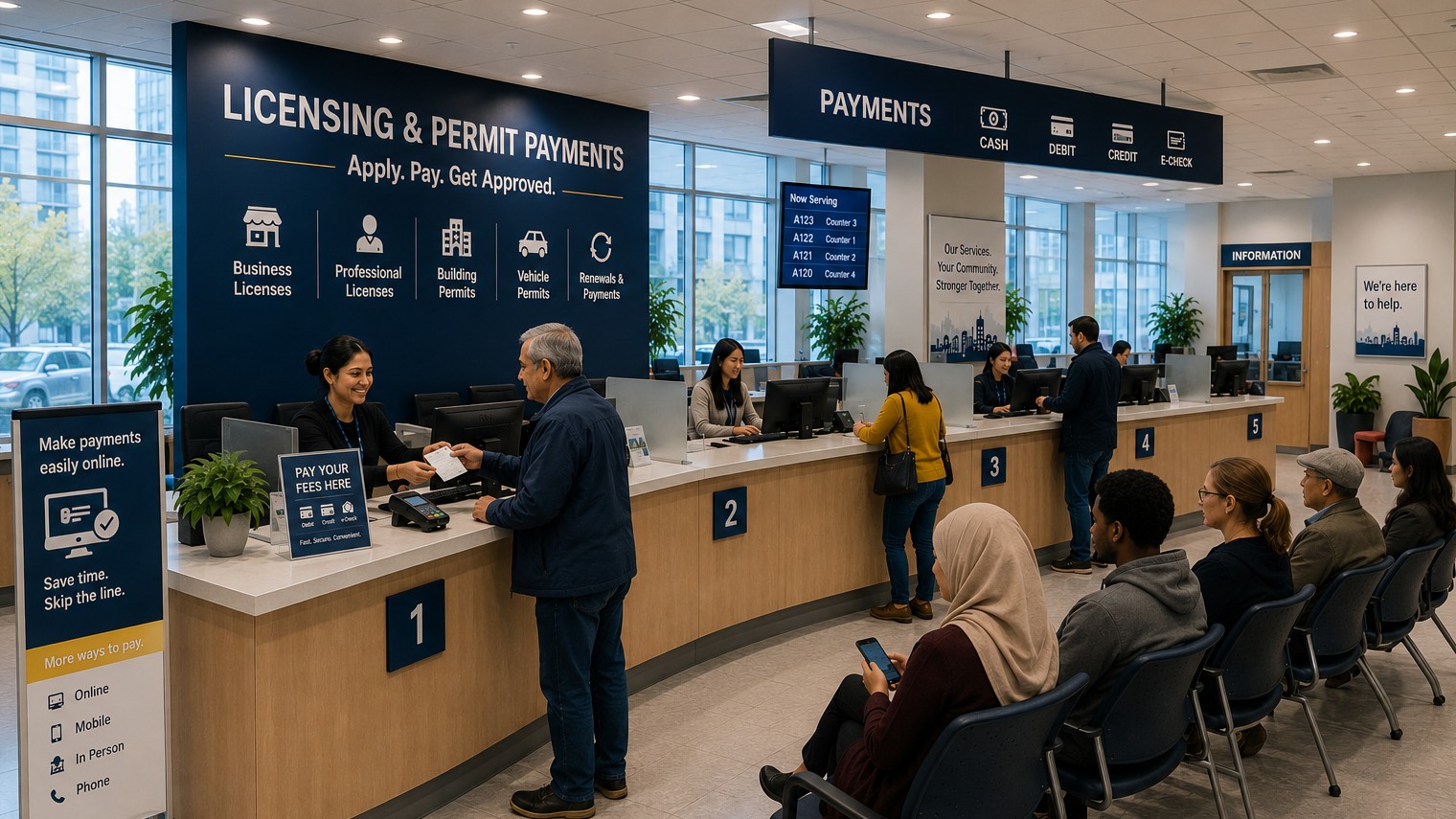
Government agencies continue expanding digital services across permitting and licensing programs, creating new opportunities to improve operational efficiency, payment visibility, and applicant experience.
From building permits and business licenses to contractor registrations, environmental approvals, and event permits, agencies process thousands of applications and associated payments each year. As these services evolve, payment processing is becoming a critical part of delivering faster, more connected workflows.
Modern permit and licensing payment solutions help agencies connect payment processing directly with application management, creating a more seamless experience for both applicants and staff.
Permit and licensing programs involve multiple stages, including application submission, fee assessment, compliance review, approval, and record management. When payment processing operates within these workflows, agencies gain better visibility into application status and financial activity.
Integrated payment infrastructure allows permit fee payments and licensing fee payments to post directly to application records, reducing administrative effort and improving processing consistency.
This approach supports a wide range of government services, including building permits, business licenses, contractor licensing, environmental permits, parking permits, and event authorizations.
Building permit programs often involve several review and validation stages before approvals are issued. Payment processing plays an important role in ensuring applications move efficiently through each phase.
As outlined in how building permit payment works in government, payment workflows typically include application review, fee calculation, compliance verification, authorization, posting, and reconciliation. When these stages are connected through a unified platform, agencies can improve visibility and reduce administrative follow-up.
Business licensing programs require accurate fee collection, reporting, and oversight. Agencies must maintain clear audit trails while ensuring licensing payments are processed consistently across departments and service channels.
Strong controls around payment monitoring, reconciliation, and reporting help support accountability and financial transparency. These practices are increasingly important as licensing programs expand and transaction volumes continue to grow.
Payment modernization extends beyond individual permit and licensing programs. Agencies increasingly seek greater visibility into how payments move across departments, financial systems, and reporting environments.
Modern payment infrastructure supports real-time transaction visibility, automated reconciliation, centralized reporting, and stronger coordination between operational and finance teams.
As governments continue investing in digital transformation initiatives, permit and licensing departments are adopting technology that supports both operational efficiency and financial accountability.
Integrated payment platforms help agencies simplify application workflows, improve reporting accuracy, strengthen compliance controls, and provide applicants with more convenient payment options across online, mobile, kiosk, contact centre, and in-office channels.
Solutions such as Access2Pay's permit and licensing payment platform help agencies align payment processing with permitting and licensing workflows, supporting more efficient service delivery while maintaining the controls required in public sector environments.
Access2Pay provides payment infrastructure for government agencies, municipalities, and public sector organizations. The platform supports permit and licensing payments, multi-channel payment acceptance, automated reconciliation, secure integrations, and centralized reporting designed for government operations.


