Texas oil field truck drivers typically work 12-14-hour shifts, six days a week, hauling frac sand across the Permian Basin under strict FMCSA hours-of-service rules.
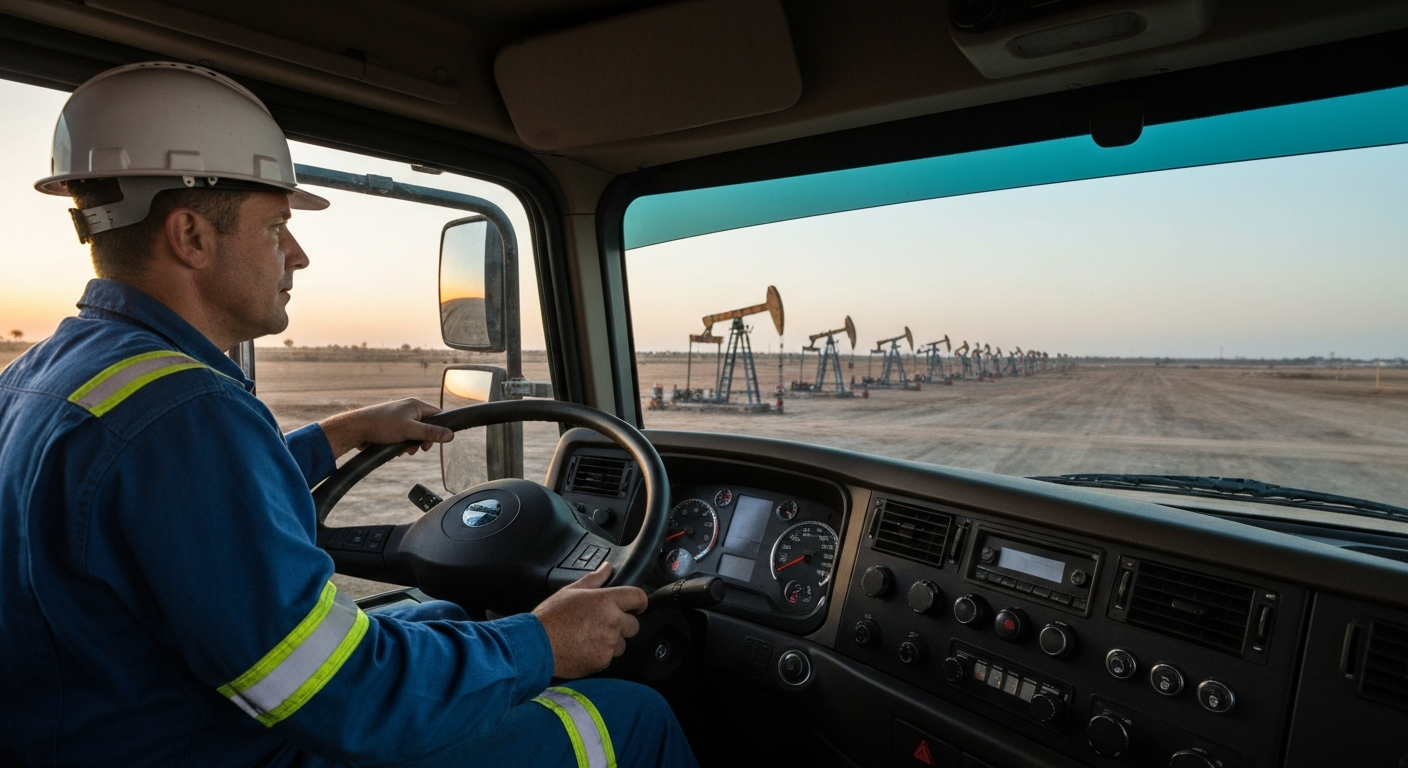
The reality of oil field trucking in Texas centers on demanding 12-14-hour daily shifts that test both driver endurance and equipment reliability. For owner-operators willing to navigate the complex regulatory framework and invest in proper certifications, however, frac sand hauling offers substantial earning potential in commercial trucking.
A typical day for Texas oil field truck drivers begins before dawn and stretches well into the evening. Most drivers report working 12-16 hour shifts, with experienced frac sand haulers confirming six-day work weeks featuring alternating 12-hour day and night shifts. These extended hours reflect the continuous nature of drilling operations, where frac crews costing operators $100,000-$300,000 per day during standby cannot afford delays in sand delivery.
The daily routine involves pre-trip inspections, multiple loading cycles at sand mines near Kermit and Monahans, navigating rough county roads to wellsites, and managing frequent detention periods while specialized equipment operates.
During active completion campaigns, drivers commonly work within FMCSA hours-of-service limits while managing rotating schedules that accommodate 24/7 drilling operations. The physical demands extend beyond driving hours to include equipment maintenance, route planning around road restrictions, and coordination with dispatch teams managing multiple wellsite deliveries simultaneously.
Federal Motor Carrier Safety Administration regulations limit commercial drivers to 11 hours of driving within a 14-hour on-duty window, following 10 consecutive hours off duty. However, oilfield operations qualify for specific exemptions that accommodate the unique demands of energy sector logistics. A key FMCSA oilfield exemption allows drivers transporting exclusively for oil and gas operations to take a 24-hour restart instead of the standard 34 hours to reset their weekly driving limit.
Drivers must log a mandatory 30-minute off-duty break when driving for more than eight hours, with Electronic Logging Devices (ELDs) required for most operations. The 24-hour restart provision is particularly valuable during high-activity periods when rapid turnaround between shifts determines weekly earning potential.
Texas intrastate Hours of Service regulations apply to loads originating and delivering within state boundaries, offering more flexibility than federal rules. These regulations permit drivers to operate 12 hours within a 15-hour on-duty period after an 8-hour rest period. Texas intrastate operations benefit from additional flexibility in scheduling compared to interstate requirements.
The distinction between interstate and intrastate operations significantly impacts daily scheduling flexibility. Many Permian Basin routes qualify as intrastate, enabling owner-operators to maximize productive hours while maintaining regulatory compliance.
Oilfield drivers may log waiting time at natural gas or oil well sites as off-duty, provided they are completely relieved of all responsibilities during the wait. This accommodation addresses the reality of prolonged waiting periods while specialized equipment operates, allowing drivers to preserve their driving hours for productive road time.
Proper logging of detention time is vital for both regulatory compliance and compensation claims. Many operators fail to capture billable detention hours due to unclear logging practices, directly impacting weekly earnings potential.
Industry estimates suggest Texas oil field owner-operators can gross over $200,000 annually, with experienced Permian Basin drivers achieving substantial weekly revenue during peak periods. However, realistic net take-home after fuel, maintenance, insurance, and carrier deductions typically ranges from $1,000-$3,000 weekly. The significant gap between gross and net reflects the substantial operating costs inherent in owner-operator businesses.
Weekly earnings fluctuate based on load volume, with top performers completing 18-22 loads per week during active drilling campaigns. Fixed costs, including truck payments, insurance, maintenance reserves, and regulatory compliance fees, consume substantial portions of gross revenue before fuel expenses. Fuel costs vary significantly depending on mileage and current diesel prices.
Pneumatic frac sand hauling commands a $3-$7 per ton premium over standard hopper bottom operations due to specialized equipment requirements and training demands. This premium reflects the technical complexity of pneumatic systems, stricter maintenance schedules, and additional certifications required for tanker endorsements.
Equipment choice directly impacts earning potential, with pneumatic operators typically achieving higher per-ton rates over hopper bottom work. However, pneumatic operations require higher upfront investment, specialized maintenance capabilities, and enhanced driver training, factors that must be weighed against increased revenue potential.
Pneumatic frac sand operations require a Class A CDL with Tanker (N) endorsement, as pneumatic trailers fall under federal tanker definitions regardless of commodity. While HazMat (H) endorsements are not mandatory for dry frac sand specifically, they significantly expand earning opportunities by qualifying drivers for specialized chemical and fluid hauling that commands premium rates.
The tanker endorsement involves additional testing covering load distribution, surge effects, and specialized braking techniques essential for safe pneumatic operations. This endorsement represents a barrier to entry that helps maintain wage premiums for qualified operators.
Universal wellsite access requires PEC/Safeland certification, costing approximately $200, covering hazard communication, personal protective equipment protocols, confined space awareness, and emergency response procedures. The 8-10 hour training program must be completed at certified centers, with periodic renewal required to maintain access credentials.
H2S training and respiratory fit testing are mandatory in regions where hydrogen sulfide is present. H2S training typically involves a 4-hour course covering detection, exposure protocols, and emergency response. Respiratory fit testing ensures proper mask seal, with periodic retesting required for continued certification. Costs for respiratory protection and fit testing range from $75-$150.
First-year owner-operators face substantial startup costs, including ELD devices, drug screening, motor vehicle records, Pre-employment Screening Program reports, FMCSA Clearinghouse registration, safety certifications, and annual permits. These costs, when amortized across 52 weeks, add to operating baselines.
The cash flow gap requires substantial reserves to cover initial operating expenses before the first settlement checks arrive. This upfront capital requirement represents a significant barrier for drivers transitioning from company positions to owner-operator status.
The Permian Basin currently operates hundreds of active rigs, generating consistent demand for specialized hauling services. This activity level produces substantial weekly sand demand concentrated across the Midland and Delaware sub-basins.
Each well completion is estimated to require roughly 18,000 tons of frac sand, generating close to 1,000 truck movements per completion. This volume creates predictable work cycles for qualified owner-operators positioned in regional markets with proper equipment and certifications.
Industry estimates project tens of millions of tons of annual frac sand consumption in the Permian Basin, driven by continued drilling activity and enhanced completion techniques. In-basin sand sourcing from West Texas mines near Kermit and Monahans has largely replaced long-haul Wisconsin sand, compressing delivery distances and creating high-turn regional lanes ideal for owner-operators.
Market fundamentals remain strong despite commodity price volatility, with the strategic importance of Permian production maintaining consistent demand floors. The shift toward local sand sourcing reduces transportation costs while creating more predictable daily schedules for regional operators.
Carriers operating 100% owner-operator fleets typically use rotary allocation systems to ensure fair load distribution — an arrangement that eliminates the load-steering issues that can occur when company trucks and independent operators share the same dispatch pool.
For drivers evaluating their options, the structure of a carrier matters as much as the rate per ton. Specialized divisions, consistent lane assignments, and transparent fuel programs are among the factors that shape long-term earnings in oilfield trucking.


