Manufacturing audits in 2026 now demand continuous compliance documentation, not last-minute evidence gathering. Digital quality control apps are slashing audit preparation from weeks to days while catching defects before they become compliance violations—but the transformation requires specific features most manufacturers overlook.
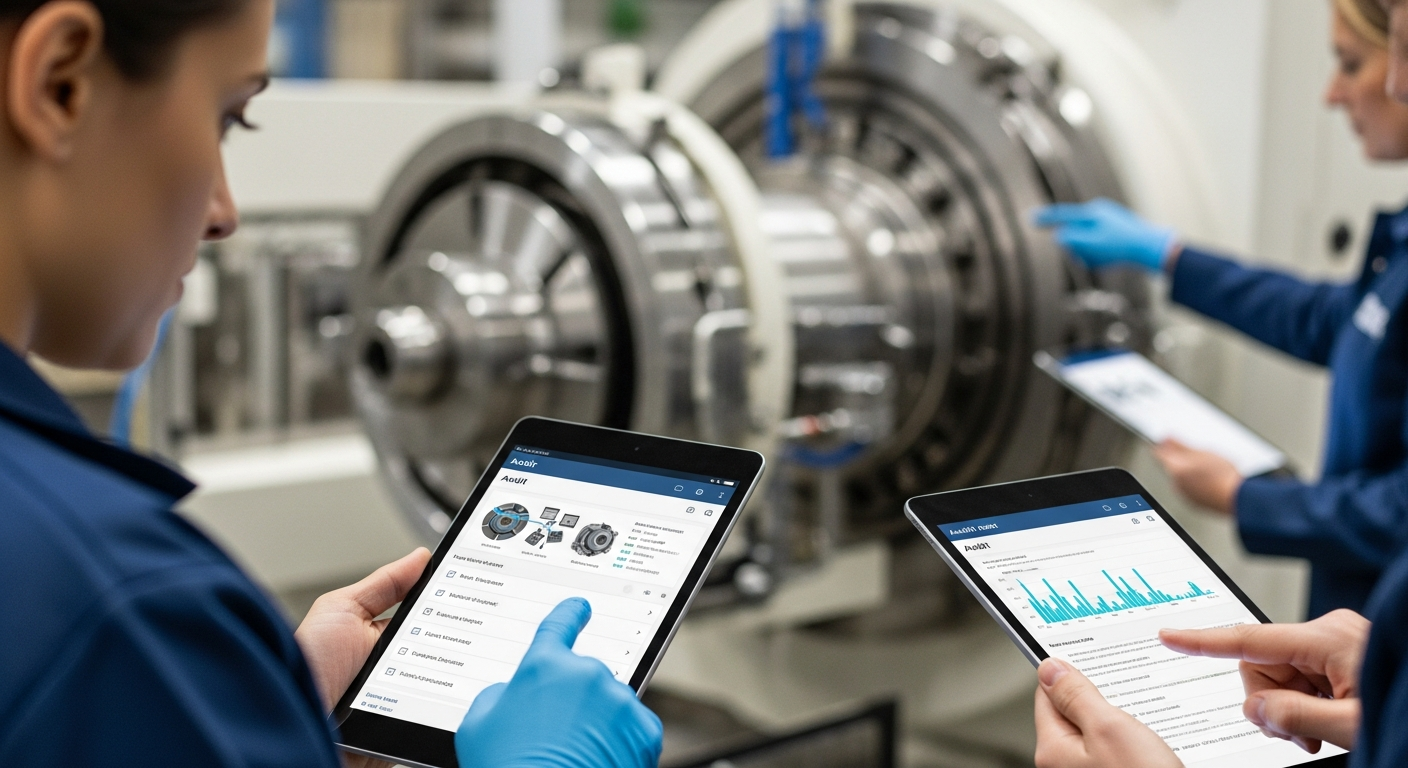
Manufacturing audits are detailed examinations of data integrity and process consistency. In the current industrial climate, quality control managers face mounting pressure to demonstrate "living" compliance. You can no longer afford to scramble for evidence when an auditor arrives; the data must be born digital.
Traditional paper-based documentation systems create dangerous gaps in traceability. A single missing signature or an unreadable timestamp can expose a manufacturer to significant compliance risks and costly fines. Digital quality control data collection apps transform audit preparation from a reactive, high-stress scramble into a proactive, continuous process. By automatically capturing critical quality metrics and maintaining immutable documentation trails, these systems provide real-time visibility into compliance status across every production line.
The most successful manufacturers "digitize" the paper trail in order to refine and restructure compliance and production workflow. The goal is a robust quality control system that meets regulatory requirements while improving operational efficiency.
Manufacturing quality control has undergone a dramatic transformation over the past decade. The era of the "clipboard and pencil" is effectively over for top-tier manufacturers. Paper-based inspection forms and manual data entry were once the standard, but they created systemic opportunities for human error, delayed reporting, and incomplete documentation.
When an inspector records a measurement on paper, that data is functionally "dark" until it is manually transcribed into a spreadsheet—a process that can take hours or even days. In the interim, a quality deviation could lead to hours of scrap production. Modern digital systems eliminate this lag. Data captured on the shop floor is instantly available in the cloud, allowing for immediate intervention and root-cause analysis.
Industry 4.0 has revolutionized how we approach data collection through connected devices, IoT sensors, and intelligent analytics. In 2026, the adoption of "Smart Factory" principles has reached a tipping point, with over 80% of manufacturers integrating some form of smart technology into their production lines.
Advanced sensor technologies now monitor pressure, temperature, vibration, and chemical properties with millisecond precision. These sensors connect directly to digital quality management systems, creating a continuous data stream. This "sensor fusion" eliminates manual transcription errors and provides a level of granularity that paper systems could never achieve. For example, if a molding machine fluctuates outside of a specific temperature range, the system can automatically trigger a quality hold.
Machine vision systems complement sensor data by providing automated visual inspections at speeds impossible for human operators. High-resolution cameras capture defects that are invisible to the naked eye, while AI-powered analysis categorizes and tracks these issues automatically. This creates a detailed, searchable record that satisfies the most rigorous audit requirements.
Quality 4.0 represents the evolution from reactive quality control—finding a mistake after it happened—to anticipatory quality management. Traditional systems focused on detecting defects at the end of the line, which inevitably led to rework and compliance friction.
Modern systems use predictive analytics to identify potential quality problems before they occur. By analyzing historical data and real-time sensor inputs, these apps can alert managers when a process is "drifting" toward a non-conformance. This shift fundamentally changes audit dynamics. Instead of defending past mistakes, you can demonstrate to auditors that your system actively prevents them.
Digital data collection apps address three primary audit challenges: documentation completeness, process consistency, and regulatory compliance.
Data collection systems ensure compliance by tracking every step of the production process. This includes "cradle-to-grave" traceability, from raw material arrival to finished goods shipping. When an auditor asks for the history of a specific batch, a digital system can pull that information in seconds, rather than requiring a search through physical filing cabinets.
Early defect detection creates a documented record of quality interventions. This proves to auditors that your quality management system is functional and proactive. These intervention records become valuable audit evidence, showing that the facility maintains active control over its processes.
Every quality check and corrective action generates a timestamped digital record. This level of completeness eliminates the weeks of evidence gathering that traditionally preceded an audit. With a platform like Alpha TransForm, this documentation is stored securely and can be exported into audit-ready reports instantly.
The "IT bottleneck" is one of the biggest hurdles to digital transformation. Manufacturers are increasingly turning to no-code platforms to bypass long development queues.
By 2026, more than 75% of new enterprise applications include components built with these platforms. For manufacturers, the speed-to-value of no-code is often the deciding factor in maintaining a competitive edge.
Not all apps are created equal. To survive a demanding factory environment, your quality control solution must include:
To help your operations teams prioritize digital transformation, quality management experts recommend starting with the highest-impact workflows that typically cause the most friction during regulatory reviews. By focusing on these core areas first, manufacturers can demonstrate immediate ROI, eliminate the most common sources of human error, and ensure that "living" compliance documentation is always available for an auditor's inspection.
Based on industry best practices and documented performance metrics, here are the top manufacturing processes to digitize first:
Beyond the headline savings, digital quality control improves "first-pass yield" rates and reduces scrap. Industry benchmarks show that the cost of quality can range between 5-15% of revenue for manufacturers without mature systems. By automating data collection, you can capture that lost margin while simultaneously lowering your compliance risk.
The transition to digital quality control is no longer a luxury—it is a requirement for survival in a highly regulated, data-driven market. By combining the flexibility of custom development with the speed of no-code platforms, manufacturers can achieve a state of continuous audit readiness.
If you are ready to modernize your shop floor, you can find the specific tools needed to digitize your quality management solution here. Manufacturers, auditors, and quality controllers have proven that by starting small and scaling fast, any production plant can eliminate paper and deliver real business value today.


