Most dog owners think their aggressive pet is trying to be “alpha,” but that dangerous misconception could be making your dog’s behavior worse—or even eliminating the warning signs before they bite. What’s really driving that stranger-directed aggression, and why do most training attempts fail?
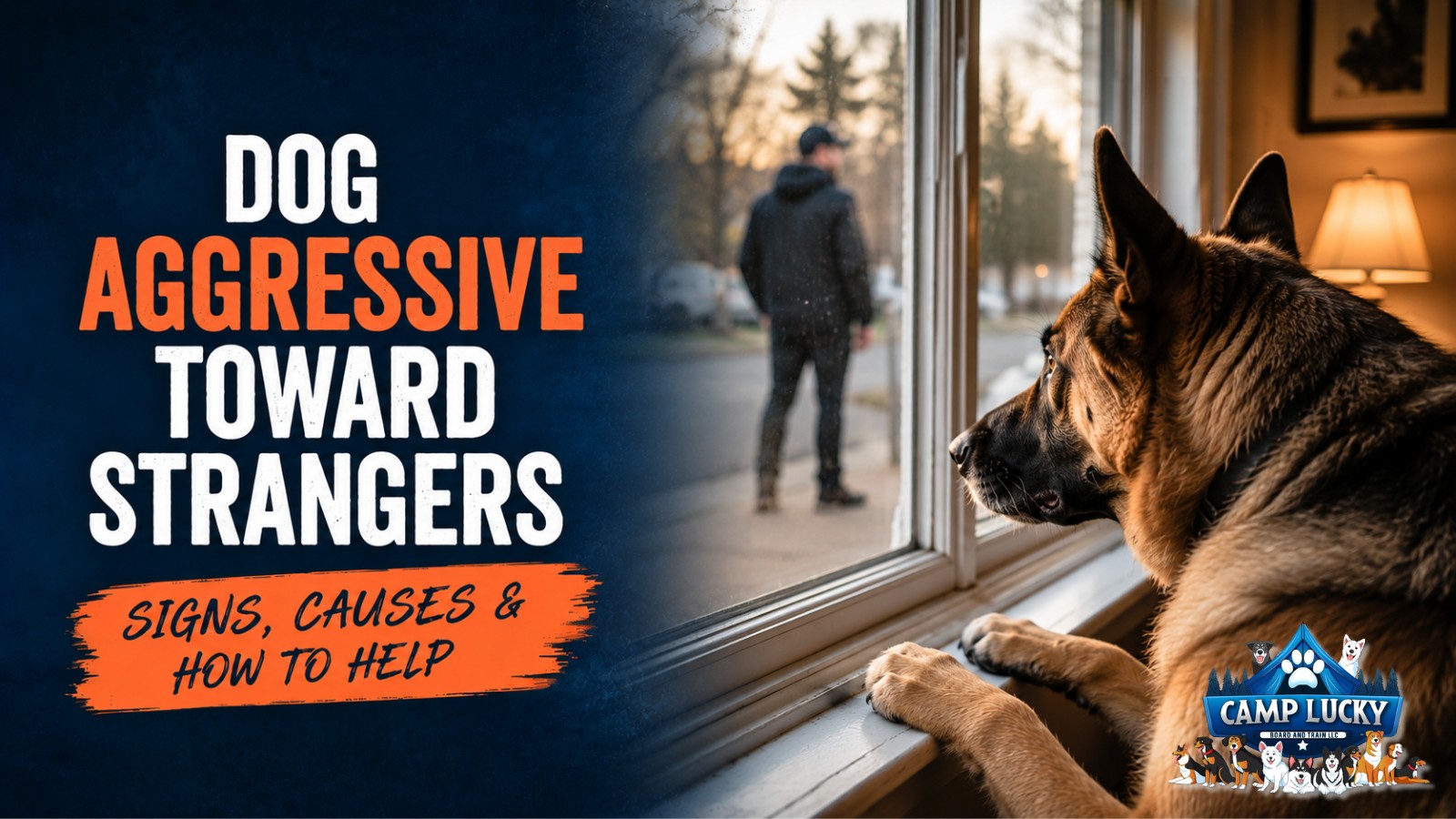
When a dog lunges, growls, or snaps at strangers, most owners assume their pet is trying to assert dominance or establish pack rank. This widespread misconception leads to training approaches that not only fail - they often make the problem significantly worse. Understanding what's actually happening inside an aggressive dog's mind is the first step toward real solutions.
The dominance theory that dominated dog training for decades has been thoroughly debunked by modern veterinary behaviorists. According to UC Davis Veterinary Medicine, "Most commonly, aggressive acts are based in fear or anxiety." The American Veterinary Society of Animal Behavior (AVSAB) has issued position statements explicitly rejecting dominance as an explanation for dog aggression, particularly fear-based defensive behaviors.
When a dog displays aggression toward strangers, it's not attempting to rule anyone. The dog is frightened and communicating that fear through the only language it has learned reliably produces results - threat display. This distinction isn't academic; it determines whether training interventions help or harm. Professional trainers who understand fear-based aggression approach these cases with desensitization protocols rather than dominance-suppression techniques.
Stranger-directed aggression includes the full range of aggressive behaviors - growling, barking, lunging, snapping, biting - directed exclusively at unfamiliar humans. Stranger-directed barking and unfriendly behavior toward unfamiliar people represents one of the most prevalent behavioral concerns among pet dogs nationwide. Yet the underlying mechanism remains widely misunderstood.
Understanding fear-based aggression requires looking beyond the dramatic display to what's happening inside the dog's nervous system. When a dog perceives a stranger as threatening, the amygdala - the brain's threat-detection center - activates the fight-or-flight response. Once the dog crosses the threshold from manageable stress to overwhelming fear, the amygdala effectively hijacks higher-order processing.
A dog "over threshold" cannot think, process information, or learn. The capacity simply isn't available. Trying to train a reactive dog in this state is like attempting to teach mathematics to someone in the middle of a car accident. The body language often misleads owners: many fear-aggressive dogs display low postures, tucked tails, pinned ears, and wide "whale eyes." They look scared, not scary - until the fear escalates to aggression.
The ladder of aggression, developed by Norwegian trainer Turid Rugaas, describes aggression not as a sudden event but as the endpoint of an escalating sequence. Yawning, lip licking, turning away, stiffening, showing teeth, growling, snapping, and finally biting represent rungs on a ladder. Each rung is a clearer communication that the dog is uncomfortable. Most owners who experience bite incidents describe missing the early signals entirely.
Fear produces four basic responses: flight, freeze, fidget, and fight. Fight is always the last resort. Dogs prefer to flee, but when escape isn't possible - due to leash restraint, territorial boundaries, or learned helplessness - the remaining options narrow. A dog that bites is, in almost every case, a dog that has run out of alternatives.
The most consequential factor in developing stranger-directed aggression is the negative reinforcement loop. When a dog lunges or barks aggressively and the stranger backs away, crosses the street, or retreats, the dog's behavior is powerfully reinforced. The dog learns that aggression makes scary things disappear. Every "successful" display deepens this pattern, teaching the dog that threat displays are the mechanism for staying safe.
Dogs with chronic stranger-directed aggression often exist in constant hypervigilance, perpetually scanning for threats and unable to relax. This state is physiologically and psychologically exhausting. The concept of neuroception - the brain's involuntary threat-radar system - helps explain why sensitized dogs register neutral stimuli like unfamiliar cologne or unexpected movements as danger signals.
Veterinary behaviorists and animal welfare organizations have reached scientific consensus: dominance theory is an outdated and inaccurate explanation for dog behavior, especially aggression. The American Veterinary Society of Animal Behavior explicitly states that aggression stems from fear, anxiety, or conflict rather than desires to establish pack hierarchy or assert control over humans.
Modern understanding recognizes that dogs and wolves have fundamentally different social structures, and that domestic dogs don't view humans as pack members to be dominated. The research that originally supported dominance theory was based on observations of captive wolves in artificial environments - conditions that don't reflect natural behavior patterns in either wild wolves or domestic dogs.
VCA Hospitals notes that even territorial or protective aggression, which may appear more confident than fear-based reactions, typically has fear and anxiety as the underlying substrate. Dogs displaying territorial responses "are often fearful and anxious and just want the intruder to leave." The high-arousal presentation - raised hackles, forward-leaning posture, confident vocalization - masks the fundamental emotion driving the behavior.
Confrontational or punishment-based training methods, often associated with dominance theory, can escalate aggressive behaviors and increase danger. When owners or inexperienced trainers use leash corrections, physical reprimands, or yelling to suppress aggressive displays, they may temporarily interrupt the behavior without addressing the underlying fear.
More critically, punishment teaches dogs to skip warning signals. A dog consistently corrected for growling learns that growling produces negative consequences. The result is a dog that bites without warning, having learned to suppress the communication that previously gave humans time to respond. This phenomenon, called punishment fallout, represents one of the most serious risks of dominance-based approaches to fear aggression.
The ladder of aggression illustrates how punishment eliminates crucial early warning signs. Dogs naturally progress through escalating signals before resorting to biting. When these signals are suppressed through corrections, the progression appears to jump directly to the final, most dangerous rung. The dog hasn't become less fearful - it has simply become less communicative about that fear.
The most common root cause of stranger-directed aggression is insufficient socialization during the critical developmental window, which closes around 12 to 16 weeks of age. The San Francisco SPCA states plainly: "The underlying motivation is fear. The stranger may be a kind, gentle person; this is irrelevant to an under-socialized dog."
Puppies not exposed to diverse humans during this window - people of different races, ages, sizes, wearing hats or uniforms, carrying bags, moving unpredictably - don't develop the neural architecture to evaluate these humans as non-threatening. The brain literally doesn't form the associations needed to categorize unfamiliar humans as safe. This represents a developmental failure with lasting behavioral consequences.
Trauma compounds socialization deficits. A single negative experience - a stranger grabbing the puppy's head forcefully, a startling approach from behind, painful handling during veterinary visits - can create lasting fear imprints. Dogs generalize rapidly from these experiences, extending fear to anyone sharing perceptual features with the original threat.
Genetic factors account for 60 to 70 percent of behavioral variation in traits like stranger-directed aggression, according to research cited in Science News. Herding and guarding breeds carry centuries of selective pressure for watchfulness, territorial awareness, and stranger wariness. German Shepherds, Belgian Malinois, Rottweilers, and livestock guardian breeds were specifically developed for these traits.
The same genetic architecture that created exceptional property guardians in agricultural settings becomes problematic in suburban environments. A 2025 PMC study confirmed that aggression is polygenic - shaped by multiple genes influencing neurotransmission, hormone signaling, and brain architecture - while remaining heavily influenced by environmental factors including owner management and training approaches.
Understanding breed-specific tendencies doesn't excuse aggression but explains why some dogs require more sophisticated behavioral intervention than generalist training approaches provide. Genetics set the behavioral range; environment and training determine where within that range individual dogs ultimately function.
Physical pain represents a consistently underestimated contributor to aggressive behavior. University of Helsinki research found that dogs experiencing pain are significantly more likely to behave aggressively toward strangers. Any dog with sudden-onset stranger-directed aggression, especially without previous behavioral history, warrants thorough veterinary evaluation before behavioral intervention begins.
Pain-induced aggression increases with age as arthritis, dental disease, and other chronic conditions lower tolerance thresholds. Cognitive dysfunction in senior dogs can also alter threat assessment in ways that mimic anxiety-based aggression. Medical evaluation becomes particularly critical when aggression appears or worsens in older animals.
Distinguishing between medical and behavioral causes requires professional assessment. A dog biting because physical contact causes pain isn't displaying a training problem - it's communicating a medical issue through behavioral channels. Addressing the underlying medical condition often resolves or significantly improves the aggressive behavior.
Most owners living with stranger-aggressive dogs have attempted various solutions - different training tools, route modifications, warning systems for guests - with limited success. The fundamental challenge lies in the behavior's self-reinforcing nature. Every time aggressive displays cause strangers to retreat, the behavior strengthens. The dog learns that lunging, barking, or growling successfully makes threatening situations disappear.
This reinforcement happens continuously throughout daily life without deliberate training. Morning walks where neighbors cross the street, delivery drivers who maintain distance, houseguests who nervously avoid the dog - each incident teaches the dog that aggressive displays work. By the time owners recognize a serious problem, the behavior has often been practiced hundreds of times.
Owner anxiety compounds the issue by transmitting down the leash. When owners tense their grip, shorten the lead, or increase their own vigilance as strangers approach, dogs interpret these signals as confirmation that the stranger is dangerous. Well-meaning attempts to soothe reactive dogs with "it's okay, good boy" inadvertently reward the aggressive display, reinforcing the very behavior owners want to eliminate.
Flooding - exposing dogs to feared stimuli at full intensity until they "get used to it" - represents one of the most common and counterproductive owner approaches. VCA Hospitals notes that forcing dogs to remain in the presence of triggers increases rather than decreases fear intensity. A dog unable to escape experiences maximum distress, often developing stronger negative associations with the feared stimulus.
Common flooding scenarios include forcing houseguests to approach fearful dogs, restraining dogs during stranger interactions, or having neighbors repeatedly attempt greetings until dogs "settle." These well-intentioned efforts typically worsen the underlying fear while appearing to address the surface behavior. Dogs may eventually stop displaying obvious distress signals, but this represents suppression rather than resolution.
Proper desensitization requires precise control over stimulus intensity, distance, and duration. The dog must remain below the threshold where fear overwhelms learning capacity throughout the process. This level of environmental control and timing precision exceeds what most owners can achieve independently, explaining why well-intentioned home efforts often fail despite significant time investment.
The evidence-based standard for treating fear-based stranger-directed aggression is desensitization and counter-conditioning (D&CC). This process exposes dogs to feared stimuli at distances and intensities that keep them below their reaction threshold while pairing the stranger's presence with high-value rewards the dog doesn't receive at other times.
Proper D&CC requires extraordinary precision. The dog must remain sub-threshold throughout exposure - aware of the stranger but not overwhelmed. Trainers must read subtle body language signals that precede visible reactivity, manage distances to the foot, and time food delivery with split-second accuracy. Repeated over hundreds of carefully controlled trials, the dog's emotional association with strangers gradually shifts from fear to neutral anticipation.
Faithfully Yours Dog Training explicitly states that desensitization and counter-conditioning is a way to help aggressive dogs and uses positive reinforcement-based training methods and behavioral modification techniques. The process literally changes the dog's emotional response at a neurological level, replacing fear-based reactions with calm interest. However, this neurological rewiring requires months of consistent work under controlled conditions that most home environments cannot provide.
Environmental management forms the crucial foundation that makes training possible. Preventing dogs from rehearsing aggressive behaviors - through controlled walking routes, visual barriers, managed home entry protocols - reduces the daily reinforcement events that strengthen reactive patterns while treatment progresses.
A dog continuing to practice lunging at strangers daily while receiving D&CC twice weekly fights against itself. Management creates the behavioral breathing room necessary for training protocols to take hold. This includes avoiding known triggers, using alternate entry points, installing privacy fencing, and employing leash techniques that prevent rehearsal of reactive sequences.
Starting introductions in neutral territory removes territorial components that escalate reactivity. Dogs displaying violent reactions to strangers entering their homes often demonstrate significantly calmer responses when meeting the same people in parks or other neutral spaces. Professional trainers deliberately structure early exposures in open, non-territorial environments to maximize success probability.
Anti-anxiety medication represents a legitimate and often necessary component of treatment plans. The San Francisco SPCA's Veterinary Behavior Service includes medication as a legitimate and often necessary component of treatment plans for severe behavioral issues, which may include cases with bite histories, slow trigger recovery, or multiple behavioral problems, when deemed appropriate by a veterinary behaviorist. For dogs with significantly elevated baseline anxiety, medication doesn't sedate - it lowers physiological arousal enough that learning becomes possible during training sessions.
Behavior modification conducted on dogs already operating at 80 percent of their reaction threshold proves ineffective. Medication can shift baseline anxiety levels enough to make D&CC protocols accessible. This represents clinical tool use in conjunction with behavioral work, not replacement of training with pharmaceutical intervention.
Veterinary evaluation becomes particularly important for dogs displaying sudden-onset aggression or those with multiple anxiety-related behaviors. Medication, properly prescribed and monitored, creates the neurochemical conditions necessary for dogs to process new information and form positive associations during structured training protocols.
Stranger-directed aggression requires professional intervention because the margin for error is minimal and the consequences of mistakes can be severe. Reading subtle body language signals that precede visible reactivity, managing environmental variables to maintain sub-threshold exposure, and timing reinforcement delivery with precision all require skills that develop over years of hands-on experience with reactive dogs.
Board-and-train programs offer particular advantages for aggressive dogs by removing them from environments where they've practiced reactive behaviors while providing controlled exposure to strangers under professional supervision. Off Leash K9 Training reports high improvement rates for aggressive behaviors in their structured residential programs, with success rates ranging from 70-95% depending on the type and severity of aggression. Board-and-train programs are generally considered to achieve faster and more thorough results for significant behavioral changes compared to weekly lessons, due to their intensive training and controlled environment.
The most critical factor in professional selection is finding trainers who understand that aggression stems from fear rather than dominance and who use desensitization protocols rather than suppression techniques. Trainers applying dominance theory to fear-aggressive dogs often create more dangerous animals by eliminating warning signals without addressing underlying emotional states.
Professional programs also provide the repetition necessary for neurological change. Three to five properly structured D&CC sessions daily, possible in residential settings, create learning opportunities that weekly sessions cannot match. The controlled environment eliminates the continuous reinforcement of reactive behaviors that occurs in home settings, allowing new response patterns to develop without competing against daily practice of old behaviors.
Realistic expectations for professional treatment focus on incremental progress measured over months rather than dramatic transformations in weeks. Success looks like dogs recovering from stranger sightings in seconds rather than minutes, threshold distances decreasing from 30 feet to 15 feet, and dogs accepting treats in strangers' presence for the first time. These changes indicate fundamental shifts in emotional processing that create lasting behavioral improvement.
For families dealing with fear-based aggression in their dogs, professional guidance isn't just helpful - it's essential for both safety and success. Camp Lucky Board and Train specializes in fear-based aggression rehabilitation through structured residential programs that address the root emotional causes rather than simply suppressing visible symptoms.


