Mold remediation in Tampa Bay can cost anywhere from $1,200 to over $30,000—but what determines whether your project stays affordable or skyrockets into five figures? Understanding these cost drivers could save you thousands, and Florida’s insurance coverage rules might surprise you.
Tampa Bay's subtropical climate creates a perfect storm for mold growth. With humidity levels often exceeding 70% and frequent storms pushing moisture into walls and attics, mold remediation has become one of the most common—and costly—home repairs area homeowners face. Understanding what drives these costs helps homeowners budget appropriately and avoid surprises when quotes start rolling in.
Mold remediation costs in the Tampa Bay area span an enormous range, primarily because no two mold situations are identical. A small patch of surface mold on bathroom tile requires vastly different treatment than black mold spreading through an entire HVAC system. Local market rates reflect this complexity, with projects ranging from $1,200-$2,500 for contained areas to more than $30,000 for whole-home treatments.
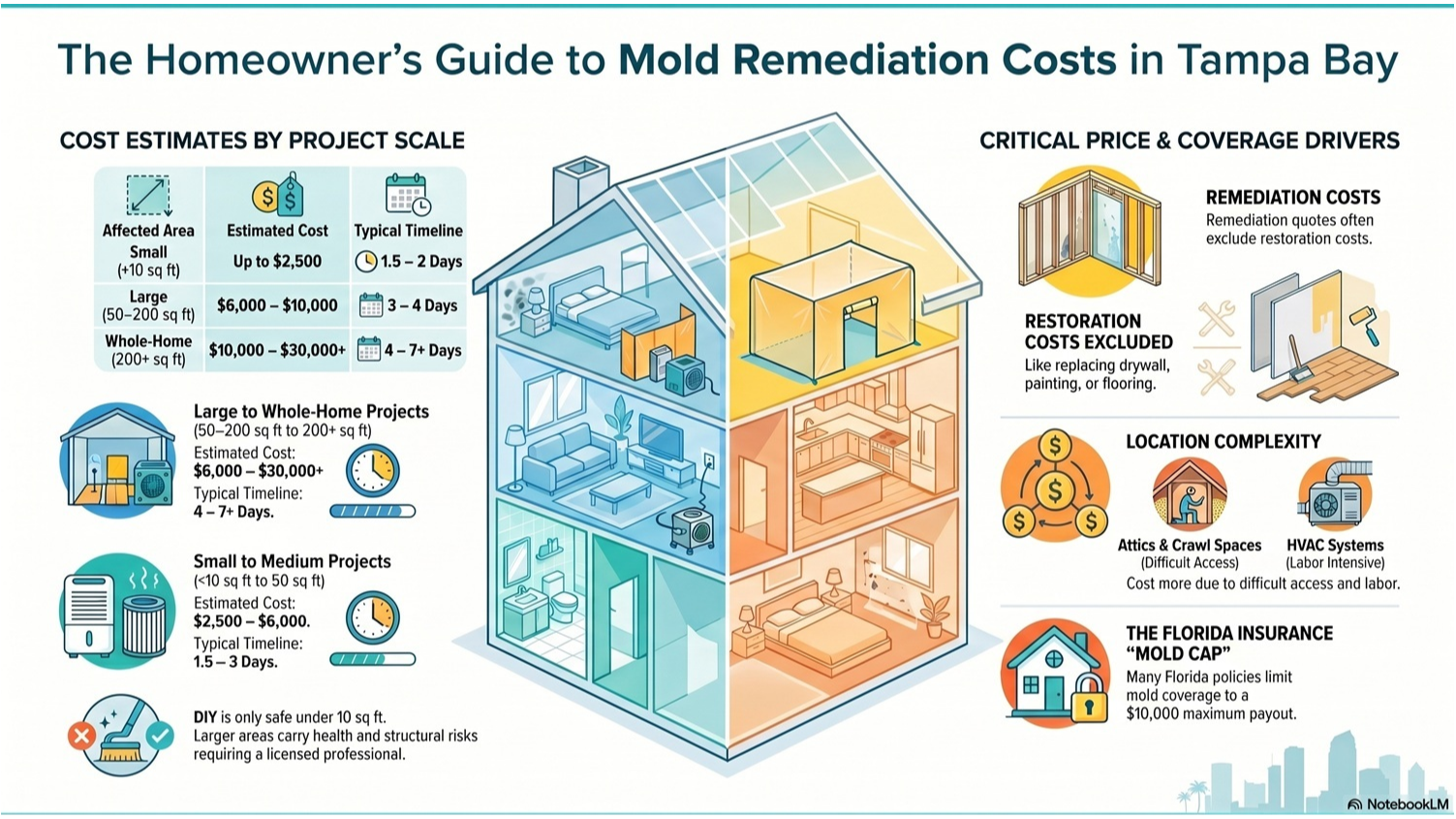
The size of the contaminated area drives the majority of cost variation. Small jobs covering less than 10 square feet typically cost $1,200-$2,500 and take 1.5-2 days to complete. Medium contamination spanning 10-50 square feet runs $1,500-$4,000 over 2-3 days. Large-scale projects covering 50-200 square feet cost $4,000-$10,000+ and require 3-4 days of work. Whole-home remediation affecting 200+ square feet can reach $10,000-$30,000+ and take a full week or longer.
TampaBayMold.net mold remediation specialists emphasize that these figures represent starting points rather than final costs. Additional factors like mold type, location accessibility, and materials requiring removal can significantly impact the final bill. Understanding these variables helps homeowners evaluate quotes more effectively and avoid companies that lowball estimates only to add surprise charges later.
Several key factors determine whether a mold remediation project stays within the lower cost ranges or escalates into the thousands. Each variable affects both the complexity of the work and the time required to complete it safely and effectively.
Square footage is the most straightforward cost driver because it directly determines labor hours, equipment usage, and disposal volume. A 5-square-foot patch on a bathroom wall requires minimal containment and can often be completed in a few hours. However, mold spread across multiple rooms demands extensive containment barriers, multiple HEPA air scrubbers, and significantly more labor time. Companies price jobs largely based on affected area because larger spaces require exponentially more resources to remediate safely.
Not all mold species require the same treatment protocols. Common surface molds like Cladosporium are relatively straightforward to address, while toxic varieties such as Stachybotrys chartarum (black mold) and Aspergillus demand more aggressive containment and specialized protective equipment. The depth of mold penetration into porous materials like drywall, insulation, and wood framing also dramatically affects costs. Surface mold can sometimes be cleaned and treated, but deep colonization typically requires complete material removal and disposal.
Where mold grows in a home significantly impacts labor complexity and equipment requirements. Crawl spaces and attics are physically challenging to access and work in, adding time and difficulty to every step of the process. HVAC systems require specialized cleaning equipment and carry the added risk that contaminated air has circulated spores throughout the entire home. Mold inside walls necessitates opening them up, which triggers additional restoration costs beyond the remediation itself.
The type and amount of materials that must be removed creates substantial cost variation between projects. Porous materials colonized by mold—drywall, insulation, carpet, ceiling tiles—typically cannot be cleaned and must be physically removed and disposed of according to EPA waste guidance and local regulations. Non-porous surfaces like tile, glass, and sealed concrete can often be treated without removal. Projects requiring extensive material removal face higher labor costs, disposal fees, and eventual restoration expenses.
Understanding cost ranges by contamination level helps homeowners budget appropriately and evaluate whether quotes align with industry standards. Each size category involves different equipment, timeframes, and complexity levels that directly impact pricing.
Small mold remediation projects represent the only category where homeowners might reasonably consider DIY approaches. However, professional treatment for areas under 10 square feet typically costs $1,200-$2,500 and provides important safety assurances that DIY cannot match. The critical consideration is that small visible mold often indicates larger hidden contamination, particularly in Tampa Bay's humid climate where moisture can migrate through wall cavities undetected for months.
Professional small-scale remediation includes proper containment, HEPA air filtration, and verification that the visible mold represents the full extent of contamination. Companies can usually complete these projects in 1.5-2 days with minimal disruption to daily routines.
Medium-scale contamination covers most single-room mold problems—bathrooms with mold behind tile, laundry rooms with wall and ceiling contamination, or bedroom sections affected by roof leaks. Projects in this range cost $2,500-$4,000 and require 2-3 days of professional work including containment barriers, HEPA air filtration, and surface treatment or material removal depending on contamination depth.
At this contamination level, professional remediation becomes necessary rather than optional. Attempting to clean 10-50 square feet of mold without proper containment can spread spores to adjacent rooms, turning a contained problem into a house-wide issue very quickly.
Large-scale mold contamination typically results from significant water intrusion events—major roof leaks, flooding, or long-term HVAC moisture problems. Projects covering 50-200 square feet cost $4,000-$10,000+ and require 3-4 days to complete safely. These jobs often involve multiple rooms, extensive material removal, and thorough HEPA air filtration throughout the affected areas.
Attic mold from chronic roof leaks and mold spread across multiple walls following storm damage commonly fall into this cost range. The complexity increases significantly because larger contamination areas require more sophisticated containment strategies and longer treatment times to ensure complete spore removal.
Whole-home mold remediation represents the most serious and expensive category, with costs ranging from $10,000-$30,000 or higher. This level of contamination usually results from catastrophic water events, long-term moisture intrusion, or undetected HVAC system contamination that has circulated spores throughout the entire home for extended periods.
Projects at this scale require 4-7+ days of work and often necessitate temporary relocation during treatment. Costs escalate because whole-home jobs almost always involve extensive structural material removal, multiple air filtration systems running simultaneously, and thorough post-remediation clearance testing to verify successful completion.
Different areas of Tampa Bay homes present unique challenges that affect both remediation complexity and final costs. Understanding room-specific factors helps homeowners anticipate potential issues and budget more accurately.
Bathrooms and laundry rooms generate the most mold-related service calls in Tampa Bay due to persistent moisture, poor ventilation, and hidden plumbing leaks. Mold typically appears on grout lines, caulking, drywall behind tile, and under flooring materials. Single-room remediation usually costs $1,200-$2,000 depending on whether tile removal is necessary to access hidden contamination behind walls.
Laundry rooms add complexity when mold grows behind appliances or inside wall cavities around washing machine connections. Slow appliance leaks often affect wall framing, requiring more extensive material removal and driving costs toward the higher end of the range.
Attic mold ranks among the most expensive and frequently missed problems Tampa homeowners face. Inadequate ventilation combined with Tampa's intense heat creates condensation on roof decking that can support mold growth for years without detection. The physical difficulty of working in attic spaces drives up labor costs significantly, while the extent of contamination often surprises homeowners who assumed they had small, localized problems.
Attic remediation costs $3,000-$7,000 depending on contamination extent and whether structural wood components require treatment or replacement. Projects involving roof decking or truss contamination fall toward the higher end due to material removal complexity.
Crawl space mold develops from ground moisture vapor, flooding, and poor ventilation. Like attics, crawl spaces are physically challenging work environments that increase labor time and costs. Contamination can affect floor joists, insulation, and subflooring, with costs ranging from $3,000-$8,000 based on the extent of structural involvement.
Crawl space projects often require additional moisture control measures beyond basic remediation to prevent recurrence, which can add to total project costs but provides necessary long-term protection in Tampa's climate.
HVAC mold occupies its own category because contaminated systems actively distribute spores throughout homes every time they operate. Basic duct cleaning costs $300-$700, but thorough HVAC remediation involving air handler, evaporator coil, or duct lining contamination can reach $3,000-$10,000.
In Tampa Bay's climate where air conditioning systems run almost continuously, HVAC mold poses particularly serious indoor air quality risks. Professional assessment determines whether cleaning suffices or component replacement becomes necessary to fully address the contamination.
The appeal of DIY mold removal is understandable given professional remediation costs, but Tampa Bay's climate creates conditions where the line between safe DIY projects and those requiring professional intervention is drawn more narrowly than in drier regions.
The EPA guidelines suggest that mold covering less than 10 square feet on non-porous surfaces in well-ventilated areas can potentially be addressed by careful homeowners using proper protective equipment—N95 respirator, gloves, and eye protection at minimum. Examples include small patches of surface mold on bathroom tile or visible spots on painted concrete garage walls.
However, DIY approaches cannot safely handle anything involving porous materials, hidden mold behind walls, contamination near HVAC equipment, or situations where the full extent of contamination isn't clearly visible. Surface treatment without addressing root growth in wall cavities accomplishes nothing except temporarily hiding problems while colonies continue expanding.
Even successful DIY mold cleanup can reverse itself quickly in Tampa Bay if underlying moisture issues remain unresolved. High humidity levels during summer months and indoor humidity often creeping above the 60% threshold where mold growth accelerates rapidly create challenging conditions for lasting DIY solutions.
Professional remediation addresses both existing mold and moisture conditions that enable recurrence. DIY cleaning products like bleach solutions kill surface mold on non-porous materials but cannot penetrate porous surfaces to eliminate root systems, creating an appearance of success without delivering lasting results.
Professional mold remediation follows a structured protocol designed to eliminate contamination while preventing spore spread to unaffected areas. The process begins with thorough assessment including moisture readings and often air or surface sampling to identify mold species and concentration levels.
Containment barriers using heavy-duty plastic sheeting and negative air pressure systems prevent spores from escaping work areas during removal. HEPA air scrubbers capture airborne particles down to 0.3 microns throughout the project. Contaminated materials are physically removed and disposed of according to EPA waste guidance and local regulations, while treatable surfaces receive EPA-approved antimicrobial treatment.
Post-remediation verification testing by independent third parties confirms successful completion before equipment removal. This systematic approach ensures safety and effectiveness in ways that DIY methods simply cannot replicate.
Florida homeowners insurance coverage for mold represents one of the most misunderstood aspects of the remediation process. Coverage depends entirely on what caused the mold, with insurers drawing sharp distinctions between sudden, accidental water damage and long-term moisture issues.
Insurance generally covers mold remediation when contamination results directly from covered perils—sudden and accidental events already included in policies. Burst pipes behind walls, appliance failures causing flooding, or storm-driven rain entering through hurricane-damaged roofs typically qualify for coverage.
Successful mold claims require detailed documentation linking contamination directly to covered water events. Insurance adjusters actively look for reasons to separate mold from covered causes, making thorough photo and video documentation necessary from the moment damage occurs. Written assessments from licensed mold professionals strengthen the connection between covered water damage and resulting mold contamination.
Most mold claims are denied because contamination resulted from long-term moisture intrusion or deferred maintenance that insurers classify as homeowner responsibility. Slow roof leaks, HVAC condensation problems, chronic bathroom humidity from broken exhaust fans, and gradual foundation seepage all fall outside standard coverage.
Flood damage represents another major coverage gap since standard homeowners insurance excludes flooding. Mold developing from storm surge or heavy rainfall requires separate flood insurance through the National Flood Insurance Program. Mold discovered during renovations without clear triggering events tied to covered perils also faces automatic denial regardless of contamination severity.
Most Florida homeowners policies include specific mold coverage caps—often $10,000—regardless of actual remediation costs. Some policies set even lower limits, while optional endorsements can increase coverage above standard caps. Reading policy mold endorsements before filing claims prevents surprises that can damage claims history without producing payouts.
Additional mold endorsements cost significantly less than paying major remediation projects out of pocket, making them worthwhile considerations for Tampa Bay homeowners. Adding coverage before hurricane season provides additional protection when storm-related water intrusion risks peak.
Obtaining multiple remediation quotes is necessary, but knowing what to evaluate in those estimates provides real protection. Every quote should include clear scope of work details, identified mold species, specific square footage being treated, materials requiring removal, containment and filtration methods, and whether post-remediation testing is included or billed separately.
Quotes significantly lower than others often exclude necessary components like containment, HEPA filtration, or clearance testing—none of which are optional in legitimate remediation. Verify that companies hold required Florida Mold Remediator licenses per Florida Statute 468.84 and request references from recent Tampa Bay projects specifically.
Local experience with Florida's climate conditions matters significantly. Companies operating in Tampa Bay for years understand regional mold challenges in ways that national franchises simply cannot match. This expertise translates into more accurate estimates, appropriate treatment protocols, and better long-term results that prevent costly recurrence issues.
For thorough mold assessment and transparent remediation estimates tailored to Tampa Bay's unique climate challenges, TampaBayMold.net provides the local expertise and detailed cost breakdowns homeowners need to make informed decisions.


