That musty smell in your Tampa bathroom might be more than humidity—it could be black mold releasing toxins into your air. Tampa’s climate makes homes vulnerable, and the most dangerous growth often hides where you’d never think to look.
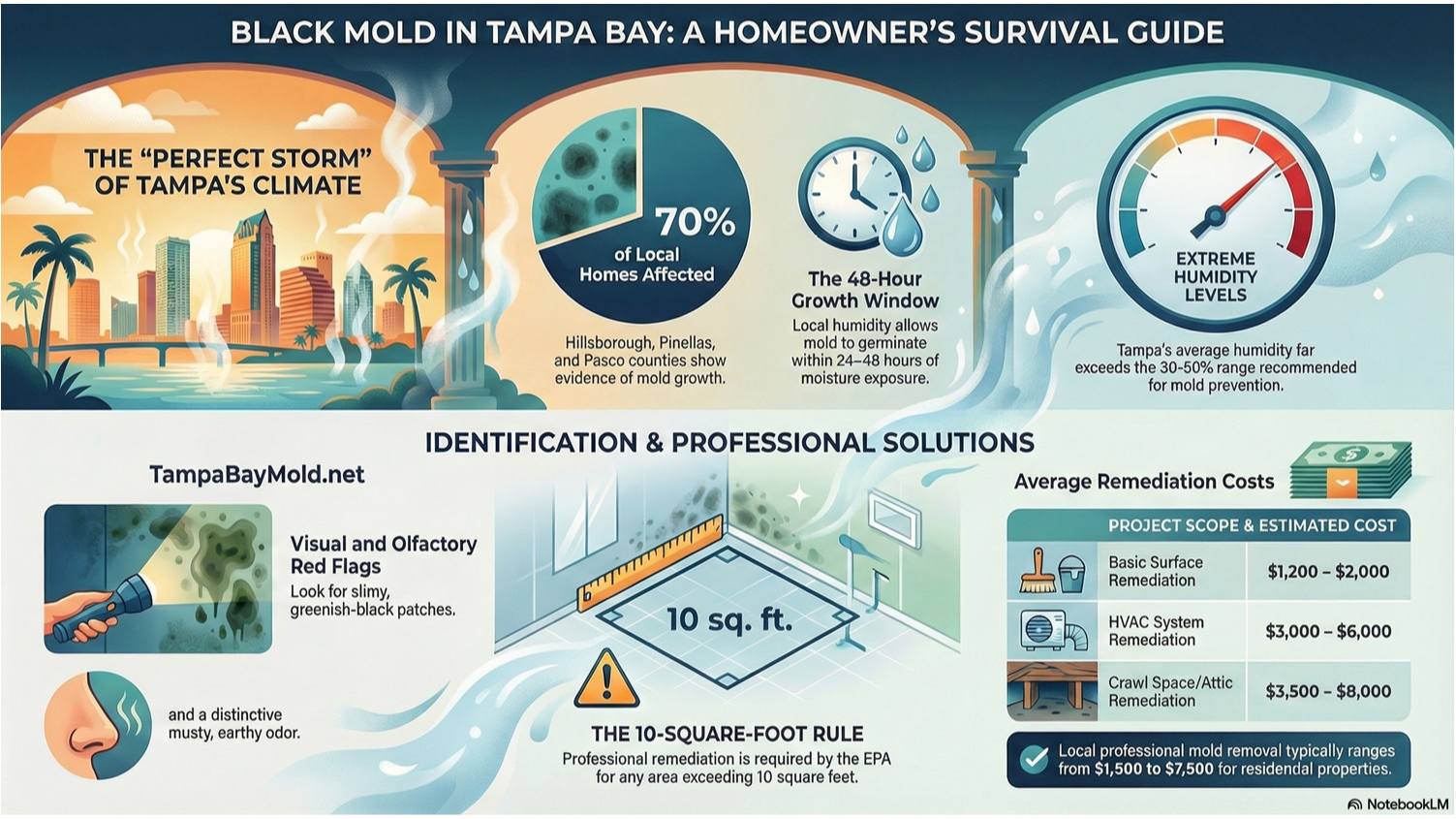
Tampa Bay's humid climate creates perfect conditions for black mold growth, making early detection vital for protecting both your family's health and your home's value. Understanding the warning signs and common hiding spots helps homeowners take swift action before minor issues become major problems.
Black mold, scientifically known as Stachybotrys chartarum, rarely announces its presence with obvious signs. This dangerous fungus often lurks in areas homeowners rarely inspect, quietly spreading through moisture-rich environments while releasing potentially harmful spores into the air. The key to protecting your family lies in recognizing the subtle indicators before the problem escalates.
Tampa Bay's year-round humidity levels frequently exceed the 60% threshold where mold spores thrive. While many types of household mold can pose health risks, black mold (Stachybotrys chartarum) is particularly known for producing potent mycotoxins that can lead to serious health complications and requires immediate professional attention for remediation. Professional mold inspections can detect hidden growth that visual checks often miss, particularly in concealed areas behind walls and within HVAC systems.
The most reliable early warning system combines visual inspection with your sense of smell. Even when mold remains hidden from view, the distinctive musty, earthy odor often penetrates through walls and flooring materials, alerting homeowners to potential problems lurking beneath the surface.
Black mold's appearance changes dramatically based on moisture conditions. When actively growing in wet environments, it develops a characteristic slimy texture with dark greenish-black coloration. The patches often appear fuzzy or cotton-like along the edges, spreading outward from the initial growth point.
During drier periods, the same mold colonies transform into powdery, black spots that may flake off when disturbed. These dried patches release more spores into the air, making them particularly dangerous to handle without proper protective equipment. Homeowners often mistake dried black mold for simple dirt stains, allowing the problem to persist and worsen.
A strong, persistent musty smell represents one of the most reliable indicators of hidden mold growth. This distinctive odor results from volatile organic compounds (VOCs) released by mold colonies as they consume organic materials in your home. The smell typically intensifies in enclosed spaces with poor ventilation.
Unlike temporary odors from cooking or cleaning, mold-related smells persist despite regular cleaning and air fresheners. The earthy, damp scent often becomes most noticeable when entering a room after being away for several hours, as your nose hasn't adapted to the constant presence.
Water stains and discoloration serve as early warning signs of the moisture conditions that allow black mold to flourish. These yellowish or brownish marks indicate past or ongoing water intrusion, creating the perfect environment for mold spores to establish colonies behind surfaces.
Even after water damage appears to dry completely, moisture often remains trapped within wall cavities, insulation, and subflooring materials. This hidden moisture provides the sustained environment black mold needs to grow extensively before becoming visible on surface materials.
Paint and wallpaper that bubbles, peels, or cracks suggests moisture trapped underneath the surface materials. Consistent moisture trapped underneath surfaces can cause paint and wallpaper to bubble, peel, or crack as their adhesive properties fail, creating ideal conditions for hidden mold growth.
What appears to be simple cosmetic damage often conceals significant mold growth that requires professional remediation to address completely.
Health symptoms that worsen at home but improve when away often indicate indoor air quality problems, including black mold exposure. Common symptoms include persistent coughing, wheezing, throat irritation, and unexplained fatigue that doesn't respond to typical treatments.
Children, elderly residents, and individuals with compromised immune systems typically experience symptoms first and most severely. These vulnerable populations may develop respiratory issues, skin rashes, or persistent headaches that medical professionals struggle to diagnose without considering environmental factors.
Bathrooms and kitchens generate significant moisture through daily activities like showering, cooking, and dishwashing. In Tampa Bay's humid climate, this moisture often exceeds the capacity of standard ventilation systems, creating persistent dampness in areas where mold thrives.
Common hiding spots include behind toilet bases, under sink cabinets, around bathtub and shower enclosures, and beneath kitchen appliances. The organic materials in these areas—wood cabinets, drywall, and subflooring—provide excellent food sources for mold colonies. Poor ventilation compounds the problem by preventing moisture from escaping effectively.
Black mold often establishes extensive colonies within wall cavities and beneath flooring materials before becoming visible on surfaces. Slow leaks from plumbing, roof damage, or foundation issues create sustained moisture conditions that allow mold to spread throughout structural materials.
Insulation materials, wooden framing, and drywall backing provide ideal food sources for mold growth. These concealed areas maintain consistent temperatures and humidity levels while remaining undisturbed, allowing mold colonies to flourish for months or years before detection. The first signs often appear as unexplained odors or health symptoms rather than visible growth.
Air conditioning systems in Tampa Bay homes work continuously to combat humidity, creating condensation that can accumulate in ductwork, drip pans, and around air handlers. When drainage systems fail or become blocked, standing water provides perfect conditions for mold growth throughout the ventilation system.
Crawl spaces present particular challenges in Florida's climate, where ground moisture combines with poor ventilation to create persistently damp conditions. Mold growth in these areas often spreads to floor joists, subflooring, and insulation materials before migrating into living spaces through air currents and structural connections.
Black mold exposure triggers immediate allergic reactions in many individuals, with symptoms appearing within hours of contact with spores. These reactions include sneezing, runny nose, red eyes, and skin rashes that may be mistaken for seasonal allergies or other common ailments.
Respiratory symptoms often develop rapidly, particularly in individuals with existing asthma or allergies. Coughing, wheezing, and difficulty breathing can escalate quickly, especially in poorly ventilated spaces with high spore concentrations. Some individuals experience throat irritation and hoarseness that persists despite avoiding other potential irritants.
Chronic exposure to black mold spores can lead to serious long-term respiratory complications, including the development of asthma in previously healthy individuals. Prolonged inhalation of mold toxins may cause permanent lung damage, particularly in children whose respiratory systems are still developing.
Research indicates that extended black mold exposure can compromise immune system function, making individuals more susceptible to respiratory infections and other illnesses. Chronic fatigue, memory problems, and concentration difficulties have also been linked to long-term mold exposure, though these symptoms often take months or years to develop.
Professional mold inspectors employ specialized equipment that reveals hidden mold growth invisible to homeowners during routine inspections. Moisture meters detect elevated humidity levels within walls and flooring materials, identifying areas where mold is likely to develop even before visible growth appears.
Infrared cameras reveal temperature variations that indicate moisture intrusion and potential mold growth behind surfaces. These thermal imaging devices can identify problem areas without requiring destructive testing, allowing inspectors to target specific locations for detailed investigation. Air quality testing measures spore concentrations throughout the home, providing quantitative data about the extent of contamination.
Professional testing also identifies specific mold species present in the home, as different types require different remediation approaches. Laboratory analysis of air and surface samples provides definitive identification that guides treatment decisions and helps ensure complete remediation.
Early detection saves both money and health complications, making professional mold inspection a smart investment for Tampa Bay homeowners. The Environmental Protection Agency recommends professional intervention for mold growth covering areas larger than 10 square feet, but hidden growth often exceeds this threshold before becoming visible.
Professional inspections identify not only existing mold problems but also conditions that promote future growth. Inspectors provide detailed reports outlining specific remediation needs and preventive measures to protect your home from recurring issues. This approach addresses both immediate concerns and long-term prevention strategies.
The cost of professional inspection represents a fraction of the expense associated with extensive remediation, structural repairs, and medical treatment for mold-related health issues. Acting quickly when warning signs appear prevents minor problems from escalating into major restoration projects that can displace families for weeks or months.
For professional mold detection and remediation services throughout the Tampa Bay area, visit TampaBayMold.net to protect your family's health and your home's value.


