Most Dallas HVAC contractors are hemorrhaging money on Google Ads while their leads disappear. But homeowners aren’t even searching on Google anymore—they’re getting contractor recommendations from AI assistants. Here’s where they’re actually looking in 2026.
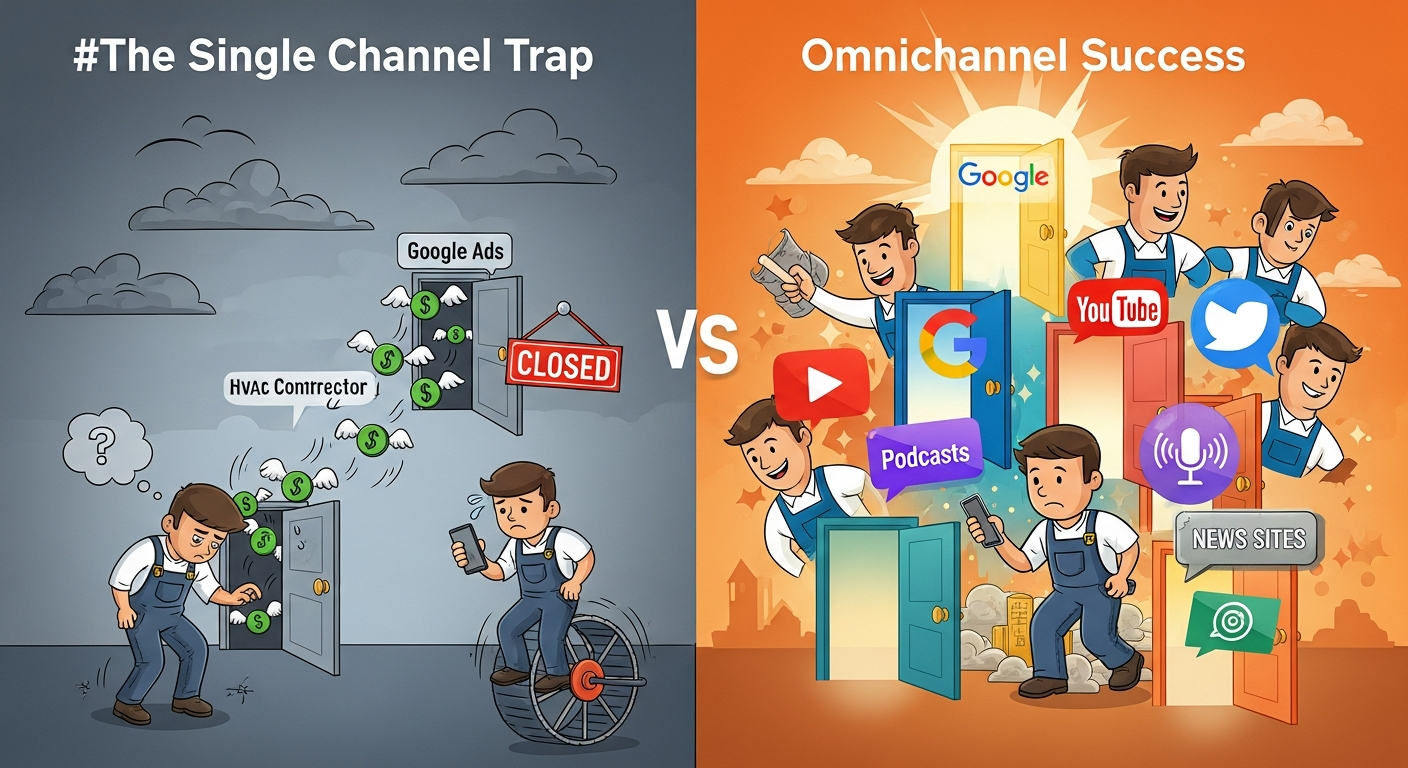
The HVAC industry in Dallas is experiencing a seismic shift in how contractors generate leads. While most companies continue pouring money into the same old advertising playbook, a fundamental change in consumer behavior and search patterns is reshaping the entire landscape.
Dallas HVAC contractors are hemorrhaging money on outdated lead generation strategies that worked five years ago but are failing today. The typical contractor spends significant amounts on highly competitive Google Ads keywords, pays HomeAdvisor and Angi for shared leads that go to five competitors, and obsesses over Google reviews while begging customers to leave them. This "pay-to-play" approach treats visibility as something to rent—the moment payments stop, the phone stops ringing.
The fundamental problem isn't just the rising costs; it's that contractors are fighting yesterday's war. This traditional approach creates a hamster wheel with no end in sight, where advertising costs increase every year as more contractors enter the bidding war. What worked when ad costs were significantly lower and competition was less saturated simply doesn't translate to today's market reality.
The stark truth is that many HVAC contractors are still playing the wrong game entirely. They're optimizing for a consumer journey that no longer exists while ignoring the platforms where homeowners actually spend their time researching contractors.
Google Ads costs for HVAC keywords have significantly increased since 2020, with highly competitive terms now commanding substantial costs per click. The average cost-per-click for HVAC is around $9.68 in 2025, though some competitive terms can reach over $50 per click. Local Service Ads, while offering pay-per-lead pricing, still require contractors to compete against multiple bidders for the same customer. The result is an unsustainable cost structure where break-even becomes the best-case scenario, and profitability requires perfect execution across every customer interaction.
Many contractors have experienced the frustration of spending tens of thousands on paid ads with minimal returns. The moment advertising stopped, so did the traffic—leaving nothing but expenses and frustration.
The research landscape has fundamentally shifted. A significant portion of daily searches now occur across YouTube, Instagram, TikTok, AI assistants, podcasts, and news sites, while Google handles a smaller percentage. Dallas homeowners aren't just Googling "HVAC near me"—they're asking specific questions like "Why is my AC running but not cooling?" and "How much should AC repair cost in Dallas?"
This fragmented search behavior means contractors focusing solely on Google are invisible to the majority of potential customers. The brand that shows up everywhere wins, while the brand appearing in one place becomes functionally invisible.
ChatGPT, Google's Gemini, Perplexity, and Google AI Overview are actively recommending contractors to homeowners. These AI systems don't rely on paid advertisements—they pull information from educational content published across high-authority sites. Contractors without substantial content footprints simply don't exist in AI recommendations, cutting them off from a rapidly growing segment of tech-savvy buyers.
The shift represents more than a new marketing channel; it's a fundamental change in how trust and credibility are established in the digital marketplace.
The MARC Framework represents a strategic shift from renting visibility through ads to owning visibility through content. This approach recognizes that modern consumers research extensively before contacting contractors and trust educational content over sales pitches.
Multicasting transforms one piece of content into eight different formats: blog articles, YouTube videos, podcasts, social posts, news articles, infographics, slideshows, and short-form video. This approach maximizes reach from minimum input, ensuring your expertise appears wherever Dallas homeowners are researching HVAC problems.
Instead of creating separate content for each platform, successful contractors develop detailed answers to homeowner questions, then adapt that core content across every relevant channel. This creates consistent messaging while dramatically expanding visibility.
Dallas homeowners ask specific questions before hiring HVAC contractors: "How much does AC repair cost in Dallas?" "Why is my AC blowing warm air?" "Is it worth repairing a 15-year-old AC unit?" "What SEER rating do I need in Texas?" The contractor who provides detailed, helpful answers to these questions becomes the trusted expert.
Most contractor websites simply say "Call us!" instead of addressing real homeowner concerns. This represents a massive opportunity for contractors willing to share genuine expertise and local knowledge.
When content appears across numerous high-authority sites, algorithms start recommending contractors organically. Google trusts sites that other trusted sites link to, while AI assistants cite sources that appear consistently across multiple platforms. This creates a compounding effect where visibility grows exponentially rather than linearly.
The key insight is that Google and AI systems reward credibility earned through third-party validation, not claimed through self-promotion.
Brand mentions across news sites, podcasts, video platforms, and blogs create a "trust footprint" that powers both Google rankings and AI answers. This citation profile demonstrates authority and expertise in ways that traditional SEO tactics cannot replicate.
Citations work because they represent earned media rather than owned media, carrying significantly more weight in algorithmic trust calculations.
Traditional advertising delivers around 2x return on ad spend (ROAS) with zero traffic when spending stops. Returns typically flatten or decline over time as competition increases and ad costs rise. Content strategy, measured as return on content spend (ROCS), can deliver up to 7.48x returns over time with compounding traffic growth and 24/7 visibility.
The mathematics are compelling: content creates owned assets that continue working indefinitely, building value rather than just consuming budget. HubSpot's 2025 report shows content marketing produces 3x the leads at 62% less cost over time.
Consider a hypothetical two-person electrical contractor in the Dallas-Fort Worth area who switched from expensive paid advertising to content strategy. Within 60 days, they began generating substantial new business. The company achieved top rankings in Google AI Overview for multiple search terms, published extensive educational content, gained significant monthly impressions, and built content that continues producing results.
This transformation illustrates the fundamental difference between renting and owning visibility. Paid ads stop working the moment payments stop, but quality content compounds over time.
Understanding actual homeowner search behavior reveals significant opportunities for contractors willing to provide genuine value. Dallas residents consistently search for answers to practical problems: "How often should I replace my HVAC filter?" "Best HVAC companies in [specific neighborhood]" "How do I know if my HVAC contractor is ripping me off?" and "Emergency AC repair near me."
The opportunity exists because most contractors don't answer these questions well. Generic websites with "Call us!" messaging miss entirely the education phase where trust and preference are established. Contractors who provide detailed, locally-relevant answers position themselves as trusted advisors rather than just another service option.
Research shows that a high percentage of consumers research extensively before contacting HVAC contractors, but they're not just looking for phone numbers—they want to understand their problems and evaluate potential solutions before making contact.
Content strategy begins with identifying questions homeowners actually ask, then answering them better than anyone else. This requires using real expertise, local knowledge, and specific examples rather than generic advice. Sources include Google's People Also Ask section, Reddit threads, and actual customer inquiries.
Successful content addresses both immediate problems ("Why won't my AC turn on?") and longer-term concerns ("Should I repair or replace my 12-year-old HVAC system?"). The goal is capturing homeowners at every stage of their decision-making process.
One detailed answer becomes multiple content formats: detailed blog articles, YouTube explainer videos, podcast episodes, LinkedIn and Facebook posts, Instagram carousels, news article placements, infographics, and short-form videos for TikTok, Reels, and Shorts.
This systematic repurposing ensures maximum visibility from each piece of created content while maintaining consistent messaging across all platforms where Dallas homeowners might encounter your brand.
Publishing content to high-authority websites builds the backlink profile and domain authority that Google rewards. Getting featured on Google News, YouTube, Spotify, Fox affiliates, and hundreds of other trusted sites creates the "trust footprint" that algorithms use to determine credibility.
The timeline for results follows a predictable pattern: expecting tangible results within six months, with organic traffic, brand awareness, and visibility continuing to grow over time as content builds authority and search engines recognize the expertise.
The HVAC industry in Dallas is splitting into two groups: contractors still running the 2019 playbook of buying ads, begging for reviews, and hoping for referrals, and contractors who recognize that the market has fundamentally shifted. Homeowners now research everywhere, trust content over commercials, and call the contractor who helped them understand their problems.
The competitive advantage no longer goes to whoever spends the most on advertising—it belongs to contractors who show up everywhere homeowners are looking with answers that actually help. This shift from rented to owned visibility represents the most significant change in local service marketing in decades.
Success in 2026 requires treating content creation as seriously as technical expertise, understanding that educational marketing builds stronger customer relationships than interruptive advertising ever could.
Ready to stop renting visibility and start owning it? ReachLocal Media specializes in helping HVAC contractors build sustainable content strategies that generate long-term leads.


