Pulse oximeters can measure blood oxygen in seconds, though factors like dark nail polish, skin pigmentation, and poor circulation can affect how reliable that reading actually is.
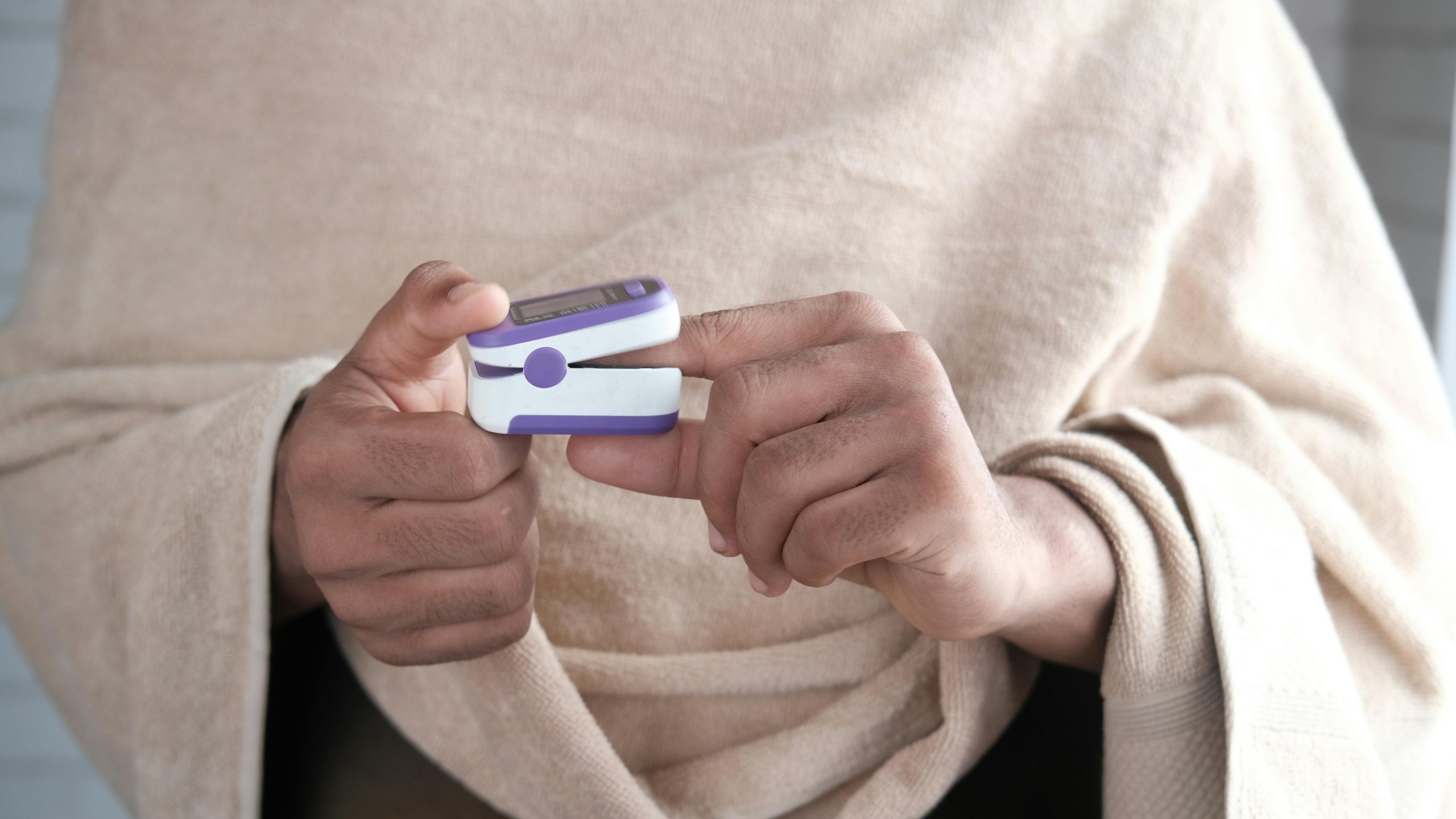
Pulse oximeters have become vital tools for monitoring oxygen levels, widely recognized for their role in detecting silent hypoxemia—a condition where dangerous drops in blood oxygen can occur without obvious symptoms. These compact devices provide critical health information within seconds, but understanding how they work helps you interpret readings more accurately and recognize their limitations.
The science behind pulse oximetry relies on a straightforward principle: different types of hemoglobin absorb light differently. A pulse oximeter contains two light-emitting diodes (LEDs) that shine specific wavelengths through your fingertip—red light at 660 nanometers and infrared light at 940 nanometers. On the opposite side, a photodetector measures how much light passes through your tissue.
This dual-light system works because oxygenated hemoglobin (the protein in red blood cells carrying oxygen) and deoxygenated hemoglobin have distinct light absorption patterns. The device calculates the ratio of these two light wavelengths to determine your blood oxygen saturation percentage.
Oxygenated hemoglobin absorbs more infrared light and allows more red light to pass through, while deoxygenated hemoglobin does the opposite—it absorbs more red light and allows more infrared light to pass through. The pulse oximeter's microprocessor analyzes these absorption differences and calculates the percentage of oxygenated hemoglobin in your blood. This measurement, called SpO2 (peripheral capillary oxygen saturation), represents the percentage of hemoglobin molecules carrying oxygen relative to the total hemoglobin in your bloodstream.
The pulsatile nature of arterial blood is the key to accurate measurements. Each heartbeat causes blood volume changes in your capillaries, creating cyclical variations in light absorption. The device uses this pulsing pattern to distinguish arterial blood from other tissues, veins, and capillaries. This is why the device needs to detect your pulse—it's not just measuring heart rate, but using the pulse timing to isolate arterial oxygen readings from background tissue interference.
Experts from Worldwide Medical Supply note that for healthy individuals, normal SpO2 readings typically range between 95% to 100%. Most people maintain levels between 96% and 98% during normal activities. However, some individuals with chronic lung conditions like COPD may have baseline readings between 88% and 92%, which can be normal for their condition. People living at higher altitudes may also have slightly lower baseline readings due to reduced atmospheric oxygen.
Readings below 90% indicate hypoxemia, a condition where blood doesn't carry enough oxygen to meet your body's needs. Contact your healthcare provider if your SpO2 consistently reads 92% or lower at home. Seek immediate medical attention if readings drop to 88% or below, as this represents severe hypoxemia that can damage organs. Remember that symptoms like shortness of breath, confusion, or bluish lips may accompany low oxygen levels, but dangerous drops can occur without obvious warning signs.
Dark nail polish, particularly black, blue, or green shades, can interfere with light transmission and cause falsely low readings. Thick artificial nails or gel polish can also block light penetration. While some studies suggest the impact of certain nail polish colors might be clinically insignificant or that some devices may be less affected, removing nail polish, especially dark or thick varieties, from at least one fingernail or using an alternative monitoring site like your earlobe ensures the most accurate readings.
Skin pigmentation can affect pulse oximeter accuracy, with research showing that darker skin tones may lead to overestimated oxygen readings. Research, including a widely cited University of Michigan study, has found that Black patients may be significantly more likely to have hidden hypoxemia compared to white patients when relying solely on pulse oximeter readings. Cold skin temperature also reduces accuracy by decreasing blood flow to extremities, making it harder for the device to detect adequate pulse signals.
Conditions that reduce blood flow—including peripheral vascular disease, shock, or hypothermia—can make pulse oximeters unreliable. Even minor movements, shivering, or improper device placement can cause inaccurate readings. Carbon monoxide poisoning presents a particular challenge because carbon monoxide-bound hemoglobin absorbs light similarly to oxygenated hemoglobin, potentially showing normal readings despite dangerous oxygen displacement.
The FDA categorizes pulse oximeters into two main types: prescription-use devices that undergo rigorous accuracy testing and over-the-counter consumer devices that aren't typically FDA-reviewed for medical purposes. Prescription devices maintain accuracy within ±2-3% of actual arterial oxygen saturation, while consumer devices may have wider accuracy ranges. Healthcare-grade devices generally perform better across different skin tones and clinical conditions, though they're significantly more expensive.
The FDA has published updated draft guidance aimed at improving pulse oximeter accuracy and performance across all skin pigmentation levels. This guidance addresses concerns about racial bias in oxygen monitoring and establishes more stringent testing requirements for device manufacturers. The new standards require testing across diverse populations and may lead to more reliable consumer devices in the coming years, particularly for individuals with darker skin tones.
Pulse oximeters serve as valuable screening tools for oxygen monitoring, but they're not perfect. Understanding their limitations helps you use them more effectively while recognizing when professional medical evaluation is necessary. These devices excel at detecting trends and significant changes in oxygen levels, making them useful for tracking recovery from illness or monitoring chronic conditions. However, they shouldn't replace professional medical assessment, especially when you're experiencing symptoms or have underlying health conditions that affect oxygen levels.
Getting the most out of a pulse oximeter comes down to a few simple habits: clean, polish-free nails, warm hands, and staying still during measurement. If a reading seems off, switching fingers or checking for interference factors is a reasonable first step. Either way, these devices work best as one piece of a broader health monitoring approach—alongside attention to symptoms and regular communication with a healthcare provider.


