If you’re a veteran in Toms River struggling with bathroom accessibility, one critical paperwork mistake could cost you up to $6,800 in federal grant money—before any contractor even picks up a tool. Here’s what you need to know before applying.
For veterans living in Toms River, NJ, getting an accessible bathroom shouldn't require going through a maze of paperwork alone — or waiting years for help. Between a local remodeler's pledge, active federal grants, and community programs, there's more support available than most veterans or their families realize. Here's a clear breakdown of what's out there and how to access it.
Most contractor promotions come in the form of a discount or a coupon. What Bathroom Pros is doing in Toms River is different. The company has publicly committed to donating three complete bathroom remodels — at no cost — to veterans in need, contingent on reaching a goal of 300 bathrooms remodeled in 2026. They've named the program 'Showers for Heroes.'
The word "conditionally" matters here. This isn't a grant that veterans can apply to today and receive tomorrow. It's a milestone-based pledge: once Bathroom Pros completes 300 remodels in 2026, three veterans will receive a full bathroom remodel free of charge. That distinction is worth keeping in mind while also looking into the federal assistance programs already available right now.
Bathroom Pros is a locally owned and operated remodeler in Toms River, and their walk-in shower installation work is a core part of what they do. Beyond the 'Showers for Heroes' commitment, the company also offers to help veterans understand VA grant options — a practical service that can make a real difference when facing federal paperwork for the first time.
The name "Showers for Heroes" might suggest the donation covers a single shower unit, but the commitment goes further. Bathroom Pros has described the award as a complete bathroom remodel, which includes a walk-in shower installation. That's a meaningful distinction — a full remodel can address multiple accessibility needs at once, from flooring to fixture placement, rather than solving one problem while leaving others in place.
For veterans dealing with mobility challenges, this scope matters. A walk-in shower alone improves safety, but a full remodel can bring together grab bars, slip-resistant tile, widened doorways, and lowered fixtures into a cohesive, functional design. The difference between a partial fix and a purpose-built accessible bathroom is significant for long-term independence.
The three veteran donations are unlocked when Bathroom Pros reaches 300 completed bathroom remodels in 2026. This isn't an ongoing rolling program — it's a defined goal tied to a calendar year. Veterans or family members interested in being considered for the program should reach out to Bathroom Pros directly to express interest and get on their radar well before the milestone is reached.
While 'Showers for Heroes' is tied to a future milestone, federal VA grants for home modifications are active and accepting applications now. Veterans and their caregivers in Toms River have several funding pathways depending on the nature and severity of their disability.
The Home Improvements and Structural Alterations (HISA) grant is the most broadly applicable VA option for bathroom accessibility modifications. It covers medically necessary home improvements, and bathroom upgrades are among the most common uses.
Covered modifications can include:
The lifetime benefit maximum is $6,800 for veterans with service-connected disabilities and $2,000 for those with non-service-connected disabilities. These are lifetime caps, not annual allowances — so planning the scope of modifications carefully before applying is important.
For veterans with more significant service-connected disabilities, the VA offers two higher-tier programs. The Specially Adapted Housing (SAH) grant can reach up to $126,526 for veterans whose disabilities require major structural home modifications. The Special Home Adaptation (SHA) grant provides a separate, lower funding tier for veterans with qualifying conditions that require home adaptation rather than full structural changes.
These grants go beyond a single room. They're designed for veterans who need homes adapted at a foundational level, including bathroom overhauls that bring in fully accessible bathing facilities. Not every veteran will qualify, but for those who do, the SAH and SHA programs can fund renovations that would otherwise be financially out of reach.
Eligibility for VA home modification grants isn't automatic with veteran status. For the HISA grant specifically, a veteran generally needs to meet all of the following:
SAH and SHA eligibility criteria differ and are generally tied to more severe service-connected conditions. A VA benefits counselor or the Ocean County Veterans Service Bureau (discussed below) can help determine which program applies to a specific situation.
The application process for VA home modification grants has specific requirements, and missteps can be costly. Understanding the process before starting helps veterans protect their eligibility.
Gathering documentation before submitting an application keeps the process moving. Key items typically include:
Working with a contractor already familiar with the VA grant process can simplify this stage. They can provide the cost documentation the VA requires in a format that supports rather than delays the application.
This point cannot be overstated: starting any home modification work before receiving written approval from the VA will result in a full denial of the grant. The VA requires prior authorization precisely because they need to verify medical necessity and cost reasonableness before funds are committed.
Even well-intentioned contractors who begin prep work early can inadvertently cause a veteran to lose their entire grant. The rule is straightforward — wait for the written approval letter before any tools come out. This protects the veteran's investment and ensures the remodel qualifies for reimbursement.
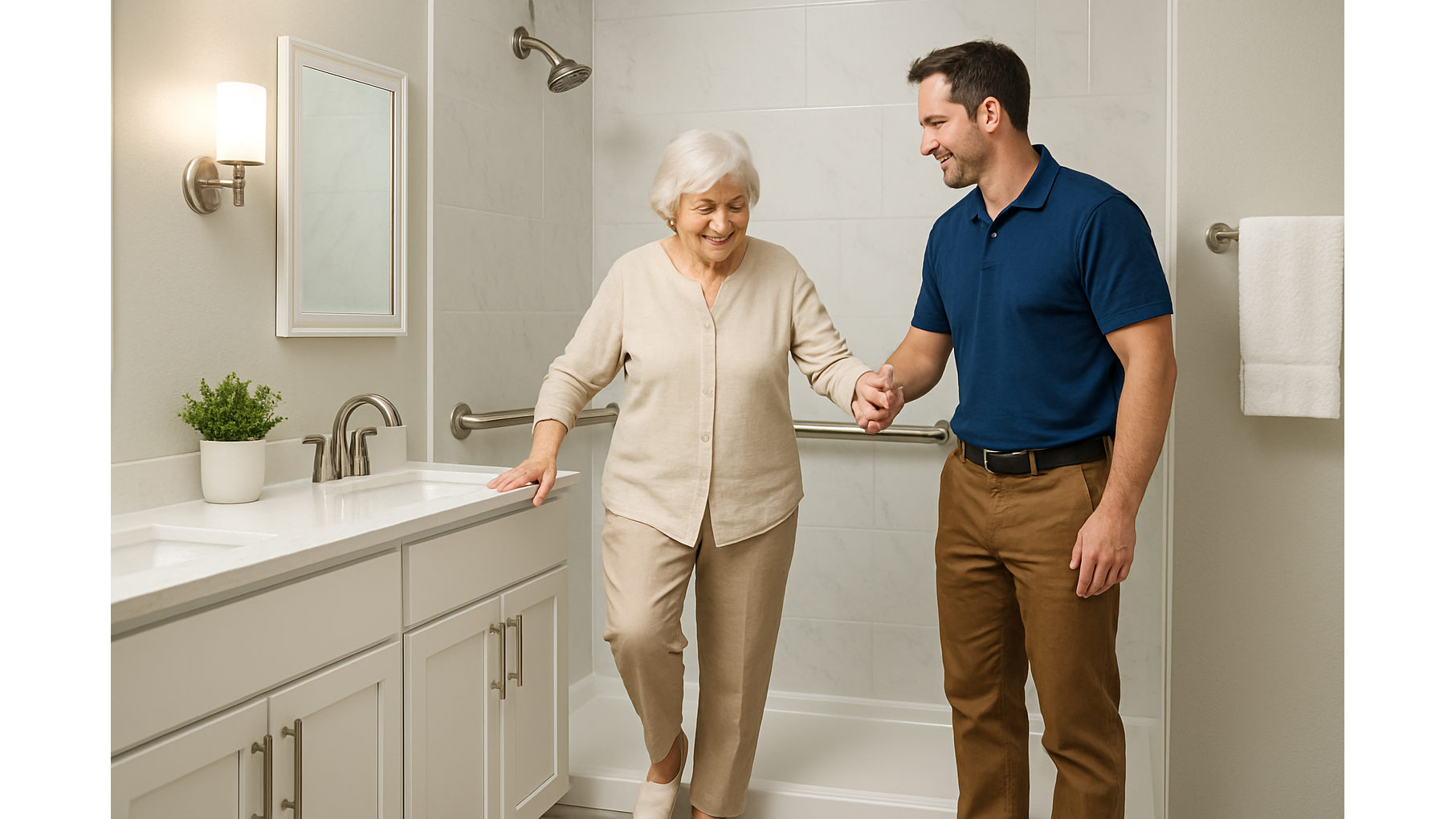
Walk-in showers have become one of the most requested bathroom modifications for veterans with mobility limitations — and for good reason. Traditional bathtubs require stepping over a raised wall to enter, which creates a significant fall risk for anyone with balance issues, joint pain, prosthetics, or other service-related physical conditions.
A properly installed walk-in shower removes that barrier entirely. With a zero-threshold or low-threshold entry, slip-resistant flooring, and strategically placed grab bars, the daily act of bathing becomes substantially safer. For veterans focused on aging in place — staying in their own homes rather than transitioning to care facilities — these modifications can extend independent living by years.
Beyond safety, the design flexibility of walk-in showers makes them adaptable. Built-in benches accommodate those who can't stand for extended periods. Handheld showerheads allow for seated bathing. Wider enclosures can accommodate wheelchairs or shower chairs. These aren't luxury features in this context — they're functional tools that directly address real challenges veterans face every day.
Baths for the Brave is a national initiative — a partnership of home improvement companies — that provides free, high-quality bathroom remodels to veterans. The program typically runs its installations around Veterans Day each year, with participating contractors donating labor and materials to complete full bathroom transformations for selected veteran recipients.
Availability in any specific area depends on which companies are participating locally. Veterans or family members interested in Baths for the Brave should look into applications well ahead of the November cycle, as selection processes generally have lead time.
For veterans in Toms River specifically, the Ocean County Veterans Service Bureau is a valuable local point of contact. The Bureau helps veterans initiate and file claims with both state and federal governments and serves as a referral source for social services — including those related to housing and home modification assistance.
Handling VA grant applications, Baths for the Brave applications, and local contractor programs at the same time can feel overwhelming. The Ocean County Veterans Service Bureau exists to help veterans avoid getting lost in that process. A single conversation with a benefits counselor there can clarify which programs a veteran qualifies for and what steps to prioritize first.
Between the 'Showers for Heroes' pledge from Bathroom Pros, active federal grants from the VA, the Baths for the Brave national program, and local support from the Ocean County Veterans Service Bureau, veterans in Toms River have a genuine network of resources available — not promises without substance.
The most important next step is simply starting. For veterans dealing with mobility challenges in the bathroom right now, the federal HISA grant offers the fastest path to funded modifications. For those with more severe service-connected disabilities, the SAH or SHA grants may be a better fit. For veterans who want to be considered for Bathroom Pros' 'Showers for Heroes' donation, reaching out early puts them in the conversation before the 2026 milestone is reached.
None of these programs require a veteran to go it alone. The Ocean County Veterans Service Bureau can help with claims. Bathroom Pros can assist with the contractor documentation the VA requires. And national programs like Baths for the Brave add another layer of possibility for those who apply.
The bathroom modifications that protect veteran safety and support independent living are within reach — the key is knowing which door to knock on first, and knocking before the need becomes urgent.
Veterans and their families in Toms River can learn more about walk-in shower installations and accessible bathroom remodeling options at Bathroom Pros, Toms River's locally owned and operated bathroom remodeling specialist.


