Digital eye strain affects millions of screen users daily. Understanding all the contributing factors helps you find the right solutions for lasting relief.
You've probably noticed your eyes feeling tired, dry, or irritated after a long day staring at screens. Between work emails, video calls, social media scrolling, and evening entertainment, most of us rack up serious screen hours. Understanding what contributes to this discomfort is the first step toward feeling better.
Sleep ZM explains that digital eye strain stems from several sources working together. Reduced blinking dries out your eyes, dropping from about 15 blinks per minute to just 5-7 when you're focused on a screen. Poor screen positioning forces awkward neck angles, while your eyes constantly refocus on pixels, creating fatigue over time.
A 2023 systematic review found that roughly 69% of people experience computer vision syndrome. That's nearly seven out of ten people dealing with symptoms like blurred vision, headaches, dry eyes, and neck pain from screen use. The research analyzed over 66,000 participants, making it clear this affects the majority of digital device users.
One of the simplest and most effective strategies is following the 20-20-20 rule: every 20 minutes, look at something 20 feet away for 20 seconds. This gives your eye muscles a break from constant close-up focus and reminds you to blink, helping restore the tear film that keeps your eyes comfortable.
Your monitor should sit about 20-28 inches from your face, slightly below eye level. This reduces strain on your neck and lets your eyes work in a more natural position. Adjusting screen brightness to match your room lighting also helps, as does reducing glare from windows or overhead lights with blinds or a matte screen filter.
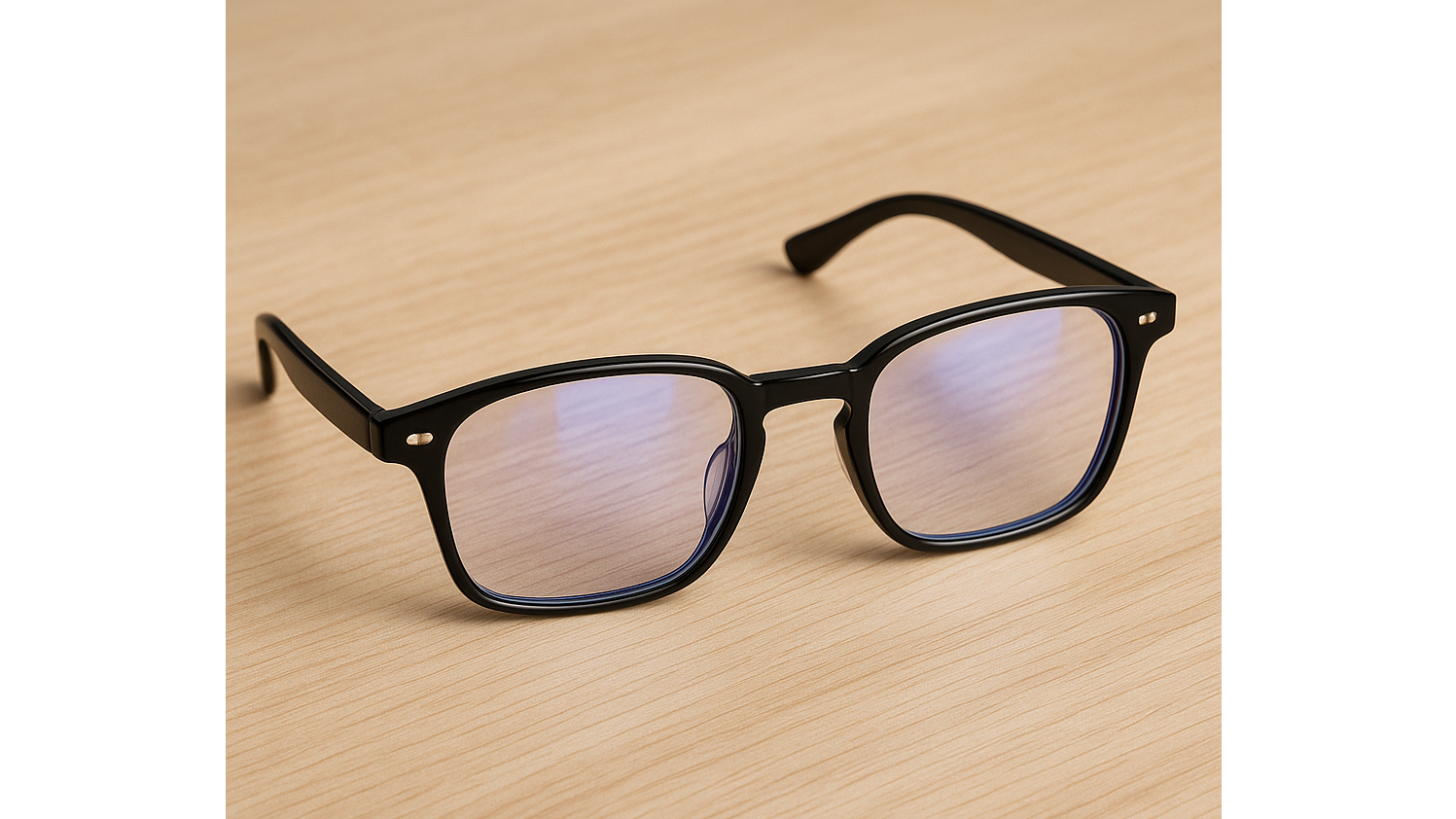
Many people find blue-light-blocking glasses helpful for managing screen-related discomfort, especially during evening use. Blue light from screens can interfere with your body's natural melatonin production, making it harder to fall asleep. Wearing blue-light-filtering glasses in the hours before bed may support better sleep quality and help reduce eye fatigue for those sensitive to screen glare.
Taking regular breaks, adjusting your workspace setup, using artificial tears when your eyes feel dry, and considering blue-light-filtering options all work together to improve eye comfort. If you already wear glasses, make sure your prescription is current, as uncorrected vision problems make screen-related eye strain significantly worse during extended digital device use.


