Choosing a dump trailer based on weight capacity isn’t as simple as looking at the GVWR sticker—and making the wrong calculation could cost you thousands or put you at serious safety risk. Here’s what contractors often overlook when matching trailers to their hauling needs.
When contractors and landscapers invest in dump trailers, weight capacity often becomes the deciding factor between a tool that enhances productivity and one that creates costly problems. The wrong choice can lead to overloaded equipment, safety hazards, and expensive repairs that derail project timelines.
Gross Vehicle Weight Rating (GVWR) represents the maximum safe total weight a trailer can carry, including its own weight and payload. This rating serves as the foundation for both safety and legal compliance in dump trailer operations. The GVWR isn't just a suggestion—it's an engineering limit that determines structural integrity, braking performance, and overall operational safety.
Understanding GVWR is universally important, and contractors should always consider the specific materials they commonly haul in their operating region. Industry experts say proper weight capacity selection is crucial to prevent costly mistakes and ensure projects stay on schedule without equipment failures.
The towing capacity of the tow vehicle must always exceed the dump trailer's GVWR for safe and legal operation. This relationship ensures adequate power for acceleration, sufficient braking capability, and proper handling characteristics during transport and dumping operations.
The choice between single and tandem axle configurations dramatically affects weight capacity and operational capabilities. Each option serves specific applications and load requirements in professional hauling scenarios.
Single-axle dump trailers typically feature GVWR ratings from 3,500 to 7,000 pounds, making them suitable for lighter hauling tasks such as small-scale landscaping projects. These trailers offer excellent maneuverability in tight spaces and lower initial costs, but their payload limitations restrict them to specific applications. The single-axle design works well for homeowners and smaller contractors handling materials like mulch, topsoil, or light debris loads.
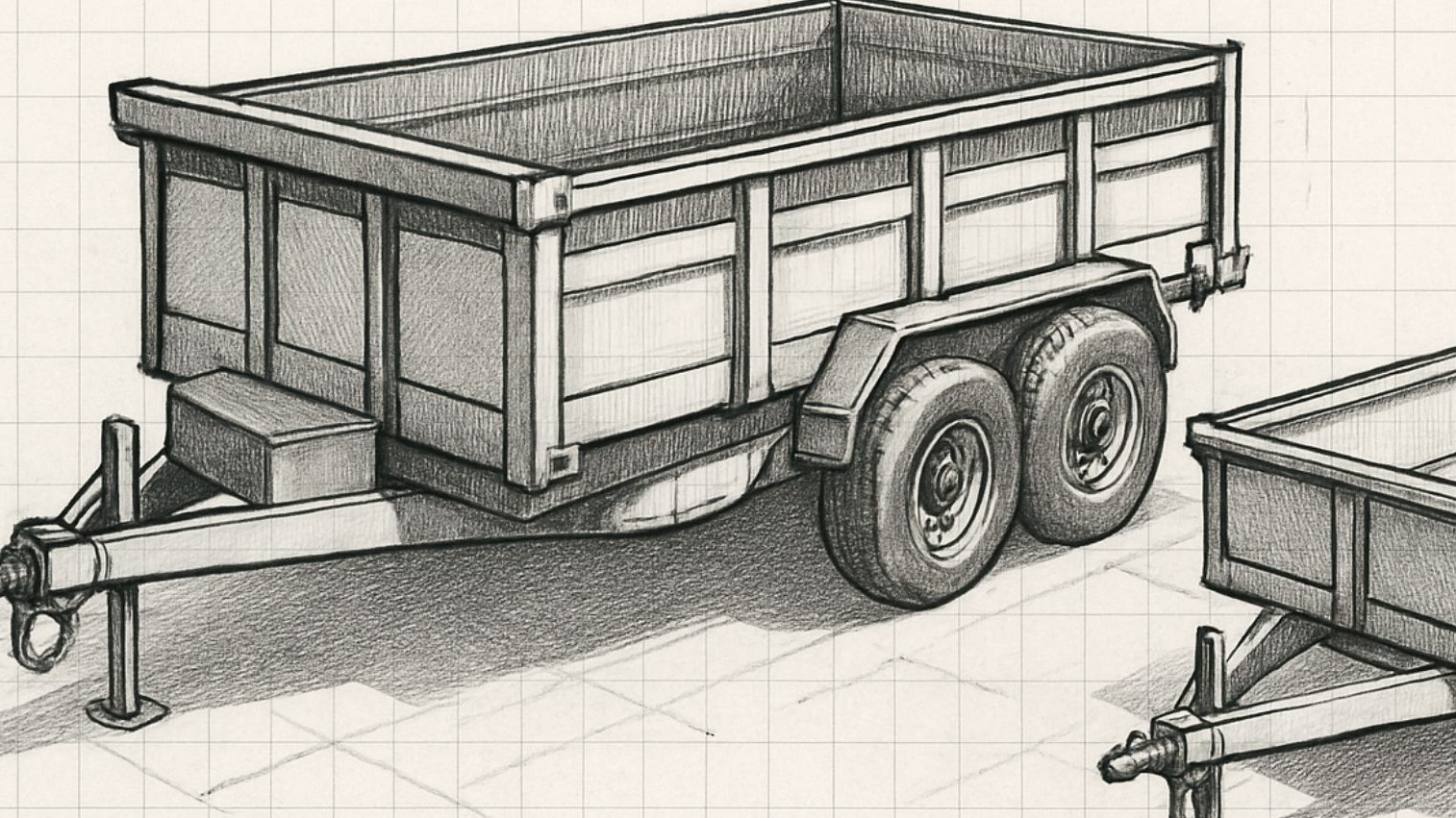
Tandem axle dump trailers provide enhanced support, stability, and braking capabilities for heavier loads, with common GVWRs of 14,000 pounds or more, extending up to 30,000 pounds for heavy-duty commercial applications. Professional applications benefit from the dual-axle design's improved weight distribution and enhanced safety margins. These trailers handle dense materials like gravel, concrete, and construction debris while maintaining stability during transport and dumping operations.
Determining real-world hauling capacity requires more than just knowing the GVWR. Contractors must account for the trailer's empty weight and understand how different materials affect loading calculations.
The actual payload capacity equals the trailer's GVWR minus its empty (curb) weight. For example, a 14,000-pound GVWR trailer weighing 4,200 pounds empty provides approximately 9,800 pounds of payload capacity. This calculation determines the maximum weight of materials that can be safely loaded without exceeding design limits.
Understanding this relationship helps contractors avoid overloading while maximizing efficiency. Many operators make the mistake of focusing only on GVWR without accounting for the trailer's substantial empty weight, leading to reduced payload capacity and potential safety issues.
Material density significantly influences haul capacity beyond simple weight calculations. A trailer can transport larger volumes of lighter materials like dirt compared to denser materials like gravel while adhering to the same weight limits. For instance, loose topsoil can weigh between 1,000 to 3,000 pounds per cubic yard depending on moisture and composition, while crushed stone typically weighs between 2,200 and 3,000 pounds per cubic yard.
This density variation means contractors must consider both weight and volume when loading trailers. Dense materials may fill the weight capacity before reaching volume limits, while lighter materials might fill the trailer bed before reaching maximum weight.
Proper tow vehicle selection ensures safe operation and prevents mechanical damage to both truck and trailer components.
The tow vehicle's rated capacity must exceed the fully loaded trailer's GVWR to maintain safe operation. This margin provides adequate power for hills, acceleration, and emergency maneuvers while preventing drivetrain damage. Matching a 14,000-pound GVWR trailer with a truck rated for 15,000+ pounds towing ensures proper safety margins and reliable performance.
Commercial operations may require a Class A Commercial Driver's License (CDL) if the combined GVWR of truck and trailer exceeds 26,000 pounds, or if the trailer's GVWR alone exceeds 10,000 pounds. Interstate commercial operations typically mandate USDOT numbers if the vehicle or combination has a gross vehicle weight rating (GVWR) or gross combination weight rating (GCWR) of 10,001 pounds or more, or if transporting hazardous materials requiring placarding. Contractors must verify licensing requirements in their operating jurisdictions to ensure compliance with federal and state regulations.
The hydraulic lift system directly impacts load capacity, unloading speed, stability, and overall trailer design. Different lift configurations offer distinct advantages for specific materials and applications.
Scissor lift systems work well for mixed loads and general-purpose hauling where stability and cost-efficiency are priorities. The scissor mechanism distributes lifting forces evenly across the trailer frame, reducing stress concentrations and providing smooth, controlled dumping action. These systems work particularly well for applications requiring controlled unloading.
Telescopic lift systems deliver superior lifting power and steeper dump angles, making them ideal for dense materials like wet concrete or heavy aggregates. The telescoping cylinder design provides greater mechanical advantage and higher lifting forces compared to scissor systems. This capability proves vital when unloading sticky or compacted materials that resist gravity flow.
Exceeding GVWR limits creates serious safety hazards that can lead to accidents, equipment damage, and costly liability issues.
Overloading compromises vehicle control and dramatically increases stopping distances, creating dangerous situations on public roads. Excessive weight overwhelms braking systems, reduces steering responsiveness, and can cause trailer sway or jackknifing. These control issues become particularly dangerous during emergency maneuvers or when traveling hills and curves.
Overloading causes structural damage to trailer frames, axles, and tires, significantly shortening equipment lifespan. Stress concentrations from excessive loads can crack welds, bend frames, and cause axle failures that result in expensive repairs and dangerous roadside breakdowns. This damage can occur over time, leading to significant equipment issues.
Proper loading techniques ensure safe operation and maximize trailer performance throughout its service life.
Distributing weight evenly across the trailer bed maintains balance and stability during transport and dumping operations. Concentrated loads create stress points that can damage the trailer structure and affect handling characteristics. Loading heavier materials toward the front helps maintain proper tongue weight while preventing trailer sway.
Operators should avoid loading all weight to one side or creating uneven distributions that can cause tipping during dumping operations. Proper distribution also ensures even tire wear and reduces stress on suspension components.
Selecting the right dump trailer requires understanding the relationship between GVWR, payload capacity, tow vehicle capabilities, and specific application requirements. Professional dealers provide valuable guidance in matching trailer specifications to real-world hauling needs, helping contractors avoid costly mistakes and safety issues.
The investment in proper equipment pays dividends through improved efficiency, reduced maintenance costs, and enhanced safety performance. Contractors who prioritize weight capacity considerations find their equipment delivers reliable service while supporting business growth and profitability.


