Ever wonder why your work boots feel fine for the first few hours, then turn painful? The culprit might be sitting in your sock drawer. There’s a “dead zone” most workers don’t know about—and it’s creating blisters you could easily avoid.
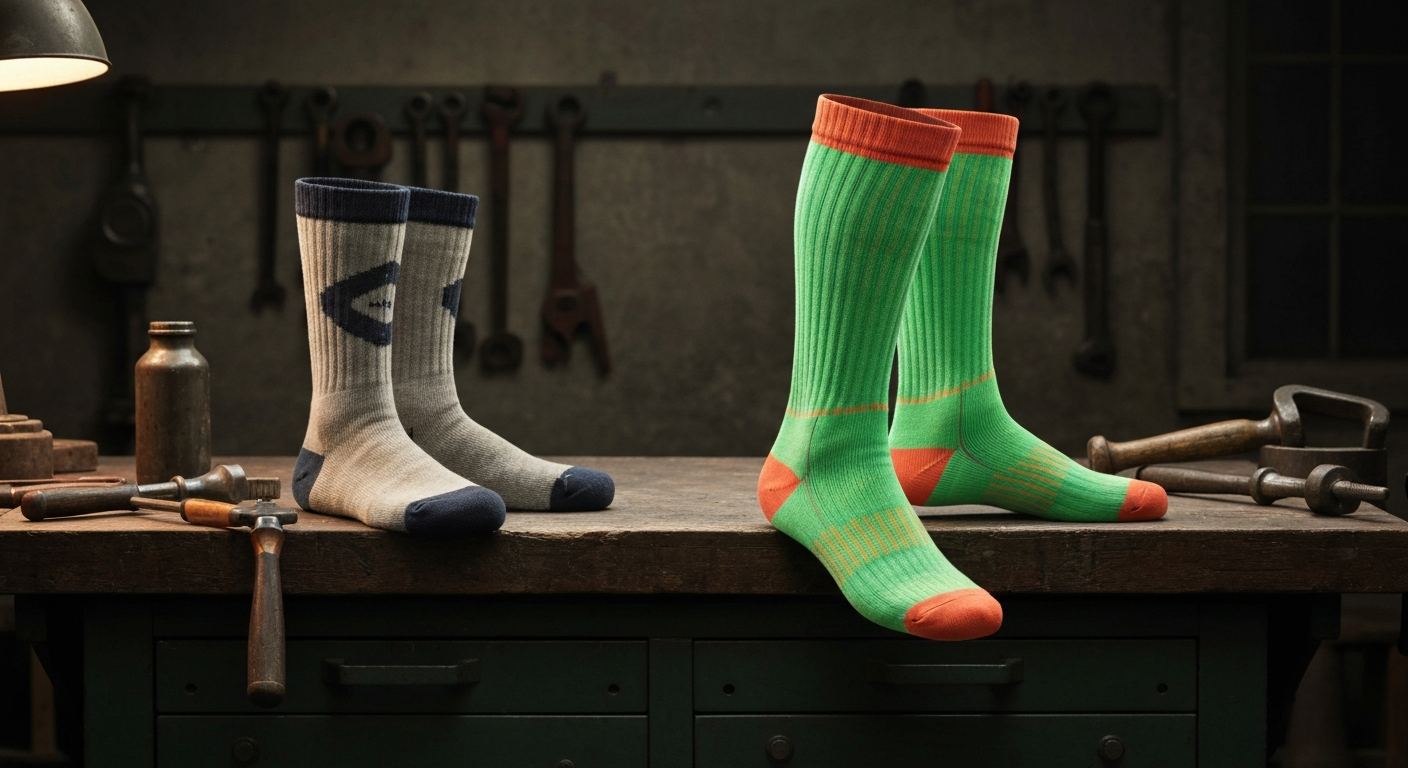
Most workers spend serious money on a quality pair of boots. Far fewer give the same thought to the socks inside them. That's a problem — because a boot can only perform as well as the sock underneath it. Sock height isn't a style preference. It's a functional decision that determines whether a workday ends in comfort or in blisters.
Hour six of a ten-hour shift, and there's a hot, raw patch forming on the inside of the calf right where the boot shaft ends. The sock has either bunched up, slipped down, or simply never reached high enough to cover the contact zone. That's the sock gap — and it's one of the most common, most avoidable sources of discomfort for anyone who wears boots for a living.
The sock gap happens when boot height and sock height don't match. Skin gets exposed to the boot's inner lining, which is often stiff leather, synthetic material, or rough stitching. Repeated friction against bare skin creates abrasions, hot spots, and eventually full-blown blisters. Workers who deal with this daily often chalk it up to "just how boots feel." It isn't.
The fix isn't a new boot. It's the right sock height. Research from occupational foot health studies consistently shows that properly fitted socks — including appropriate height for the footwear — significantly reduce the incidence of blisters and calluses on the job. Sock height is often the primary consideration for boot compatibility, though material, fit, and cushioning also play meaningful roles. Get the height right first, then optimize from there.
Crew socks sit at mid-calf, typically measuring 6 to 8 inches from the heel. They're the most common sock height available — the multi-pack that fills most sock drawers. For boots that don't rise significantly past the ankle or lower calf, crew socks are a natural, reliable fit. They stay put, provide solid coverage through the ankle and lower leg, and don't bunch or fold over inside shorter boot shafts.
The important caveat: crew socks are only a good fit when the boot doesn't extend past the point where the sock ends. The moment the boot shaft rises above the sock's cuff, the advantages disappear and the problems begin.
Over-the-calf socks extend 14 to 18 inches from the heel, stopping just below the kneecap. This height covers the entire calf — not just the lower leg — and sits well above the collar of even the tallest work boots. They're the go-to choice for logger boots, military boots, tall safety boots, and high-cuff hiking boots.
At this height, the sock functions as a true barrier between the skin and the boot's inner lining. There's no exposed skin for the shaft to rub against, and the sock stays firmly in place throughout a full shift. The extra fabric also opens the door to additional benefits — compression, insulation, and structured leg support — that shorter socks simply can't deliver.
The dead zone is the gap between where the sock ends and where the boot collar begins. This happens most often when someone wears a crew sock with a tall boot, or a boot-height sock that falls just short of the shaft. In this no-man's-land, the sock edge digs into the calf, the sock tends to slip downward, and exposed skin makes direct contact with hard boot materials.
Workers in this situation often describe the sensation as a "hot ring" around the calf — a pressure mark that intensifies through the day. User experience reports from construction and trade workers repeatedly flag mismatched sock height as the culprit, with many noting significant relief after switching to over-the-calf styles with their taller boots. The dead zone isn't a comfort issue. It's a compatibility issue.
For boots that sit at or just above the ankle — standard low-cut work boots, everyday lace-ups that don't extend past the mid-calf — crew socks are the right call. The sock height aligns with the boot collar, meaning there's no gap and no friction on exposed skin. Coverage is complete through the foot and ankle, cushioning is positioned exactly where impact occurs, and the sock won't bunch inside a shorter shaft.
Crew socks in this context are practical, versatile, and easy. They're not a compromise — they're the correct tool for the job when the boot doesn't demand more coverage.
Logger boots, full-height safety boots, and tall steel-toe work boots all share one thing: a shaft that extends well up the calf. Wearing a crew sock with any of these creates the dead zone almost immediately. Over-the-calf socks eliminate this problem entirely.
For steel-toe boots specifically, ample coverage and cushioning around the protective toe cap and up the shaft prevents the rubbing and pressure that accumulates over a long shift. Work boot manufacturers and safety professionals consistently advise wearing socks that extend above the boot collar to create a full protective barrier — not just at the foot, but along the entire area of boot contact. Mason Workwear's Tradesman Socks are built around this principle, designed to meet the demands of workers who need reliable coverage and durability through full-length shifts in demanding footwear.
High-cuff hiking boots sit in an interesting middle ground. Many hikers reach for crew socks by habit, but on long-distance treks, the boot's upper collar creates the same friction problem as a tall work boot. Over-the-calf or full-calf socks provide continuous cushioning and protection up the leg, substantially reducing friction during extended movement over uneven terrain.
Outdoor gear experts consistently recommend longer sock heights for high-cuff hiking boots when the activity involves serious mileage. The logic is straightforward: more boot means more potential contact, and the sock should cover all of it.
Boot shafts are built for structure and protection, not softness. The inner lining of a tall work boot or logger boot is typically firm leather, synthetic material, or reinforced fabric — materials that are abrasive against bare skin under repeated motion. Every step creates micro-movement between the boot and the leg. Over thousands of steps in a shift, that adds up to raw, irritated skin.
The abrasion pattern is predictable: it follows the exact edge of the boot collar, appearing as a ring of redness or broken skin right where the shaft ends. If the sock doesn't extend past this point, there's nothing between the skin and the boot material. No amount of boot quality or break-in time changes this dynamic — only the sock can bridge the gap.
Over-the-calf socks address the abrasion problem structurally. By extending well above the boot collar, they place a cushioned fabric layer between the skin and every inch of the boot's interior. The sock absorbs the friction, not the skin.
Reports from construction sites back this up consistently: workers who switch from crew socks to over-the-calf socks with their safety boots notice a meaningful reduction in foot and lower leg discomfort by end of shift. Safety experts specifically cite the sock-as-barrier function as a key reason to match sock height to boot shaft height. For workers on their feet for 8 to 12 hours, it's the difference between finishing the day functional and finishing it in pain.
One underappreciated advantage of over-the-calf socks is their ability to deliver graduated compression — a design where the sock applies slightly more pressure at the ankle than at the calf, encouraging blood to move upward more efficiently. This improves circulation and reduces the pooling effect that causes leg swelling and fatigue after long periods of standing or walking.
Medical sources confirm that compression applied to the lower leg can reduce muscle fatigue and improve venous return. For a laborer or construction worker standing on concrete for a full shift, or a hiker putting in miles across uneven terrain, this translates directly to less leg soreness and more energy through the end of the day. Crew socks don't cover enough of the leg to replicate this effect.
Over-the-calf socks cover significantly more leg surface area, which means more insulation in cold conditions. This matters most for outdoor workers and tradespeople working in winter environments, where exposed lower legs — even just a few inches — lose heat quickly and affect overall body temperature regulation.
Tall boots alone don't always solve the problem, especially if they're not insulated or if cold air finds its way inside the shaft. A full-length sock that reaches just below the knee keeps the entire lower leg covered, retaining warmth across the full interior of the boot. In seasonal guides and workwear advice, this dual function — protection from boot friction and retention of warmth — is consistently cited as the main reason over-the-calf socks are the preferred choice for cold-weather outdoor labor.
Boots that sit at or just above the ankle don't require over-the-calf coverage. Crew socks (6-8 inches) align correctly with the boot shaft, keeping the ankle and lower calf covered without creating bunching or excess fabric inside the boot. This is the right pairing for everyday low-cut work boots, casual lace-ups, and any boot where the shaft doesn't climb past mid-calf.
Steel-toe boots impose unique pressure points — particularly around the toe cap and along the upper shaft. Over-the-calf socks with targeted cushioning in the toe and underfoot address both issues at once: they protect against the hard edge of the steel cap, and they create a full-length barrier against the boot shaft. Workers in steel-toes for extended shifts should treat over-the-calf as the baseline, not an upgrade.
These boot styles have the tallest shafts and the most potential for skin contact along the calf. Logger boots in particular feature stiff, heavy-duty materials that are highly abrasive without proper sock coverage. Over-the-calf socks (14-18 inches) are the clear, consistent recommendation across workwear experts and product guides. There is no practical argument for a shorter sock with this category of footwear.
For day hikes and shorter outings, crew socks with hiking boots often work fine. But for all-day or multi-day treks where high-cuff boots are worn for hours at a stretch, over-the-calf socks provide continuous cushioning and protection across the full contact area of the boot. Outdoor gear reviews and hiking experts point to reduced chafing and improved comfort on long-distance hikes as the primary reasons to make the switch. When mileage goes up, sock height should follow.
The height of a work sock isn't a detail — it's the decision that everything else depends on. Get it wrong and no amount of boot quality, break-in time, or foot powder changes the outcome. Get it right, and a full shift or a long trail doesn't have to end in raw skin and sore legs.
The rule is straightforward: the sock should always meet or exceed the boot collar. For short boots, crew socks do the job cleanly. For tall boots — steel-toe, logger, military, or high-cuff hiking — over-the-calf is the answer, every time. The dead zone between sock and boot is always a problem waiting to happen.
Beyond just covering the skin, the right sock height unlocks real performance benefits: compression that fights fatigue, insulation that keeps warmth in, and cushioning positioned exactly where the boot applies pressure. These aren't premium extras. They're what proper boot-and-sock compatibility actually delivers.
For workers and outdoor enthusiasts who want purpose-built work socks designed for long days in demanding footwear, Mason Workwear specializes in durable workwear built for people who earn their living on their feet.


