The real question behind Yamaha’s PSR-SX920 vs SX900 isn’t cost—it’s whether the SX920’s upgraded voice engine and extra memory actually make you play, sound, and feel better on stage.
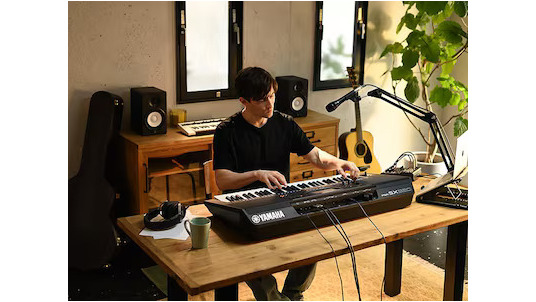
Yamaha's PSR-SX920 and PSR-SX900 back-to-back releases represent a real choice between proven reliability and next-gen performance tech. Both 61-key arranger workstations share the same core DNA, including a 7-inch color touchscreen and FSB keyboard action, but the differences under the hood tell a more interesting story for serious players.
On the surface, they look almost identical—same sleek profile, same intuitive layout, same broad connectivity that's made the SX line a global fave. The real divergence happens in how the SX920 refines key elements that pros actually care about: sound realism, expansion flexibility, and stage-level reliability.
That refinement explains the price gap. The SX920 sits at a premium, and understanding why matters if you're weighing an upgrade. Gear experts at Sam Ash note that studying specs side-by-side helps players see exactly what they're paying for. For anyone choosing their next arranger, knowing where the SX920 steps ahead of the SX900 is essential to making a confident, informed call.
The PSR-SX920 doubles the expansion memory to 2 GB—up from the SX900's 1 GB. For players who rely on expansion packs to build custom sound libraries, that's a real workflow upgrade. The extra space lets musicians load far more Voices and Styles without constantly juggling storage.
It pairs neatly with Yamaha's Expansion Explorer app (Mac, Windows, iOS, Android), which makes browsing, installing, and organizing packs almost effortless. What used to be a tedious data-management task now feels easy with drag-and-drop systems. For arrangers working across multiple genres, this extra headroom means the full library can finally live in the keyboard instead of on a hard drive.
The SX920 doubles the Style Insertion DSP power found in the SX900, and you can hear it. Accompaniment tracks—the rhythmic and harmonic backbone of arranger performance—sound fuller and more defined. Drums hit harder, mixes breathe better, and each instrument sits in its own space.
That extra processing muscle translates to a more lifelike band feel, especially in live settings where the auto-accompaniment needs to blend with real vocals or lead instruments. Players describe the upgrade as "mix-ready out of the box," a subtle but serious step up for both gigging and studio work.
Both models support Bluetooth, but only the SX920 adds full audio-streaming capability. Musicians can now play music wirelessly from phones or tablets and jam along in real time—no aux cables, no adapters, no clutter.
Beyond convenience, it opens creative doors: stream complex arrangements to analyze them, practice to original recordings, or fold backing tracks directly into a live set. For performers who value clean setups and freedom of movement, it's a small feature that makes a big difference.
Here's where Yamaha's PSR-SX920 really earns its upgrade badge: voice tech. It introduces Super Articulation2 (S.Art2) and Super Articulation+ (S.Art+), lifted straight from the flagship Genos2 workstation—a major leap beyond the SX900's standard Super Articulation engine.
S.Art2 uses a 3-part sample system—head, body, and tail—that merges in real time to mimic the natural flow of acoustic performance. The result? Strings that breathe and bow like real instruments, wind patches that respond with lifelike breath and embouchure, and performances laced with subtle fret noise, glissandos, and phrasing nuances that older sampling can’t match.
S.Art+ takes it even further, letting players toggle articulations instantly via panel buttons. You can jump from pizzicato to arco, or flip a trumpet from muted to open mid-performance—all within the same voice. The SX900's original Super Articulation still sounds great, but it can't replicate this level of live, dynamic control.
In practice, the difference is obvious. Musicians describe the SX920 as more "alive," with instruments reacting naturally instead of mechanically. These articulations automate what used to require multiple MIDI layers or manual tweaks, freeing players to focus on expression instead of endless editing.
In recording and arranging contexts, that realism pays off again. SX920 tracks often need far less EQ or automation to sit right in a mix—the voices already sound record-ready. Users comparing both models note that while the SX900 can achieve similar results, it usually demands more time in post to reach the same authenticity.
The PSR-SX920 ships with 1,587 voices. The library spans acoustic instruments, synths, world sounds, and special-effect voices—now enhanced by S.Art2 and S.Art+ technologies for next-level realism.
It packs 575 preset accompaniment styles across genres from jazz and classical to pop, EDM, and world music. Each style includes variations, intros, endings, and fills that make arranger performances sound live and fluid. The Style Dynamics Control system lets players shape intensity on the fly using the Live Control knobs.
Under the hood, the SX920 offers 128-note polyphony, preventing voice dropouts even in dense arrangements, and 4 GB of internal memory for user content. Its FSB (Organ-style) keyboard spans 61 touch-sensitive keys, giving responsive control for both leads and accompaniment.
The PSR-SX900 still holds its own with 1,337 instrument voices, 56 drum/SFX kits, and 480 XG voices—enough range for nearly any session. While it lacks the SX920's advanced articulation engines, its Super Articulation voices still deliver professional depth and character.
Its 525 preset styles mirror Yamaha's flagship Genos heritage, complete with intros, variations, fills, and endings. A built-in Chord Looper records and loops progressions, freeing hands for solos or layered performances.
Performance specs match the SX920: 128-note polyphony, 4 GB internal memory, and identical FSB keyboard action, ensuring a familiar feel for those upgrading within the line.
Where these two models diverge most is expansion memory—and that matters long-term. The SX920 doubles capacity to 2 GB, leaving room for larger expansion-pack libraries without constant content juggling. The SX900's 1 GB capacity, while functional, demands more selective installs and frequent swaps.
Both models support external USB storage, but internal expansion determines how many premium voices and styles stay instantly accessible. For professionals juggling multiple genres or live setups, that extra gigabyte can mean uninterrupted sessions instead of stop-and-swap breaks.
Across forums and review platforms, musicians agree: the PSR-SX920 sounds noticeably more precise and polished than its predecessors. The S.Art2 voices draw the most praise—particularly for how string and wind instruments behave like the real thing, responding with natural phrasing and expressive nuance.
Players also highlight the expanded 2 GB memory as a quiet revolution. With twice the space, they can finally load full expansion packs without the constant delete-and-reload routine. The Expansion Explorer app earns props for making installation simpler across Mac, Windows, and mobile devices, though a few reviewers mention that large packs still take time to load.
One recurring note: a faint, high-pitched "parasite noise" in certain grand-piano voices when played at maximum velocity—mainly noticeable on headphones. Most consider it minor and expect a firmware fix in a future update.
Players often describe the PSR-SX900 as a "mini-Genos," crediting it for packing flagship features into a more affordable, portable frame. The 7-inch touchscreen gets near-universal praise for its clarity and quick response—an intuitive leap from Yamaha's older, button-driven layouts.
Built-in bi-amped speakers impress with clean output and enough power for home use or small venues, while the 25.3-pound chassis earns consistent love from gigging musicians who need a board that travels easily.
There are trade-offs: the semi-weighted FSB action feels less satisfying to classically trained pianists than a fully weighted keybed, and advanced producers find the internal sequencer limited compared to a full DAW. But for most performers, the SX900 hits a sweet spot—expert tone and feel without the price or bulk of Yamaha's top tier.
Choosing between the PSR-SX920 and PSR-SX900 really comes down to how deep you go with your music.
If your workflow demands ultra-realistic instrument voices, flexible expansion space, and the ability to jump between genres mid-set, the SX920 earns its premium. Its S.Art2 engine, doubled 2 GB expansion memory, and pro-grade refinement make it the smarter pick for arrangers and performers who plan to push every feature to its limit.
For those who want top-tier capability without paying flagship prices, the SX900 still delivers. It's built on the same core platform, offers hundreds of premium voices and styles, and keeps Yamaha's intuitive interface intact. This model is ideal for advanced hobbyists, gigging players, and anyone who values versatility and reliability over bleeding-edge tech.
Both keyboards are professional tools—responsive, portable, and deeply musical. The difference isn't about quality, but about how much control and expansion you want in your creative setup. Sam Ash stocks both models and offers consultation with their Gear Experts for anyone ready to test or order their next workstation.


