That 2 p.m. wave of dread isn’t in your head—it’s your cortisol rhythm breaking down. The twist? Both too much *and* too little of this stress hormone trigger anxiety, and they feel completely different. Here’s how to tell which one you have.
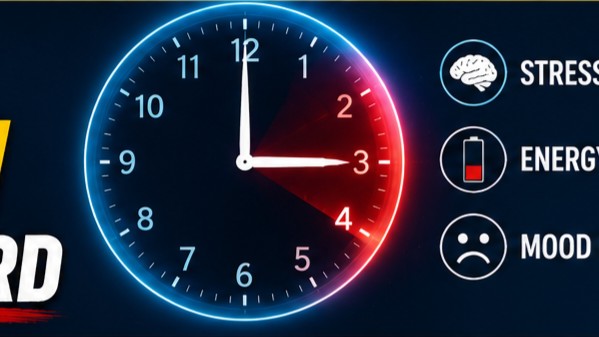
That familiar wall that hits around 2 or 3 p.m. — the creeping tension, the low-grade dread, the sense that something is just off — isn't random. Afternoon anxiety is a widely recognized pattern, one that shows up for a significant number of people with near-clockwork regularity. It arrives, lingers, and fades just as quietly as it came. But there's nothing mysterious about it. The answer lives inside one of the body's most powerful hormones.
Most people who experience recurring afternoon anxiety assume it's a mental health problem — something to manage, push through, or medicate. But the biology tells a more specific story. What feels like anxiety in the afternoon is often the body signaling that its internal hormonal rhythm has been disrupted.
Cortisol is produced by the adrenal glands and plays a central role in regulating energy, alertness, immune response, and stress. It doesn't just flood the system when something scary happens — it operates on a precise daily schedule, rising and falling in a pattern tied directly to the body's circadian rhythm. When that schedule gets thrown off, the downstream effects show up in mood, cognition, and anxiety.
The Reel Deal has examined this connection in depth, breaking down how hormonal imbalances affect everyday mental health in ways most people don't expect. For a closer look at the cortisol-anxiety connection and what it means practically, their content is worth a visit.
Cortisol earns its nickname — the "stress hormone" — but that label undersells what it actually does. Every morning, cortisol surges within the first 30 to 45 minutes of waking in what's called the Cortisol Awakening Response (CAR). This spike is intentional. It primes the brain, mobilizes energy stores, sharpens focus, and essentially boots up the system for the day ahead.
From that morning peak, cortisol levels are supposed to decline gradually throughout the day. By late evening, levels drop to their lowest point, which is what allows the body to wind down and eventually sleep. This arc — high in the morning, low at night — is the diurnal cortisol rhythm, and it is fundamental to how the body manages stress, energy, and mood across a 24-hour cycle.
When this rhythm is functioning properly, most people feel alert and capable in the morning, experience a natural but mild energy dip in the early-to-mid afternoon, and gradually feel sleepier as the evening approaches. That's the design.
The afternoon dip — typically between 1 p.m. and 3 p.m. — is a built-in feature of the circadian rhythm, not a flaw. As cortisol naturally decreases during this window, the body's arousal system temporarily downshifts. In many cultures, this biological pause is honored with a midday rest or nap. In others, it's fought with caffeine and willpower.
Under normal conditions, this dip is mild. Energy softens slightly, focus loosens a bit, and then the body recalibrates and carries on. The key phrase is under normal conditions. When the cortisol rhythm has been disrupted — which chronic stress, poor sleep, and lifestyle factors all contribute to — this natural dip stops being gentle. It becomes a valley, and that valley can feel a lot like anxiety.
Chronic stress is the primary disruptor of cortisol rhythm. When the body faces ongoing stress — whether from work pressure, relationship conflict, poor sleep, financial strain, or even over-exercising — the adrenal glands are asked to keep producing cortisol at elevated levels, day after day.
Initially, the adrenal glands comply. Cortisol stays high when it should be dropping, or it spikes at the wrong times — like late afternoon or evening. Over time, however, the system can swing in the opposite direction. The adrenal glands become less responsive, cortisol output drops below normal, and a different kind of dysfunction sets in. This pattern is sometimes referred to as adrenal fatigue, though the medical community more precisely describes it as HPA axis dysregulation (hypothalamic-pituitary-adrenal axis dysregulation).
Both scenarios — cortisol too high and cortisol too low — disrupt the smooth daily arc that the body depends on. And both can produce anxiety, though for somewhat different reasons.
Here's where things get cyclical, and frustrating. Anxiety doesn't just result from cortisol disruption — it also causes it. When anxiety is felt, the brain interprets it as a threat signal and triggers cortisol release. That cortisol release can then worsen the feeling of anxiety, which triggers more cortisol, which worsens anxiety further.
This feedback loop is one reason afternoon anxiety can feel so relentless once it starts. The body is essentially stuck in a stress-response cycle, with cortisol and anxious feelings feeding into each other. Research consistently shows that individuals with anxiety disorders tend to experience more severe symptoms in the afternoon and evening compared to morning — a pattern that maps directly onto the natural decline phase of the cortisol rhythm.
Addressing anxiety alone, without addressing the cortisol disruption underneath it, often delivers only partial relief. Both sides of the loop need attention.
Cortisol dysregulation doesn't announce itself with a single obvious symptom. It tends to show up as a cluster of complaints that individually seem unrelated — until seen together as part of a hormonal pattern. The symptoms differ depending on whether cortisol is running too high or too low.
Chronically elevated cortisol is a sign the body is stuck in "on" mode — the stress response never fully powers down. Common signs include:
High cortisol keeps the nervous system in a state of low-grade alert. Over time, the constant activation wears down mental resilience, making stressors feel disproportionately intense.
Low cortisol — often the result of long-term HPA axis dysregulation following prolonged high-cortisol periods — produces a different but equally disruptive set of symptoms:
It might seem counterintuitive that low cortisol causes anxiety — but without adequate cortisol, the body struggles to regulate its stress response properly, leaving the nervous system reactive and dysregulated. The result can feel like anxiety even in the absence of an obvious trigger.
One of the more sobering aspects of cortisol dysregulation is what chronic exposure does to the brain itself. This isn't metaphorical — sustained elevated cortisol levels are associated with measurable structural changes in key brain regions.
The hippocampus, which plays a central role in memory formation and stress regulation, is particularly vulnerable. Prolonged high cortisol can reduce hippocampal volume, impairing the ability to form new memories and to accurately assess whether a threat is real or perceived. A less efficient hippocampus means the brain becomes worse at turning off the stress response — which feeds directly back into anxiety.
The amygdala — the brain's emotional alarm system — can actually grow more reactive under chronic cortisol exposure. Over time, the brain becomes increasingly prone to triggering fear and anxiety responses, even when the actual threat level hasn't changed. The threshold for "danger" gets lower, and the body reacts accordingly.
This neurological impact underscores why addressing cortisol disruption early matters. What starts as an afternoon slump can, over years, shift how the brain processes emotion and stress at a structural level.
Testing cortisol isn't complicated, but it does require looking at the pattern throughout the day — not just a single snapshot. A one-time blood draw at the doctor's office gives a limited picture. What reveals cortisol dysregulation is how levels change from morning to night.
The most informative methods include:
Both methods are available through functional medicine practitioners, integrative health providers, and some telehealth platforms. If afternoon anxiety, chronic fatigue, or sleep disruption are recurring issues, testing cortisol rhythm is a practical and illuminating first step — well before assuming the problem is purely psychological.
The afternoon slump is easy to dismiss — another cup of coffee, a quick scroll, push through it. But when that slump consistently comes with anxiety, irritability, or emotional heaviness, the body is communicating something specific. It's not a willpower problem. It's not just stress. It's a rhythmic biological signal that something in the cortisol system has gone off-track.
Understanding the cortisol-anxiety connection reframes the entire experience. The afternoon doesn't have to be the hardest part of the day. Recognizing the physiological mechanism behind it is the first step toward addressing it — whether through lifestyle changes, targeted testing, or working with a healthcare provider who understands hormonal health.
The body runs on rhythm. When the rhythm is disrupted, everything downstream feels harder. Restoring it isn't just about feeling less anxious in the afternoon — it's about giving the brain and body the stable hormonal foundation they need to function well across every part of the day.
For more insights on the biology behind stress, anxiety, and everyday mental health, see what The Reel Deal covers on their channel.


