Children’s brains are wired to absorb new languages with ease in their earliest years. Research shows that early bilingualism strengthens memory, problem-solving, and even empathy—benefits that last a lifetime.
By the time children reach 8 to 12 years old, their brains begin to lose the ability to hear and reproduce unfamiliar sounds as effortlessly as before. That's why experts call early childhood a "critical period" for language learning. During this window, young learners can achieve native-like fluency and pronunciation in a way that adults rarely can (Rizki Amelia, IJIELT 2016; ACTFL, 2024).
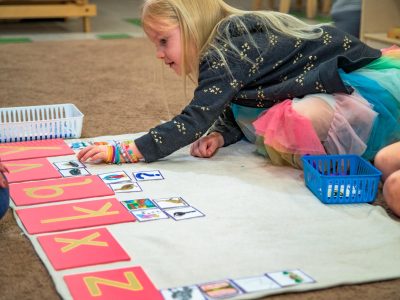
Unlike adults, who depend on grammar drills and rote memorization, children absorb intuitively. Immersion through play, songs, and hands-on activities helps them pick up patterns naturally—just as they did with their first language.
The benefits go far beyond communication. Research shows bilingual children have stronger cognitive skills than monolingual peers. They demonstrate improved memory, creativity, and mental flexibility (Rizki Amelia, IJIELT 2016).
A bilingual brain also learns to filter distractions and focus on relevant details, which boosts multitasking and attention skills. These advantages extend into academic performance, supporting stronger results across subjects from math to reading.
Language is tied to how children see the world—and how they connect with others. Studies suggest bilingual children are better at understanding perspectives, intentions, and emotions (Bialystok & Senman, 2004; Akhtar & Menjivar, 2012). This ability supports empathy and social flexibility, qualities that help them thrive in diverse environments (PMC, Bilingualism in Early Years, 2006).
Being able to access multiple languages also builds confidence. Children learn they can move between different communities and cultures with ease, which lays the foundation for a global mindset.
The academic payoff of bilingualism shows up early. Young learners often develop stronger reading comprehension, writing skills, and metalinguistic awareness—the ability to think about how language works. Bilingual students also tend to score higher on standardized tests like the SAT (Rizki Amelia, IJIELT 2016).
In adulthood, fluency in multiple languages becomes a professional asset. From international business to diplomacy and tourism, bilingualism opens doors to careers that demand cross-cultural communication (University of the Potomac, 2024).
Educators emphasize that language learning is most effective when paired with hands-on exploration. As one representative at San Antonio preschool ExcellED Montessori Plus explained:
"Children learn differently and at different speeds. Schools need to create a safe space where students can explore new concepts while building independence and curiosity through discovery."
Their experience with Spanish immersion programs underscores what the research shows: children thrive when language is integrated into daily learning, not treated as an add-on.
From sharper thinking to greater empathy, the benefits of bilingualism extend far beyond childhood. Whether introduced at home or through structured immersion programs, the earlier children begin, the more lasting the impact.
Parents considering bilingual education have many options. For those interested in expert-led immersion, educators such as those at provide practical ways to nurture these skills from the start.


