Businesses struggle to capture audience attention in an oversaturated digital landscape. Learn why short-form storytelling matters and practical strategies to communicate your brand message effectively in seconds, not minutes.
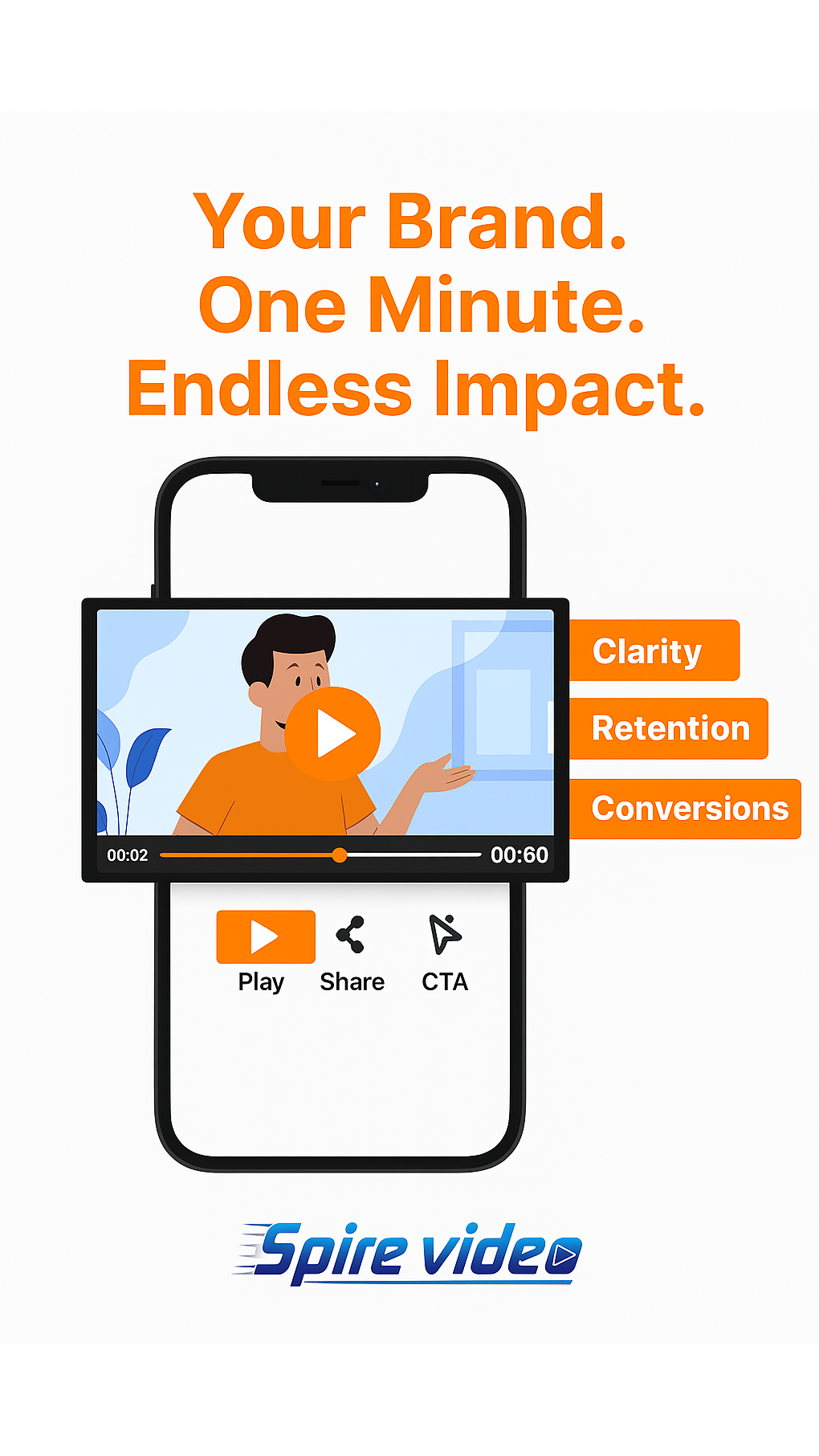
Your potential customers are scrolling through their phones right now, and you have exactly 8 seconds to capture their attention before they move on. That's less time than it takes to read this sentence twice.
Welcome to the attention economy, where every brand is fighting for the same scarce resource: your audience's focus. While most companies create longer content hoping something will stick, the smartest brands are doing the opposite—they're mastering the art of saying more with less.
You've probably experienced this yourself. You craft the perfect explanation of your product or service, complete with features, benefits, and compelling reasons why someone should care. Then you watch your carefully constructed message get buried under an avalanche of competing content.
Here's what's happening: your audience isn't rejecting your message because it's bad—they're rejecting it because their brains are overwhelmed. When faced with too much information, the human brain defaults to ignoring everything rather than processing it all.
This creates a cruel irony. The more you try to explain, the less likely people are to understand. The more value you attempt to communicate, the less value they perceive. Your comprehensive approach becomes your biggest obstacle.
Short-form storytelling isn't about cutting corners—it's about strategic precision. Think of it like editing a novel: you're not removing quality, you're sharpening focus.
Start with your core transformation. Instead of listing everything your product does, focus on the single most important change it creates in your customer's life. What's the before and after that matters most?
Use the "So What?" test. For every piece of information you want to include, ask yourself: "So what? Why should my audience care about this specific detail?" If you can't answer immediately, cut it.
Structure for mobile consumption. Your story should work perfectly on a phone screen with no sound. Use visual hierarchy, clear text, and assume your audience is multitasking.
Hook within the first three seconds. Open with a problem your audience immediately recognizes or a surprising insight that makes them pause their scroll.
End with a clear next step. Don't make people guess what to do after consuming your content. One clear, simple action is infinitely better than multiple options.
Companies using short-form content see significantly higher engagement rates than those using longer formats. Why? Because clarity creates confidence. When you can explain your value proposition quickly, you demonstrate that you understand both your solution and your customer's problem.
Research shows that 96% of consumers watch explainer videos to learn about products before making purchase decisions. But here's the key: they're not watching 10-minute deep dives. They're consuming quick, focused content that answers their immediate questions.
60 seconds might be all they're willing to give you.This isn't about dumbing down your message—it's about respecting your audience's time and cognitive load. When you remove unnecessary complexity, you make it easier for people to say yes.
Most businesses struggle with this because they confuse comprehensive with compelling. They believe more information equals more persuasion. But in today's market, the opposite is true.
Consider how successful brands approach this challenge. They don't try to explain everything—they focus on explaining the right thing. They identify the core message that resonates most with their target audience, then build everything around that single insight.
Some video production companies have built entire business models around this philosophy, specializing in 60-second brand stories that work across all digital platforms. Their success comes from understanding that effective communication isn't about saying more—it's about saying what matters most.
Start by recording yourself explaining your business to a friend in one minute. Then listen back and identify which 15 seconds were most compelling. That's your foundation.
Next, test your message across different platforms. What works on LinkedIn might not work on Instagram, but the core story should remain consistent.
Finally, measure engagement, not just views; short-form content should drive action, not just attention.
The brands winning in today's attention economy aren't the ones with the most to say—they're the ones who know exactly what to say and when to stop talking. Your audience will thank you for the clarity, and your conversion rates will thank you for the focus.


