Most homeowners have no idea their HVAC system could be silently leaking a deadly, odorless gas into their home. Even more surprising? The single maintenance task that prevents this costs less than a monthly utility bill but saves four times its cost in avoided repairs.
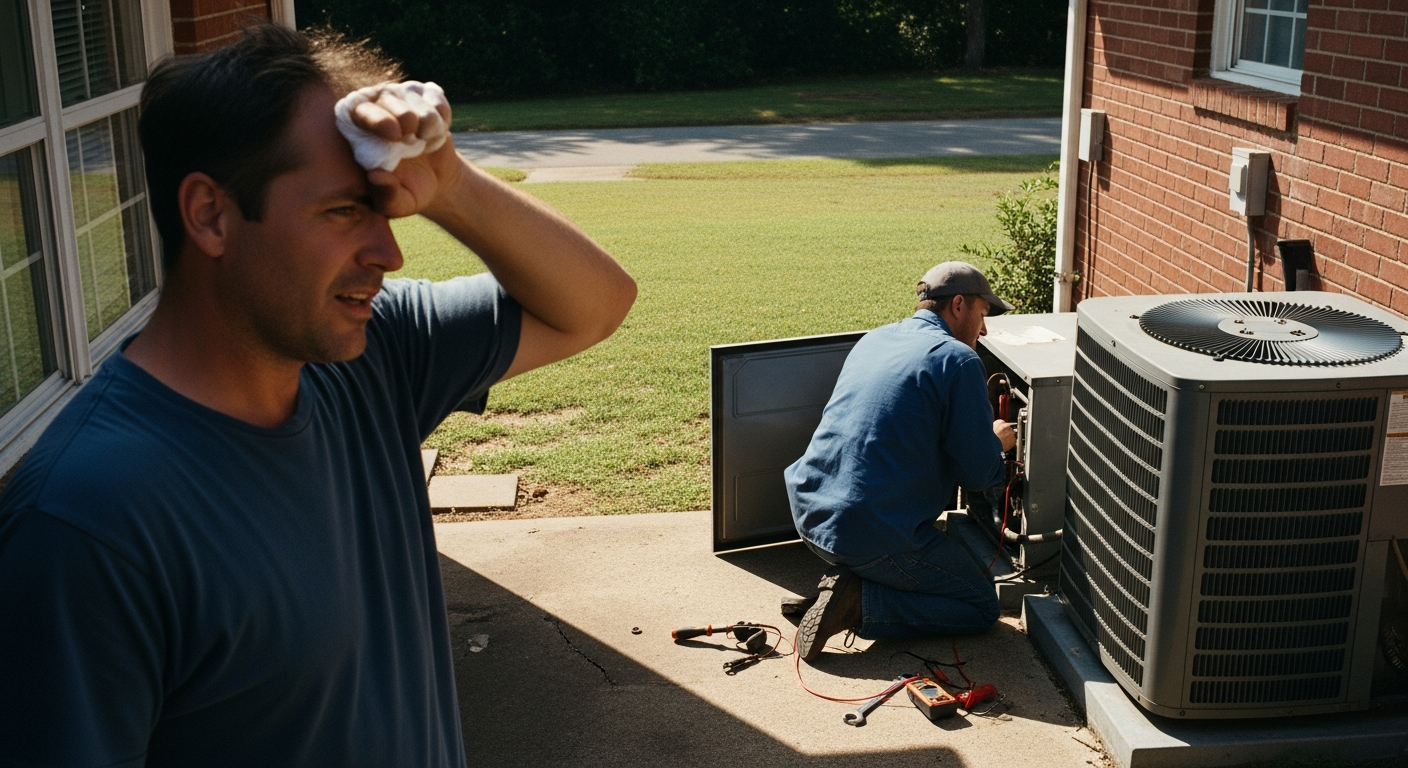
When homeowners think about saving money and keeping families safe, HVAC maintenance rarely tops the priority list. Yet this single investment delivers massive returns in safety protection, energy savings, and equipment longevity that most people never fully realize.
Skipping regular HVAC maintenance creates invisible dangers that can threaten family safety without warning. Systems operating without professional care develop serious hazards that homeowners cannot detect through casual observation. These risks escalate silently until emergency situations arise, often catching families completely unprepared for the consequences.
The most concerning aspect of HVAC neglect involves how quickly minor issues transform into life-threatening problems. What begins as simple component wear can rapidly progress to dangerous gas leaks, electrical failures, or ventilation blockages. Understanding these risks helps homeowners recognize why professional maintenance represents vital safety protection rather than optional upkeep.
Carbon monoxide poisoning stands as the deadliest threat from unmaintained HVAC systems. Cracked heat exchangers, blocked flue pipes, improper ventilation, faulty installation, and dirty burners create conditions where this colorless, odorless gas escapes into living spaces. HVAC professionals prevent these tragedies by annually inspecting fuel-fired appliances and their venting systems, identifying dangerous conditions before they become fatal.
Heat exchanger cracks develop gradually through repeated heating and cooling cycles, making them nearly impossible for homeowners to detect without specialized equipment. Professional technicians use advanced diagnostic tools to identify microscopic fractures that allow combustion gases to mix with household air. Professional inspections are vital because even minor heat exchanger damage requires immediate attention to prevent carbon monoxide exposure.
Clogged air filters create fire hazards by restricting airflow and forcing HVAC systems to overheat. When systems cannot move adequate air through ductwork, motors work harder and generate excessive heat that can ignite nearby debris or cause electrical component failure. These conditions develop gradually, making fire risks difficult to recognize until dangerous overheating occurs.
Overheating motors pose additional fire threats as electrical components deteriorate under extreme temperatures. Worn bearings, damaged wiring, and failing capacitors become ignition sources when systems operate beyond safe temperature ranges. Regular maintenance prevents these conditions by ensuring proper airflow, cleaning components, and replacing filters before restrictions become dangerous.
HVAC systems without regular maintenance lose 20-30% of their efficiency, directly translating to higher energy bills month after month. This efficiency loss happens gradually as dust accumulates on coils, filters become restricted, and components wear out of proper alignment. Homeowners often attribute rising utility costs to rate increases rather than recognizing how system degradation drives consumption higher.
The efficiency decline affects every aspect of system operation. Dirty evaporator coils cannot transfer heat effectively, forcing compressors to run longer cycles. Restricted airflow makes blower motors work harder while delivering less comfort. Refrigerant levels drop slowly through minor leaks, reducing cooling capacity and increasing energy consumption. Each degraded component compounds the problem, creating exponential efficiency losses over time.
Energy Star research demonstrates that routine HVAC maintenance reduces energy usage by 5% to 15%, generating significant savings on utility bills. These savings accumulate monthly, often paying for maintenance costs within the first year while delivering ongoing benefits for the system's entire lifespan. The reduction percentages vary based on system age, previous maintenance history, and operating conditions.
Well-maintained systems operate at design efficiency levels, using minimal energy to maintain comfortable temperatures. Clean components transfer heat effectively, proper refrigerant levels optimize cooling cycles, and calibrated thermostats prevent energy waste. Professional maintenance ensures every system component contributes to peak efficiency rather than fighting against accumulated wear and contamination.
Preventive maintenance delivers exceptional financial returns, with every dollar invested saving up to four dollars in future repair costs. This savings ratio results from identifying and addressing minor issues before they escalate into major system failures requiring expensive emergency repairs. Small problems like worn belts, dirty coils, or low refrigerant levels become catastrophic failures when left unaddressed.
The cost comparison becomes dramatic during peak seasons when emergency repairs command premium pricing. A $200 annual maintenance visit prevents $800 emergency compressor replacements, $600 heat exchanger repairs, or $400 electrical component failures. Professional technicians catch developing problems during routine visits, allowing homeowners to plan repairs during off-peak periods when parts and labor cost significantly less.
Many HVAC manufacturers require routine professional servicing to maintain warranty coverage, protecting homeowners from costly out-of-pocket expenses for major repairs. Warranty terms typically specify annual maintenance by qualified technicians, with detailed service records required for warranty claims. Skipping maintenance voids coverage, leaving homeowners responsible for expensive repairs that warranties would otherwise cover.
Warranty protection becomes especially valuable for high-efficiency systems where individual components can cost thousands of dollars. Compressors, heat exchangers, and control boards carry substantial replacement costs that warranty coverage eliminates. Professional maintenance documentation provides the service history manufacturers require, ensuring warranty protection remains valid throughout the coverage period.
Emergency HVAC service calls typically cost 100-400% more than scheduled maintenance visits due to after-hours labor rates, rush delivery charges, and limited technician availability. Systems that fail during extreme weather events face the highest premiums as demand peaks and replacement parts become scarce. Regular maintenance prevents most emergency situations by addressing problems before they cause complete system failures.
Emergency repairs also force homeowners to accept whatever technician and pricing is available, eliminating opportunities to compare quotes or schedule convenient service times. Preventive maintenance allows homeowners to choose preferred contractors, schedule service during normal business hours, and plan repairs around family schedules rather than facing urgent replacement decisions.
Well-maintained HVAC systems last 15-25 years on average, compared to 10-15 years for poorly maintained units, representing a significant extension in equipment value and performance. Regular maintenance can extend system life substantially, transforming what would be frequent replacement cycles into decades of reliable service.
The lifespan extension results from preventing premature wear on critical components like compressors, heat exchangers, and blower motors. Professional maintenance maintains proper lubrication, cleans heat transfer surfaces, and ensures optimal operating conditions that prevent accelerated aging. Components operating within design parameters experience normal wear rates rather than the accelerated deterioration that occurs in neglected systems.
Exceptional maintenance programs can push HVAC system lifespans beyond 30 years, with some units delivering reliable service for decades when receiving consistent professional care. These extended lifespans require thorough maintenance approaches that address every system component, from ductwork and controls to mechanical components and electrical connections.
Systems reaching extreme longevity typically receive twice-yearly professional service, prompt repair of minor issues, and proactive component replacement before failures occur. This intensive maintenance approach costs more annually but delivers exceptional value by eliminating multiple replacement cycles that other homeowners face. The investment in premium maintenance pays massive dividends through decades of avoided replacement costs.
Well-maintained HVAC systems effectively filter pollutants, control humidity levels, and circulate fresh air, significantly improving indoor air quality for family health and comfort. Regular filter replacement prevents dust, pollen, pet dander, and other contaminants from accumulating in ductwork and circulating throughout living spaces. Professional maintenance ensures filtration systems operate at peak effectiveness.
Indoor air quality improvements become especially important for families with allergies, asthma, or respiratory sensitivities. Clean filters capture airborne particles before they reach living spaces, while properly maintained systems control humidity levels that prevent mold growth and dust mite proliferation. Regular maintenance transforms HVAC systems into thorough indoor air quality management systems.
Homeowners can handle basic maintenance tasks like filter changes and outdoor unit cleaning, but professional service addresses complex system components that require specialized tools and expertise. DIY maintenance saves money on simple tasks while professional service prevents safety hazards and ensures thorough system care that protects warranties and maximizes performance.


