You’ve been told paid ads are the fastest path to visibility, but 94% of searchers actively skip them entirely. Here’s what most small businesses miss about organic search—and why it could be costing you over half your potential traffic.
The search engine landscape reveals a striking truth about user behavior that should reshape how small businesses approach their online marketing. While paid advertising dominates marketing budgets, the overwhelming majority of searchers actively avoid clicking on ads in favor of organic results.
The numbers tell a compelling story: 94% of all search clicks go to organic results, leaving just 6% for paid advertisements. This statistic fundamentally challenges the assumption that paid advertising is the fastest path to search visibility. Instead, it reveals that users consistently prefer organic listings when making their search decisions.
This overwhelming preference for organic results isn't random—it reflects deep-seated user behavior patterns that have developed over decades of search engine use. Understanding why users gravitate toward organic results provides the foundation for building more effective marketing strategies that align with actual user preferences rather than marketing assumptions.
Users perceive organic search listings as more credible and trustworthy than paid advertisements. This trust stems from the understanding that organic results are earned through relevance, quality content, and authority rather than simply paying for placement. When someone searches for information, they instinctively seek results that have been validated by the search engine's algorithm rather than purchased position.
The psychological impact of this trust factor cannot be overstated. Users have developed sophisticated ad-blindness over years of internet use, learning to distinguish between paid placements and earned results. They understand that organic listings represent genuine expertise and value, while ads represent commercial intent.
Most search queries are informational or navigational rather than having direct commercial intent. Users seeking answers, explanations, or specific information naturally gravitate toward organic results because these listings typically provide educational content rather than sales-focused messaging.
Organic results better align with the user's journey through the research and decision-making process. Businesses that understand this dynamic can position themselves as trusted authorities through strategic content creation and distribution, meeting users where they are in their search journey rather than interrupting with commercial messages.
Paid advertising creates a dependency cycle that requires continuous investment to maintain visibility. The moment ad spending stops, traffic disappears entirely, leaving businesses with no sustainable online presence. This creates an expensive treadmill where businesses must continuously pay for the same visitors month after month.
In contrast, organic rankings provide compounding returns. Once established, organic positions continue generating traffic without ongoing costs, creating a sustainable foundation for long-term business growth. The initial investment in SEO and content creation pays dividends for months or years, unlike paid ads that require immediate and ongoing payment for every click.
Organic search accounts for over 53% of all website traffic, significantly outperforming organic social media and other traffic sources. Businesses that ignore organic search optimization effectively abandon access to the largest single source of online traffic. This represents a massive missed opportunity for customer acquisition and revenue generation.
The scale of this missed opportunity becomes clear when examining conversion rates. Organic traffic often converts at higher rates than other traffic sources because users arriving through organic search have demonstrated genuine interest in the topic or solution through their search query.
Organic traffic generates higher-quality leads with better engagement metrics and improved conversion rates compared to other traffic sources. Users who find businesses through organic search have typically engaged in more extensive research, making them more informed and qualified prospects when they arrive.
These leads also demonstrate higher lifetime value because the relationship begins with trust rather than interruption. When users discover a business through helpful content or organic search results, they enter the relationship with a positive impression of the company's expertise and credibility.
Local SEO presents a particularly powerful opportunity for small businesses to compete effectively against larger competitors. The Google Maps Pack—the three local listings that appear in local search results—receives a significant portion of clicks for location-based searches. Optimizing for these positions can dramatically increase visibility for "near me" searches and local service queries.
Success in local search requires consistent business information across all online platforms, active management of customer reviews, and strategic optimization of Google Business Profile listings. Small businesses that master these fundamentals often outrank much larger competitors in their local markets.
Building consistent citations across online directories and platforms establishes business credibility and improves local search rankings. This process involves ensuring that business name, address, and phone number (NAP) information appears consistently across numerous online platforms, from local directories to industry-specific sites.
Citation building also creates multiple pathways for customers to discover the business beyond just the primary website. Each citation serves as a potential entry point for new customers while simultaneously strengthening the business's authority signals for search engines.
Strategic content creation involves developing a single core message or story and transforming it into multiple formats to reach audiences across different platforms and consumption preferences. A single business insight can become a blog post, video, podcast episode, infographic, slideshow, and news article, multiplying the reach without proportionally increasing the creation effort.
This approach recognizes that different audiences prefer different content formats and consume information on different platforms. Video-focused audiences on YouTube require different presentation than readers preferring detailed blog posts or professionals browsing LinkedIn updates.
Modern content distribution extends far beyond posting on a business website and sharing on social media. Strategic distribution involves placing content across many platforms, including industry publications, news sites, podcast networks, video platforms, and professional networks.
This broad distribution creates multiple discovery pathways while building domain authority through diverse backlink profiles. Each platform placement represents an opportunity for new audience discovery and strengthens the overall online presence through increased visibility across the internet ecosystem.
Securing placement on recognized media outlets like Fox, NBC, CBS affiliates, and major online publications provides significant credibility boosts while generating high-authority backlinks. These placements transform businesses from unknown entities into recognized authorities in their fields.
The key to media placement lies in developing newsworthy angles and insights that provide genuine value to media outlet audiences. Rather than promotional content, successful media placement focuses on industry expertise, trend analysis, and educational value that naturally positions the business as a thought leader.
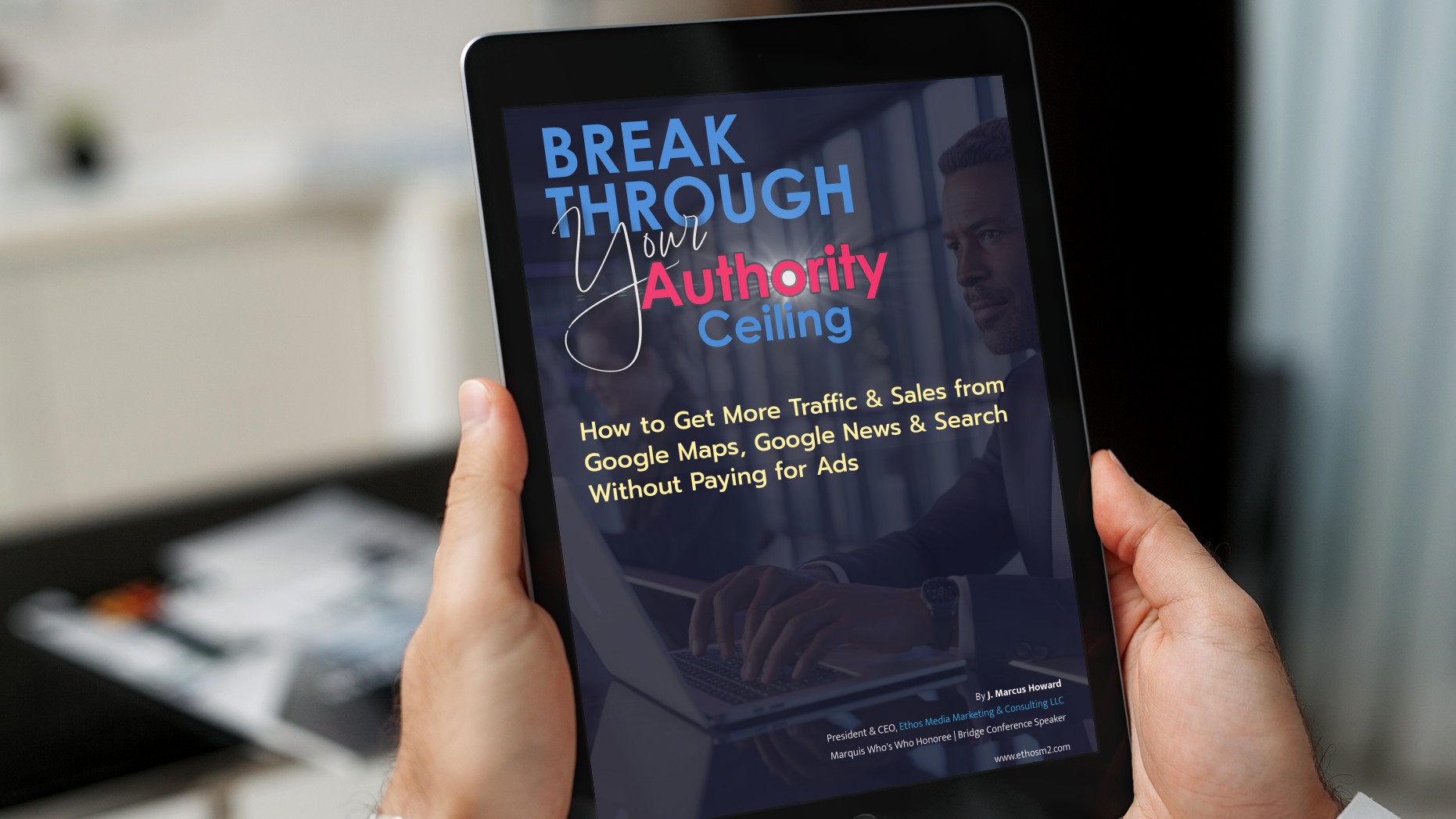
Most small businesses hit an invisible barrier in their growth where traditional marketing approaches stop delivering results. This authority ceiling represents the point where businesses need credibility and recognition rather than just more advertising to continue growing. Breaking through requires shifting from promotional tactics to authority-building strategies.
Authority building involves consistent demonstration of expertise through valuable content, media recognition, and industry participation. This process transforms businesses from service providers into trusted advisors, creating competitive advantages that paid advertising cannot replicate.
The financial mathematics of organic growth versus paid advertising become increasingly favorable over time. While paid ads provide immediate results but require continuous investment, organic strategies require upfront effort but generate compounding returns. A well-executed content and SEO strategy continues producing results for years after the initial investment.
Studies demonstrate this clearly: businesses implementing local SEO strategies often experience significant increases in website traffic and phone inquiries. These results continue generating value without ongoing advertising costs.
Many small businesses allocate the majority of their marketing budgets to paid advertising while neglecting the organic strategies that could provide better long-term returns. This misallocation often stems from the immediate gratification of paid advertising compared to the patience required for organic growth strategies.
The reality is that sustainable business growth requires a foundation of organic visibility that paid advertising cannot provide. Businesses that rebalance their marketing approach to prioritize organic strategies often discover they can achieve better results with lower ongoing costs while building valuable business assets in the form of content, authority, and search rankings.
The shift toward organic-focused marketing represents more than just cost savings—it creates sustainable competitive advantages that compound over time. While competitors continue paying for the same clicks month after month, businesses with strong organic foundations enjoy increasing returns on their initial marketing investments.
For small business owners ready to break through their authority ceiling and dominate organic search results, Ethos Media & Marketing LLC specializes in helping businesses achieve sustainable growth through strategic content distribution and local SEO optimization.


