You know that relaxed, melted feeling after 20 minutes in a hot tub? It might actually be your body’s early warning system telling you to get out. Here’s what dizziness, nausea, and racing heartbeat really mean when you’re soaking.
A hot tub session is supposed to leave you feeling relaxed and refreshed - not dizzy, nauseated, or dangerously overheated. Knowing when to step out is just as important as knowing how to enjoy the soak.
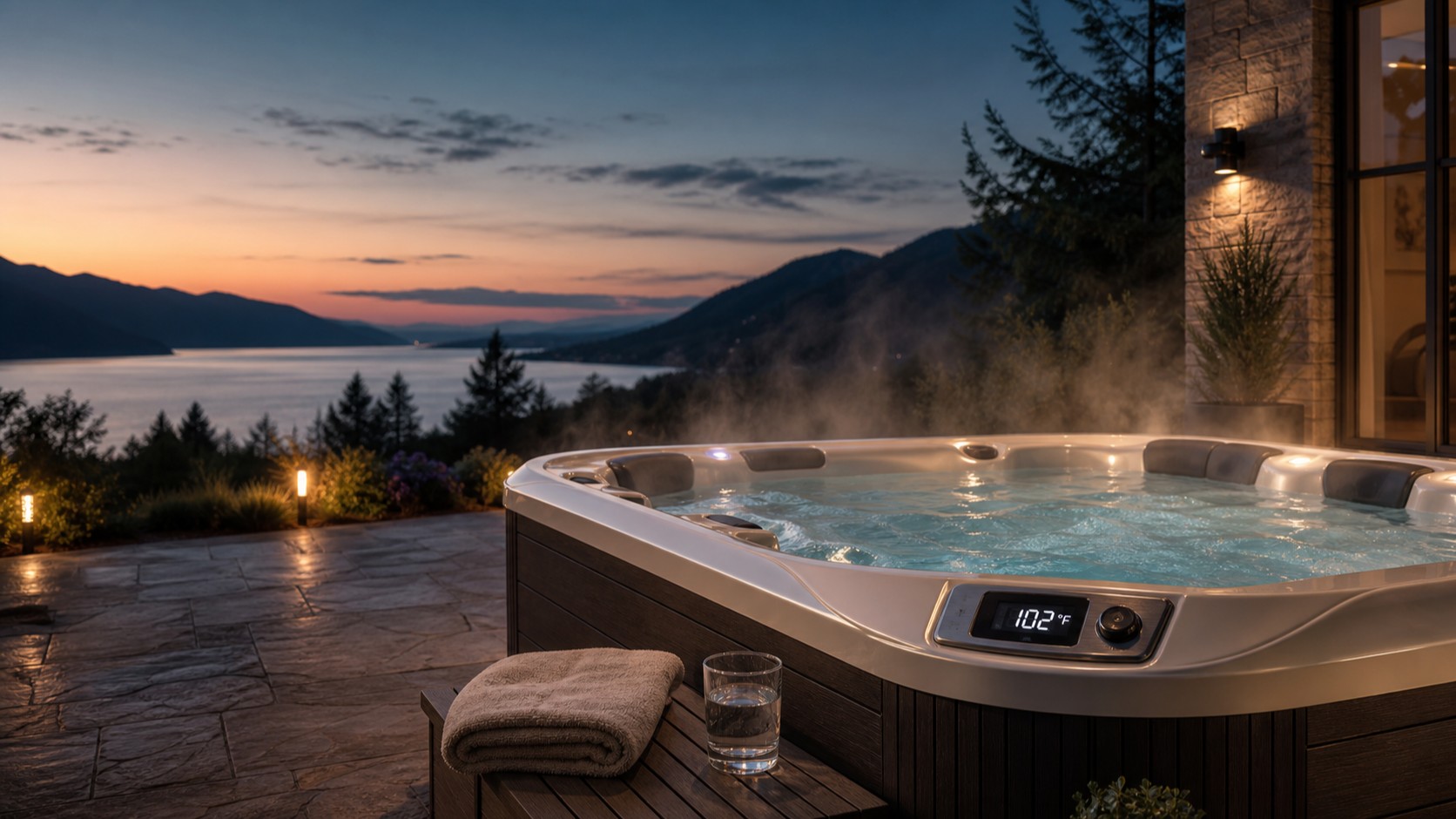
The U.S. Consumer Product Safety Commission (CPSC) sets a clear ceiling: hot tub water should never exceed 104°F (40°C). Most manufacturers and public health guidelines treat this as the absolute maximum, with a preferred upper limit of 102°F (38.9°C) for regular use. That two-degree difference carries real weight - at 104°F, the body works hard to shed heat, and the margin for error shrinks considerably. Most healthy adults find the 100°F-102°F range more comfortable, and it supports longer, more sustainable soaks without pushing the body's heat regulation to its limits.
The CPSC also flags alcohol as a serious risk multiplier. Drinking before or during a soak significantly raises the chances of drowsiness, loss of consciousness, and hyperthermia-related drowning - a combination worth taking seriously.
Hot water immersion causes blood vessels near the skin to dilate - a process called vasodilation - which helps release internal heat. Heart rate increases to compensate for the expanded blood vessel volume, producing a mild cardiovascular load similar to light exercise. For a healthy adult, this is manageable. For someone with an underlying heart condition, that same response can be significantly more taxing. As a session continues and core temperature climbs, the body moves through identifiable stages: heat fatigue, then heat exhaustion, and in serious cases, heat stroke. Symptoms escalate from excessive sweating and muscle cramps to disorientation and fainting - and that progression can feel sudden when early warning signs go unnoticed.
Dehydration is one of the most underestimated hot tub risks. The body sweats during a hot water soak just as it does in a sauna - but because you're surrounded by water, the sensation is completely masked. Fluid loss still accumulates. Drinking water before and during a soak is the basic counterbalance to a process that continues whether you feel it or not.
For most healthy adults, a reasonable hot tub session runs 15 to 30 minutes when water sits between 100°F and 104°F. At the high end of that range - right at 104°F - sessions should be capped closer to 10 to 15 minutes. The hotter the water, the faster core temperature rises, and the narrower the safe window becomes. First-time users, or anyone returning after a long break, should start at the shorter end and build up gradually across multiple sessions rather than going straight to a 30-minute soak at maximum heat.
A useful rule of thumb: if the temperature would be uncomfortable to hold against bare skin for an extended period, it's probably too hot for a half-hour soak. The hotter the water, the shorter the time the body can safely manage, with safe exposure time decreasing significantly as temperature rises. Staying in longer does not deepen the benefits - it only increases risk.
These signals mean exit immediately - not after finishing the current song or waiting to see if it passes:
Prolonged exposure past these warning signs can escalate into heat stroke or organ stress - conditions that require emergency medical attention. None of these symptoms should be waited out while still in the water.
Dehydration often develops alongside overheating, and its early signs are easy to miss. Unusual thirst, dry mouth, mild dizziness, or a low-grade headache are the first indicators. Left unaddressed, symptoms can intensify into a rapid heartbeat, extreme thirst, or fever. Mild dehydration is manageable with prompt rehydration, but severe dehydration in a hot tub environment - combined with heat stress - is a medical emergency. Keeping water nearby and sipping regularly throughout a session is the simplest prevention.
Elevated core body temperature during early pregnancy has been linked to increased risk in obstetric research. Most medical guidance recommends keeping water under 100°F and limiting session length - or avoiding hot tubs entirely during the first trimester. A physician should be consulted before any hot tub use during pregnancy. This is a consistent finding across obstetric guidance, not an overly cautious recommendation.
Children regulate body heat less efficiently than adults, which means they overheat faster and with less warning. The recommended ceiling for children is under 95°F (some guidelines suggest under 100°F as a softer limit), with sessions kept to no more than 10 to 15 minutes and direct adult supervision throughout. Hot tub jets and seating designed for adults can also pose submersion risks for smaller children, making supervision non-negotiable.
The vasodilation and elevated heart rate that hot water triggers are mild inconveniences for a healthy adult, but meaningful cardiovascular stressors for someone with a diagnosed heart condition or hypertension. Anyone in this group should get physician clearance before regular hot tub use and generally stay at the lower end of the temperature range - 95°F to 100°F. Diabetes deserves special mention: diabetic neuropathy can reduce skin sensation, making it difficult to notice dangerously hot water before a burn occurs. A thermometer check before entry is a practical safeguard for anyone with reduced peripheral sensation.
If any overheating or dehydration symptoms appear, the response is straightforward:
A sudden drop in blood pressure upon exiting is a real and underappreciated risk. Standing too quickly after a long soak can cause lightheadedness or fainting even in otherwise healthy adults. Exiting slowly and sitting at the edge of the tub for a moment before standing is a simple habit worth forming.
The warning signs of overheating and dehydration are not obscure - dizziness, nausea, a racing heartbeat, and sudden fatigue are the body's clear signals to get out. Hot tubs are relaxing by design, which makes it easy to rationalize staying in just a little longer. Building a simple routine - capping sessions at 15 to 30 minutes, keeping water nearby, and knowing which groups need stricter limits - removes the guesswork and keeps every soak restorative rather than risky. For a closer look at how temperature affects soak safety across different groups and situations, Collective Relaxation's full temperature guide covers the complete picture, including duration, physiology, and group-specific recommendations.
For anyone looking to find hydrotherapy options with wellness and safety in mind, Leaf World Media LLC connects readers with trusted resources and insights across the home wellness space.


