An in-depth but accessible look at what it actually costs to start a business in Sweden, including overlooked expenses, tax considerations, and practical budgeting insights for foreign founders.
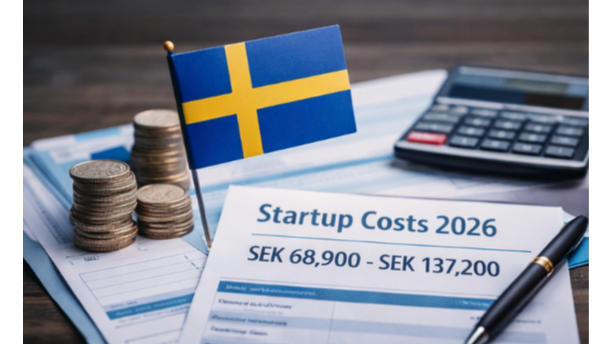
Sweden is often described as one of Europe’s most business-friendly countries. Clear regulations, strong institutions, and digital public services make company formation appear straightforward. However, many founders discover that the real challenge is not registration, but budgeting accurately for the first year.
Initial estimates frequently focus on share capital and registration fees, while a range of secondary costs are only discovered once the process is already underway.
While registering a private limited company in Sweden is relatively affordable, the total cost of becoming operational is significantly higher. Banking fees, accounting services, insurance, documentation requirements, and office solutions all add up quickly.
For foreign entrepreneurs, these costs are often higher due to extended compliance checks, document certification requirements, and longer bank onboarding processes. This is particularly relevant for non-EU founders, who may face additional scrutiny under anti-money laundering regulations.
Opening a corporate bank account is frequently cited as one of the most time-consuming steps in the process. Swedish banks require detailed information about ownership, business activities, and funding sources. Delays at this stage can stall company registration, as share capital must be deposited before incorporation is completed.
Accounting is another area where underestimation is common. Even small companies are required to maintain accurate records, file VAT returns when applicable, and submit annual reports. Outsourcing these services is often more cost-effective than attempting to manage compliance internally during the early stages.
Sweden’s tax system is transparent, but not forgiving. Corporate tax, VAT obligations, and employer contributions can have a significant impact on cash flow if they are not planned for in advance.
Founders who spend extended periods in Sweden must also consider personal tax residency rules, which may trigger taxation on worldwide income. Dividend withholding taxes and capital gains treatment vary depending on ownership structure and treaty coverage, making early planning essential.
Sweden’s digital-first approach reduces paperwork and administrative friction, but it does not eliminate compliance requirements. Online filing systems make reporting easier, yet deadlines, thresholds, and documentation standards still apply.
Digital tools are most effective when combined with a clear understanding of obligations and a realistic financial buffer for unexpected costs.
Many early-stage companies fail not because the business idea is weak, but because financial planning was incomplete. A realistic budget provides founders with control, flexibility, and the ability to absorb delays or additional requirements without jeopardizing operations.
A full breakdown of first-year startup costs, hidden expenses, and optimization strategies for 2026 is covered in the complete guide: How Much Does it Cost to Start a Business in Sweden?


