You can’t just click a button to claim Google’s coveted Position Zero—but there’s a specific framework their systems use to decide which pages earn it. The difference between being featured and being overlooked comes down to how you structure one critical element.
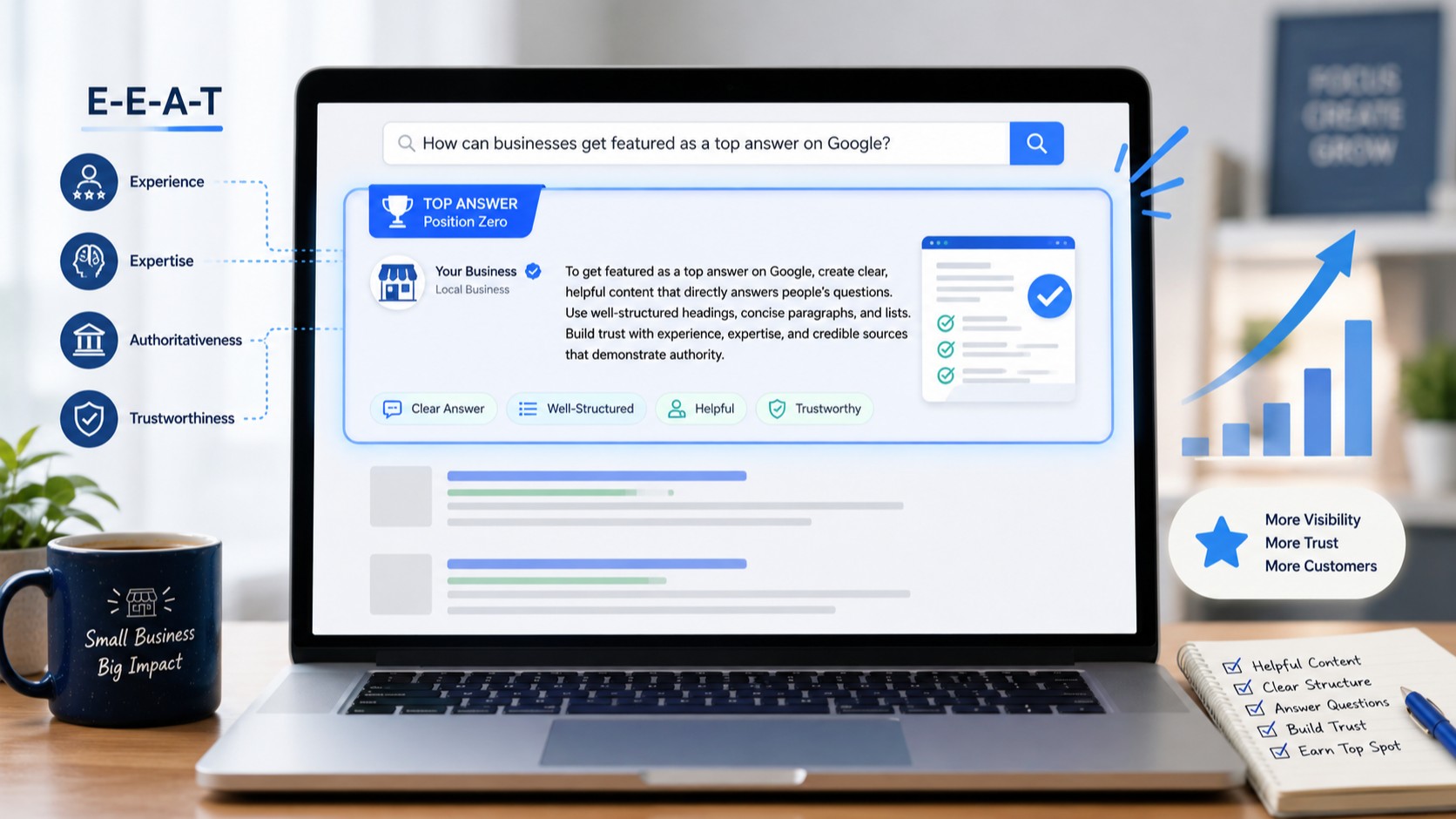
Every business owner wants the same thing: to be the first answer someone sees when they search for what you offer. That top slot — sometimes called Position Zero — is a Featured Snippet, and getting there requires understanding exactly what Google is looking for and why.
Here's the honest truth that a lot of SEO advice glosses over: you cannot directly mark your page as a Featured Snippet. According to Google's own developer documentation, "Google systems determine whether a page would make a good featured snippet for a user's search request, and if so, elevates it." That's the whole policy in one sentence.
There's no special tag, no application process, and no shortcut. What there is, however, is a clear set of principles Google's automated systems follow when deciding which content deserves that spotlight. Understanding those principles is where the real opportunity lies — and it's where small and mid-sized businesses can genuinely compete with larger brands.
The teams at 365 Lead Strategy work closely with business owners navigating exactly this challenge — building content that earns visibility not through tricks, but through relevance and quality that Google's systems are designed to reward.
A Featured Snippet is a special search result box that appears at the very top of Google's results page — above the regular organic listings. It pulls a short excerpt directly from a webpage and displays it as a direct answer to a user's query. The source page is credited with a link, but the answer itself is shown right there on the results page, no click required.
Google describes them as results where "the format of a regular search result is reversed, showing the descriptive snippet first." They can also appear inside People Also Ask boxes, multiplying the chances for a single piece of well-structured content to show up multiple times on the same page.
Featured Snippets occupy what the SEO world calls Position Zero — above the first organic result. Even if a page already ranks on the first page of Google, being elevated to a snippet can dramatically increase click-through rates and brand visibility. Users searching for quick answers tend to trust the page that Google chose to highlight. That implied endorsement carries real weight, especially for businesses trying to establish credibility in a competitive space.
For local service providers, consultants, and product-based businesses alike, a Featured Snippet can be the difference between being noticed and being scrolled past entirely.
Not all Featured Snippets look the same. Google pulls content in several formats depending on what best answers the query:
Google doesn't limit itself to one format per topic — it selects whichever format best serves the searcher. That means a single well-structured page can qualify for multiple snippet types across different queries, which is a strong argument for mixing content formats strategically.
Winning a Featured Snippet isn't random. Google's automated ranking systems follow consistent principles to identify content that is genuinely helpful and trustworthy. Two of the most important frameworks shaping those decisions are E-E-A-T and the people-first content standard.
E-E-A-T stands for Experience, Expertise, Authoritativeness, and Trustworthiness. Google uses a mix of signals that reflect these qualities to identify high-quality content — and according to Google's own guidelines, trust is the most important of the four. The other three contribute to trust, but content doesn't need to demonstrate all of them equally to be considered helpful.
Here's how each element plays a practical role:
E-E-A-T is especially critical for topics Google classifies as YMYL — "Your Money or Your Life" — which includes health, finance, legal advice, and safety. For businesses operating in these spaces, demonstrating strong E-E-A-T isn't optional; it's the baseline.
Google is explicit about this distinction in its own documentation: "Google's automated ranking systems are designed to prioritize helpful, reliable information that's created to benefit people, and not content that's created to manipulate search engine rankings."
People-first content starts with a real audience in mind. It answers questions that visitors are actually asking. It leaves readers feeling informed, not confused. Search-engine-first content, by contrast, is built around keyword density, arbitrary word counts, or trending topics that have nothing to do with the business's actual expertise.
The practical test Google recommends: After reading your content, will someone leave feeling they've learned enough to help achieve their goal? If the honest answer is no, the content isn't ready — regardless of how well it's technically optimized.
Once the foundation of quality and trust is in place, structure becomes the lever that helps Google recognize and extract your best answers. Below are four of the most effective structural practices for businesses targeting Featured Snippets.
Google's systems are looking for a clear, concise answer near the top of the page. Burying the answer in the fifth paragraph — after a long backstory — is one of the most common mistakes in business content. Lead with the answer, then expand on it.
A good rule of thumb: if the heading on a page is a question, the very next sentence should begin answering it. This mirrors how Google's paragraph snippet format works — it pulls a tight, focused response, not a general overview.
Research from Semrush confirms that question-based queries — particularly those beginning with how to, what is, why does, and how does — are the most common triggers for Featured Snippets. For businesses, that means identifying the specific questions your customers are already asking and building focused content around each one.
Think about the calls you get before a sale. What do people ask first? Those questions are the foundation of a strong snippet strategy — and they're often more valuable than generic industry keywords because they reflect actual search intent.
Well-organized content isn't just easier to read — it's easier for Google to parse. Using H2 and H3 headings to label each section, breaking processes into numbered steps, and presenting comparisons in table format all improve the likelihood that Google can extract a clean, useful snippet from the page.
Each section should be self-contained enough that it could stand alone as an answer. Think of the page as a collection of individual Q&A cards, each one optimized for a slightly different phrasing of a related question.
Google's guidelines specifically reward content that goes beyond the obvious. "Does the content provide insightful analysis or interesting information that is beyond the obvious?" is one of the self-assessment questions Google asks creators to consider. Thin content that simply restates what every other page already says won't earn a snippet — and it won't earn reader trust either.
Depth doesn't mean length for its own sake. It means covering the nuances, the edge cases, and the practical details that make a reader think, "This is exactly what I needed." Businesses that shift their strategy toward answering specific long-tail questions with direct, well-developed responses — rather than producing longer articles on broad topics — tend to see meaningful gains in Featured Snippet visibility over time.
Structure and depth get a page noticed. Trust is what makes it stick. Two simple but often overlooked practices can significantly strengthen the trust signals on any business content page.
Google's guidelines highlight a straightforward concept they call "Who" — making it clear who authored the content. "Something that helps people intuitively understand the E-E-A-T of content is when it's clear who created it," the documentation states.
In practice, this means adding author bylines to blog posts and articles, linking those bylines to an author profile page, and making sure that page explains the author's background and areas of expertise. For a small business, that might simply mean a short bio on the owner or the team member who wrote a particular guide. It's a low-effort addition that sends a meaningful trust signal.
Google also places weight on the "How" — transparency about how content was created. For a product review, that means explaining how many products were tested and what the methodology was. For a how-to guide, it might mean referencing real project experience or citing industry standards. For any content, it means being clear about the sources and reasoning behind the claims being made.
This isn't about academic citation formats. It's about giving readers — and Google — enough context to trust that the content reflects genuine knowledge rather than assembled generalities. A roofing company explaining exactly how they diagnose a specific type of leak, based on hundreds of real-world jobs, is demonstrating the kind of experience-backed authority that E-E-A-T is designed to surface.
Publishing a strong piece of content is not a one-time task. Google's systems favor content that remains accurate and current — and there's an important distinction between genuinely updating content and simply changing a publication date without making meaningful changes. The latter is explicitly flagged in Google's guidelines as a practice to avoid.
Meaningful updates include adding new data, correcting outdated information, filling out thin sections based on new developments, or revising answers that no longer reflect best practices. For businesses in fast-moving industries — technology, finance, healthcare, home services — a quarterly content review is a practical minimum. Pages that consistently remain accurate and relevant over time build the kind of sustained authority that earns and keeps Featured Snippet placement, rather than briefly winning and losing it as competitors improve their own content.
The throughline across every principle covered here is the same: Google rewards content that genuinely serves people. Not content engineered to rank, not content that covers topics because they're trending, and not content that leaves readers reaching for a second search to fill in the gaps.
For business owners and marketing managers, this is actually good news. It means the path to Position Zero is open to any organization willing to invest in real expertise, honest communication, and consistent quality. Large budgets and technical complexity matter far less than clarity, depth, and authenticity.
The businesses that consistently show up at the top of Google's results aren't gaming the system — they're doing the work of being genuinely useful. Every page is an opportunity to answer a real question, demonstrate real knowledge, and build the kind of trust that both readers and Google's automated systems are designed to recognize.
For businesses ready to turn that understanding into a measurable search strategy, 365 Lead Strategy helps small and medium businesses build the kind of content-driven online visibility that compounds over time.


