CMS allows virtual direct supervision for most services through December 31, 2025, and has permanently authorized it beginning January 1, 2026, only for a limited subset of incident‑to services. Learn how CMS rules and ACR guidance may affect your imaging center.
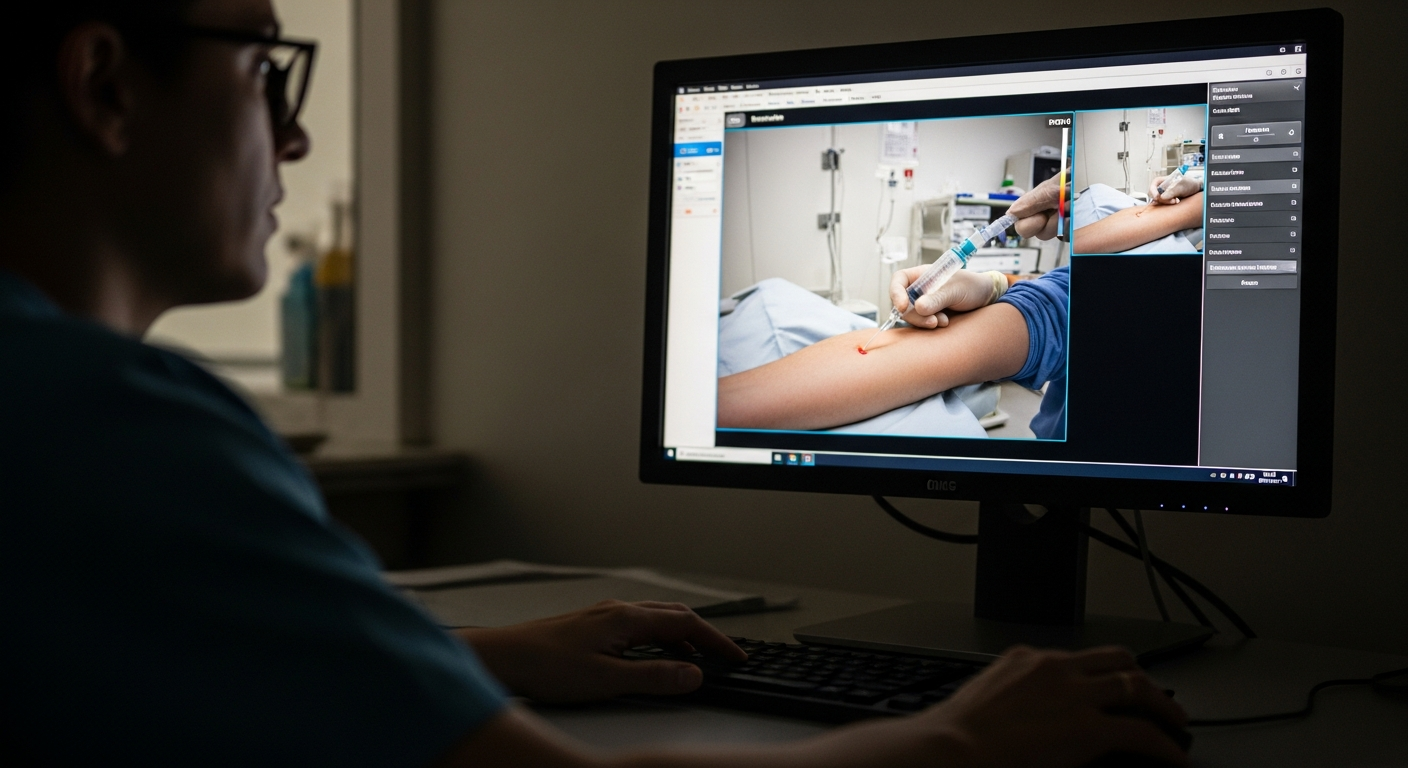
Virtual contrast supervision has transitioned from an emergency necessity to an industry standard. As imaging centers adapt to this shift, understanding the regulatory framework and implementing proven best practices becomes critical for maintaining patient safety, regulatory compliance, and operational efficiency.
CMS's 2026 Medicare Physician Fee Schedule Final Rule has extended virtual direct supervision through December 31, 2025, for most services. Beginning January 1, 2026, CMS permanently allowed virtual direct supervision only for a limited subset of incident-to services (e.g., PC/TC '5' and CPT 99211); broader expansion remains under evaluation. This regulatory change, effective January 1, 2026, expands beyond the temporary pandemic measures to establish virtual supervision as a permanent fixture in medical imaging.
The 2026 Final Rule fundamentally amends the federal definition of direct supervision, allowing supervising clinicians to be virtually "present" using interactive audiovisual technology. This applies to diagnostic tests and other services that previously required physical presence. Virtual direct supervision may now be provided for incident-to services where auxiliary personnel work under direct supervision, opening new operational possibilities for imaging centers.
ACR guidance provides detailed recommendations to implement remote contrast supervision within CMS's supervision framework, including supervision availability, documentation, and escalation procedures.
Successful virtual supervision requires more than simply connecting via video call, say the experts at virtual contrast supervision provider ContrastConnect. Imaging centers must implement detailed protocols that address every aspect of remote oversight, from technology infrastructure to emergency response procedures. The company lists five essential best practices for compliant implementation.
The ACR's current guidelines establish specific protocols that imaging centers should integrate into their standard operating procedures. These protocols cover technologist certification requirements, supervision availability windows, and detailed documentation standards. Centers must ensure their virtual supervision workflows align with ACR specifications for training programs, response times, and quality assurance measures. ACR guidance describes expectations for supervising physician qualifications and ongoing education; centers should map these to their credentialing and accreditation requirements.
Platforms should support two-way, real-time audiovisual communication (not audio-only) to meet CMS' immediate availability' when virtual direct supervision is permitted. They must also implement encryption, access controls, audit logs, and other HIPAA/HITECH safeguards. Integration capabilities with existing imaging systems ensure seamless workflow incorporation without disrupting established processes.
Virtual supervision shifts greater procedural responsibility to on-site technologists, making detailed training programs essential. Training must cover hardware operation, emergency response procedures, communication protocols with remote physicians, and recognition of adverse contrast reactions. Programs should include hands-on practice with virtual supervision platforms, scenario-based emergency drills, and regular competency assessments. Ongoing education ensures technologists remain current with evolving protocols and technology updates.
Clear escalation pathways ensure rapid response during contrast reactions or other emergencies. These procedures must define communication protocols between on-site staff and remote supervisors, specify response timeframes, and outline backup communication methods. All team members must understand their roles during emergencies and practice escalation procedures regularly. Documentation requirements for emergencies should be clearly defined and readily accessible to all staff members.
Quarterly internal audits help imaging centers maintain adherence to ACR and CMS standards while identifying improvement opportunities. These reviews should examine documentation practices, technology performance, staff competency, and emergency response effectiveness. Regular performance monitoring ensures continuous compliance and helps centers avoid issues before they arise during external audits or inspections.
CMS guidelines emphasize specific technical and procedural requirements that imaging centers must meet to qualify for virtual direct supervision. Understanding these requirements ensures compliant implementation and successful reimbursement. These virtual direct supervision flexibilities apply for most services through December 31, 2025; beginning January 1, 2026, CMS has made virtual direct supervision permanent only for a limited subset of incident‑to services.
CMS requires real-time audio and video communication capabilities that enable immediate interaction between supervising physicians and on-site staff. The technology must provide sufficient video quality for clinical assessment and audio clarity for effective communication. Connection reliability becomes critical, requiring strong internet infrastructure and backup communication systems. High-speed internet connections, quality interfacing equipment, and redundant systems ensure consistent supervision availability during all imaging procedures.
Documentation should demonstrate the supervising practitioner's immediate availability via real‑time AV, identify participants, and record any interventions; robust audit logs support both Medicare compliance and internal QA. Automated documentation systems reduce administrative burden while ensuring complete record-keeping. The audit trail should demonstrate continuous supervision availability and appropriate response to any adverse events or technical issues.
Patient safety remains the primary concern in virtual supervision implementation. Proper protocols ensure immediate response capability while maintaining the benefits of remote oversight.
Despite virtual supervision capabilities, the ACR recommends having qualified on‑site personnel capable of immediate assessment and emergency response during contrast administration under virtual supervision; centers should align this with state law, accreditor standards, and institutional policy. The on-site professional must maintain current training in contrast reaction management, emergency procedures, and basic life support. This dual-layer approach combines the efficiency of virtual supervision with the safety assurance of on-site medical expertise.
Clear communication pathways enable rapid coordination between on-site staff, virtual supervisors, and emergency medical services when necessary. Multiple communication channels ensure redundancy during critical situations. Escalation procedures must specify when to engage emergency medical services, how to coordinate with virtual supervisors during emergencies, and documentation requirements for incident reporting. Regular drills test these pathways and identify potential improvements.
Choosing the right virtual supervision platform impacts compliance, efficiency, and user experience. Key considerations include security features, integration capabilities, and regulatory alignment.
HIPAA compliance ensures secure handling of clinical images, patient information, and supervision records. Platforms must provide end-to-end encryption, secure data storage, and detailed access controls. Features should include encrypted video transmission, secure file sharing, and audit-ready logging systems. Data residency requirements, backup procedures, and disaster recovery capabilities protect against information loss and unauthorized access.
Seamless integration with existing PACS, RIS, and EMR systems reduces workflow disruption and improves efficiency. The platform should support DICOM viewing capabilities, allowing remote supervisors to review imaging studies in real-time. Integration features enable automatic documentation, streamlined reporting, and reduced manual data entry. Compatibility with existing hardware and software minimizes implementation costs and technical complexity.
Successful virtual supervision implementation requires careful planning, appropriate technology selection, and detailed staff training. CMS supervision rules, extended through 2025 with limited permanence in 2026, together with ACR guidance, provide the framework for compliant, safe implementation.
The transition to virtual contrast supervision represents a significant operational shift that demands attention to regulatory compliance, patient safety, and technological reliability. Imaging centers that adapt to this change with proper preparation and ongoing commitment to best practices will find that virtual contrast supervision improves their operational efficiency while maintaining the highest standards of patient care.


