When Vegas hits 100°F, scorpion activity jumps 50% as pests seek shelter in your home. Seal entry points, fix leaky pipes, and eliminate standing water to keep them out. Read on for more tips.
When Las Vegas temperatures soar past 100°F, your home becomes a cool oasis that attracts every crawling creature in the neighborhood. These extreme temperatures don't just make you uncomfortable—they trigger survival behaviors in pests that send them searching for shelter, water, and food inside your walls. Dispatch Pest Control has tracked this pattern for years, noting how heatwaves directly correlate with increased service calls as desert dwellers face sudden invasions.
The science behind summer pest invasions is straightforward: extreme heat functions as a powerful behavioral trigger. Scorpions become 50% more active at night when temperatures exceed 100°F, while ants form longer trails seeking water sources that might lead straight to your kitchen sink. Even typically outdoor pests like certain spider species will abandon their natural habitats when the ground temperature becomes too hot for survival.
This isn't just uncomfortable for them—it's life-threatening, which makes their determination to enter your home all the more intense. The cooler air inside, combined with reliable moisture sources like condensation from air conditioning units, creates an irresistible target.
Las Vegas homes have vulnerable entry points that become highways for heat-stressed pests. The most common access routes include:
What makes these entry points particularly dangerous in summer is how they expand slightly with heat. A barely noticeable crack in spring can widen just enough during peak temperatures to admit even larger pests like scorpions and roof rats seeking refuge.
Scorpions become notably more active when temperatures climb. Their nocturnal hunting increases by over 50% during extreme heat as they search for water and cooler environments. Unlike many pests, scorpions can survive months without food but only days without moisture, making your bathroom and kitchen prime targets during summer heat waves.
Their flattened bodies allow them to squeeze through gaps as small as 1/16 of an inch—about the thickness of a credit card. This makes thorough sealing of entry points critical for preventing these venomous invaders.
Argentine ants are particularly problematic during Las Vegas summers. These tiny invaders form massive colonies and create distinct trails leading from outdoor nests directly to indoor water sources. A single dripping faucet can attract thousands within days when outdoor conditions become too harsh.
What makes these ants particularly troublesome is their ability to establish satellite colonies throughout your home, creating multiple invasion points that require comprehensive treatment strategies.
Black widows and other desert spiders intensify their hunting during hot weather, often following their prey indoors. These arachnids prefer dark, undisturbed areas like garages, storage areas, and crawl spaces where temperatures remain relatively stable compared to the fluctuating outdoor heat.
Their presence often indicates secondary pest problems, as spiders follow food sources. Finding increased spider activity usually means other insects have already established themselves in your home.
Roof rats and mice become desperate for water and cooler environments during summer heat waves. These intelligent pests can identify the coolest parts of your home—often attics and wall voids near air conditioning ducts—and establish nests that can quickly lead to property damage.
Their need for regular water drives them to chew through pipes and container materials, potentially causing significant damage while seeking relief from the heat.
Cockroaches flourish in the warm, humid microenvironments created by summer conditions. They gravitate toward dark spaces with access to water—under sinks, behind appliances, and near water heaters. These resilient pests reproduce faster in summer heat, with egg cases developing more quickly and populations exploding if left unchecked.
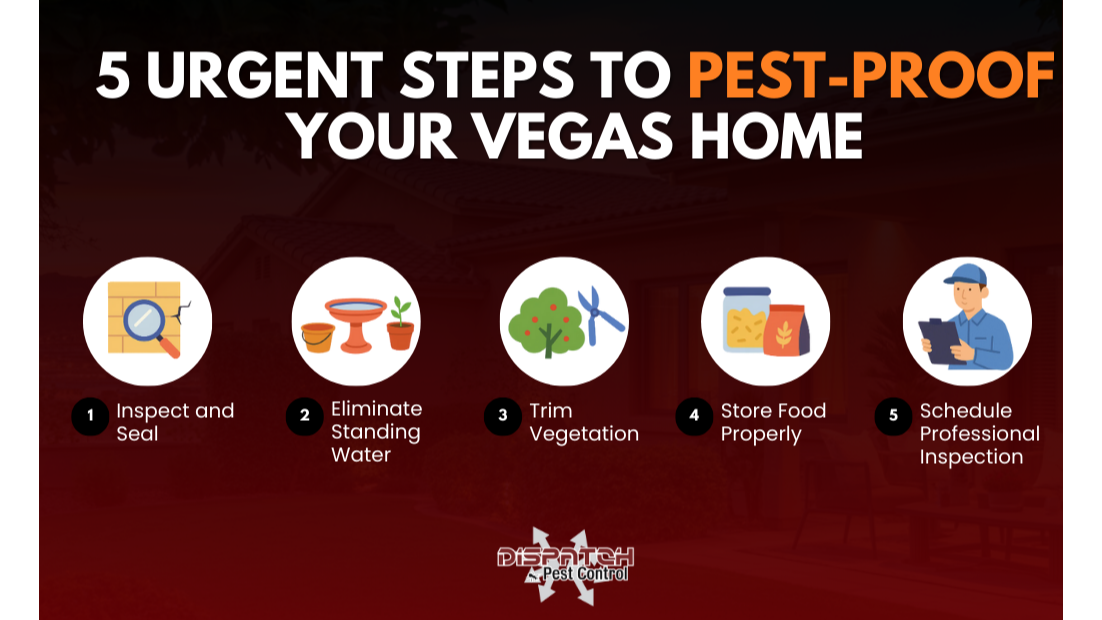
Take a methodical approach to sealing your home's exterior. Use silicone caulk for smaller gaps and expanding foam for larger openings. Pay special attention to where utility lines enter your home—these are prime access points for pests seeking cooler air. Door sweeps and weather stripping should be replaced if showing signs of wear, as even tiny gaps provide entry for determined pests.
Check window screens for tears and repair or replace damaged ones immediately. The investment in proper sealing materials pays dividends in prevention.
In desert environments like Las Vegas, water becomes a powerful attractant. Inspect your property for these common water sources:
Fix leaking pipes promptly, as even slow drips create humid microclimates that attract thirsty pests. Consider using dehumidifiers in naturally damp areas of your home like basements and laundry rooms.
Create a vegetation-free perimeter around your home's foundation. Trim tree branches that touch or overhang your roof, as these create natural bridges for rodents and insects. Maintain at least a 2-foot clearance between shrubs and exterior walls to eliminate hiding spots and reduce humidity against your home's foundation.
Consider replacing dense ground cover near your foundation with gravel or other pest-resistant landscaping materials that don't retain moisture or provide shelter.
Pantry organization becomes crucial during summer pest season. Transfer dry goods like flour, sugar, cereals, and pet food into sealed plastic or glass containers. Clean kitchen surfaces nightly to remove crumbs and food residue that attract hungry pests.
Manage trash properly by using bins with tight-fitting lids and emptying them regularly. Even outdoor grills should be cleaned thoroughly after use to remove food remnants that might attract nocturnal pests.
Professional pest control technicians can spot vulnerability points homeowners often miss. Early summer is the ideal time for a comprehensive inspection before pest populations reach their peak. A professional can identify specific risk factors unique to your property and recommend targeted preventative measures.
Basic prevention falls within most homeowners' capabilities. Regular cleaning, proper food storage, and simple exclusion methods like caulking obvious gaps can significantly reduce your risk. Over-the-counter sprays and traps can address minor, isolated problems if used according to label instructions.
However, DIY approaches have significant limitations. Most retail products provide only temporary relief and may not reach hidden nests or colonies. Improper application of even consumer-grade pesticides can create health risks or environmental concerns.
Professional pest control becomes essential when:
Professionals bring commercial-grade products, specialized application equipment, and comprehensive knowledge of pest behavior that dramatically increases effectiveness while reducing chemical exposure risks.
Establishing a regular maintenance schedule provides continuous protection against seasonal pest pressures. Professional pest control companies typically recommend quarterly service visits for Las Vegas homes, with treatments tailored to address the specific pests active during each season.
These regular visits allow technicians to monitor for early warning signs and adjust strategies before small problems become major infestations. Many companies offer maintenance plans that provide cost savings over individual service calls.
Between professional visits, stay vigilant for these warning signs that require prompt attention:
Most professional treatments show results within 24-48 hours, but addressing warning signs quickly prevents minor issues from becoming full-blown infestations requiring more intensive treatment.
Las Vegas summers create perfect conditions for pest invasions, but with proactive measures and professional support, you can maintain a pest-free environment even during extreme heat. Start with the five immediate steps outlined above, then consider establishing a regular maintenance schedule with experienced professionals.
Prevention is always more effective and economical than treating established infestations. The small investments in sealing, proper storage, and professional inspections protect your home, health, and peace of mind during Las Vegas heat waves.
For more information visit: https://dispatchpestcontrol.com/summer-pest-activity-what-to-expect-and-how-to-prepare/


