Professional musicians need gear that won’t fail mid-performance, but choosing the right stage keyboard involves tradeoffs most players don’t consider. The Nord Stage 4 88’s unique triple-engine design addresses reliability concerns in surprising ways.
Professional gigging musicians face a constant challenge: finding one instrument that can handle multiple roles without compromising sound quality or reliability. The synthesizer market in 2025 offers impressive options, but few instruments can match the capabilities needed for demanding live performances across different musical genres.
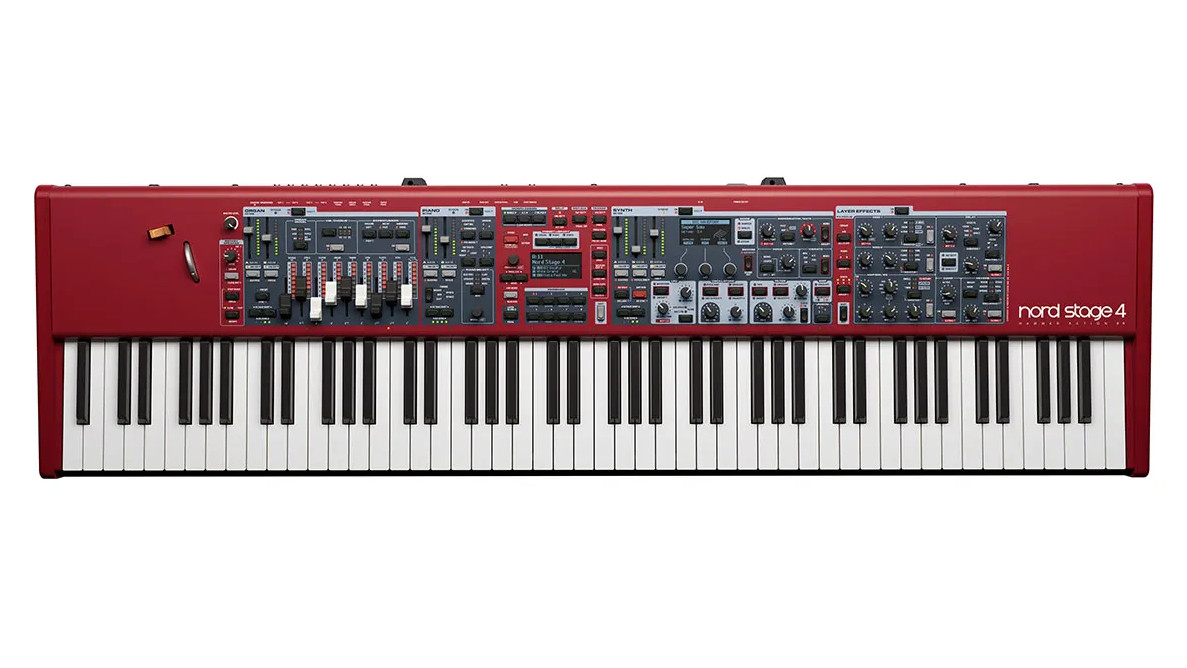
The Nord Stage 4 88 stands as the ultimate Swiss Army knife for professional performers who refuse to compromise on sound quality. Unlike workstations that force musicians into menu-diving workflows, this instrument puts every essential control at fingertips level. The front panel redesign introduces mixer-style sliders for instant level adjustments across all sound engines, eliminating the frantic knob-turning that can derail live performances.
What sets this instrument apart from competitors is its ability to seamlessly blend up to seven different sound layers simultaneously across the three sound engines (organ, piano, synth), with each engine offering dedicated effects processing. represents the pinnacle of this technology, offering professional musicians the reliability and sonic flexibility demanded by today's diverse musical landscape.
The build quality follows Nord's legendary standards with a metal chassis that withstands the rigors of constant touring. Professional musicians report using previous Stage models for over a decade without significant issues, making the investment worthwhile for working performers who depend on their instruments nightly.
The three-engine foundation of the Stage 4 88 creates unprecedented flexibility for live performance. Each engine operates independently while maintaining perfect synchronization, allowing musicians to create complex soundscapes that would typically require multiple keyboards or extensive programming.
Physical drawbars across all Stage 4 models transform the organ playing experience from digital approximation to authentic vintage feel. LED indicators provide instant visual feedback of drawbar settings when switching between patches, eliminating guesswork during live performances. The B3 Tonewheel engine captures the harmonic complexity of classic Hammond organs, while the new B3 Bass mode adds low-end punch that cuts through dense band arrangements.
The Model 122 Vintage Rotary Speaker modeling offers multiple microphone positions, allowing musicians to dial in everything from intimate jazz club tones to stadium-filling gospel swells. Vox Continental and Farfisa models complete the vintage palette, ensuring authentic sounds for psychedelic rock, progressive, and classic pop applications.
The triple-sensor keybed technology represents a significant advancement in expressive control. This fully weighted keybed with aftertouch captures nuanced performance techniques that bring digital piano sounds closer to acoustic authenticity. Dynamic string resonance and pedal noise details add organic character that responds naturally to playing dynamics.
The updated piano library takes full advantage of this enhanced sensing, delivering everything from intimate jazz club uprights to concert grand presence. The Unison feature and dynamic compression provide instant sound-shaping tools for cutting through mix density without requiring external processing.
Based on the acclaimed Nord Wave 2, the synth section offers three independent layers with substantial polyphony. Virtual analog, FM, wavetable, and sample synthesis methods provide extensive sound design capabilities. The triple-layer architecture enables massive pad sounds or complex brass sections that would typically require dedicated synthesizer modules.
The enhanced arpeggiator features polyphonic, gate, and pattern modes that operate independently across all three synth layers. This creates rhythmic complexity impossible with single-layer arpeggiators, allowing musicians to build intricate patterns that maintain interest throughout extended performances.
The Stage 4's effects architecture represents a fundamental shift from previous models. Rather than forcing musicians to choose which engine receives effects processing, every layer now enjoys dedicated effects chains. This independence opens creative possibilities that transform how musicians approach live sound design.
Multiple independent effects chains allow different phaser settings on electric piano while simultaneously running chorus on a layered synth part. This level of processing independence previously required external effects units or complex routing schemes. Professional musicians can now create signature sounds that would be impossible to replicate with traditional single-effects-chain keyboards.
The effects quality matches studio-grade processors, with algorithms that maintain clarity even when multiple effects operate simultaneously. Reverb tails blend naturally between patches, preventing the abrupt cutoffs that can disrupt musical flow during live performances.
The Pump effect simulates classic sidechain compression techniques. This modern production technique adds rhythmic movement to sustained sounds, creating the breathing effect heard in contemporary pop and electronic music. The implementation responds to internal trigger sources, providing flexibility for different performance scenarios.
The Spin effect adds rotary speaker characteristics to any sound engine, not just organs. Applied to synth pads or piano sounds, it creates movement and space that enhances musical arrangements without overwhelming the mix.
New reverb algorithms include everything from intimate room ambience to cathedral-sized spaces. The delay variations span vintage tape echoes to modern digital repeats, with modulation options that add character without muddying the mix. Each effect responds to real-time control via expression pedals or MIDI controllers, enabling dynamic performance techniques.
Professional musicians know that technical failures during live performance can derail entire shows. The Stage 4 88 addresses these concerns with reliability features designed specifically for the demands of regular gigging.
The Layer Scene function allows instant switching between two complete sound setups at the touch of a button. Musicians can prepare upcoming song sections while current sounds continue playing, eliminating awkward gaps between musical passages. This feature proves invaluable during medleys or songs requiring dramatic sound changes mid-performance.
The transition processing ensures that reverb tails and sustained notes continue naturally while new sounds engage. This attention to musical continuity separates professional instruments from basic keyboards that abruptly cut off sounds during program changes.
The redesigned front panel features dedicated level sliders for each sound engine, eliminating menu diving during live performance. Musicians can instantly balance organ against piano levels or bring synth parts forward during solos. These visual controls allow sound adjustments even in challenging stage lighting conditions.
The muscle memory developed with these physical controls becomes invaluable during high-pressure performance situations where menu navigation would be impractical or impossible.
The sample memory has been expanded with 2GB dedicated to piano samples and 1GB for synth samples, accommodating higher-resolution samples and expanded sound libraries. This capacity supports professional-grade samples that maintain quality across the entire keyboard range. Musicians can load custom samples via the Nord Sample Editor, creating unique sounds unavailable to other performers.
The expanded memory also supports the extensive Nord Sample Library, which receives regular updates with new orchestral, vintage synth, and specialty sounds. This ongoing content expansion keeps the instrument current with evolving musical trends.
The professional keyboard market offers several compelling alternatives to the Nord Stage 4 88. Understanding these options helps musicians make informed decisions based on their specific performance requirements and budget constraints.
The Yamaha Montage M8x offers a different approach to sound generation with its FM-X and AWM2 engines, which some users may prefer for orchestral sounds compared to Nord's sample-based approach. The Montage's deep DAW integration appeals to musicians who bridge live performance with studio production work.
However, the Montage's menu-driven interface requires more programming time than Nord's hands-on approach. For musicians who prioritize instant sound access during live performance, the Stage 4's immediate control layout provides clear advantages. The Montage's strength lies in complex sound design and studio applications, while the Nord focuses on live performance reliability.
Roland's RD-2000 utilizes V-Piano modeling technology, which some players may find provides a highly realistic piano sound through mathematical generation rather than samples. This approach provides sound variations and realism that appeals to piano-focused performers. The RD-2000's dual sound engines and effects processing create formidable competition for the Nord.
The Roland's weakness appears in organ sounds, where Nord's physical drawbars and dedicated tonewheel modeling provide superior authenticity. Musicians whose performances center heavily on piano sounds might prefer the RD-2000, while those requiring strong organ and synth capabilities will find the Stage 4 more versatile.
Professional musicians often question whether premium keyboards justify their cost compared to more affordable alternatives. The Stage 4 88's price point places it firmly in luxury territory, but working musicians must evaluate instruments based on earning potential rather than simple purchase price.
The Nord Stage 4's reputation for reliability can be a significant factor for professional musicians who rely on their instruments for income. A keyboard failure during a wedding, corporate event, or tour date can cost far more than the price difference between budget and professional instruments. The Stage 4's proven track record and robust construction provide insurance against such catastrophic failures.
The sonic versatility eliminates the need for multiple instruments in many performance scenarios. Musicians who previously required separate organs, pianos, and synthesizers can consolidate their setup around the Stage 4, reducing transportation costs, setup time, and potential failure points. This consolidation often pays for the instrument's premium price through reduced logistics expenses and increased booking efficiency.
The Nord Stage 4 88 offers a combination of sound quality, reliability, and versatility that can be a valuable asset for working musicians who demand uncompromising performance capabilities Those interested in the instrument can browse Sam Ash's selection of professional keyboards and stage gear designed for serious musicians.


