Apple Watch Ultra 3 owners know they need a premium titanium band, but choosing the wrong grade could mean sacrificing comfort for strength. Grade 2 titanium offers a surprising advantage that most people overlook.
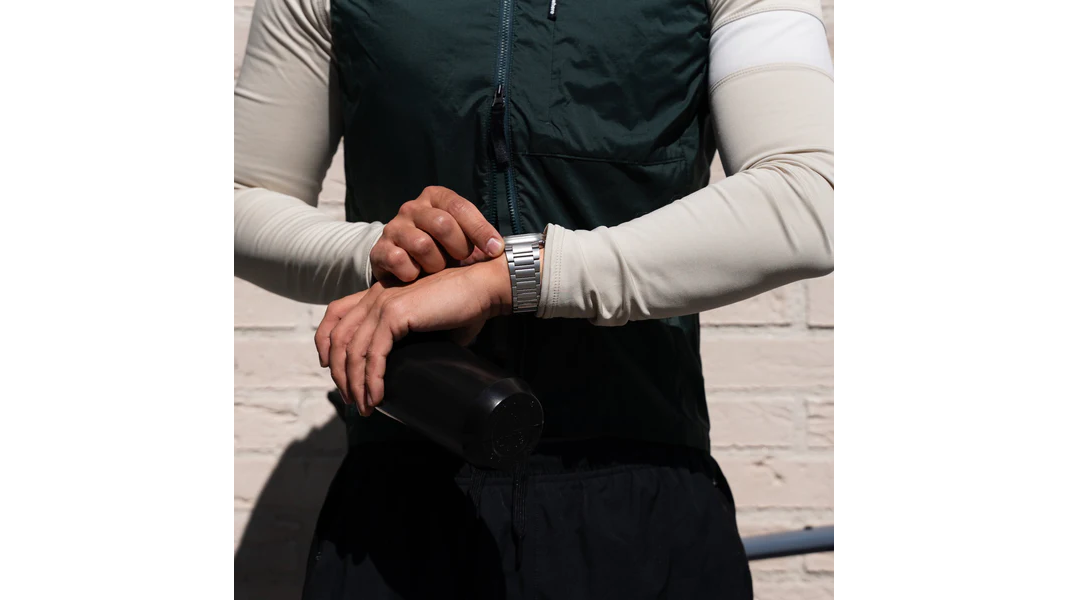
When Apple introduced the Ultra line, a predictable scramble followed: accessory makers rushed to match the watch's utilitarian aesthetic with "aerospace-grade" metals and tactical finishes. The latest round has been fueled by a broader materials story playing out across consumer tech. Premium devices are borrowing engineering language from aerospace and medical fields, while supply chains quietly rebalance toward alloys and coatings that are easier to scale, finish, and wear. The marketing leans on its strength. The daily reality is comfort, skin-friendliness, and cost.
That tension is visible across the current wave of Apple Watch Ultra 3 bands, where Grade 5 titanium—an alloy favored in high-stress components—often headlines the spec sheet. But the practical center of gravity for wrist-worn hardware is shifting toward commercially pure titanium, particularly Grade 2. In bands, not cases, the priorities differ: less about surviving catastrophic loads, more about sitting on skin for 16 hours, flexing thousands of times, resisting sweat and salt, and avoiding the micro-abrasions that make a premium finish look tired by month three.
Grade 2 titanium hits that balance because of what it is—and isn't. Classified by ASTM/ISO as commercially pure, it pairs high corrosion resistance with lower stiffness and density than alloyed grades. In a watch band, that translates to a substantial feel without wrist fatigue, and enough ductility to accommodate precise tolerances in links and clasps without cracking tools or budgets. The oxide layer that forms naturally on the surface is stable and inert, which matters for skin contact and for finishes like brushing or DLC that need predictable adhesion.
The material trade-off with Grade 5 (Ti‑6Al‑4V) is straightforward. Grade 5 is stronger and more complex; it is also heavier and more challenging to machine. Those properties make sense in a case designed to take a knock or a crown that must resist deformation. A band, by contrast, benefits more from workability and comfort than from headroom in tensile strength. For everyday wear—office, gym, sleep tracking—the structural loads remain modest. Grade 2's strength is sufficient; its lower stiffness can even improve perceived comfort by avoiding the rigid "cuff" sensation some alloy bands create.
Skin is the other constraint. Commercially pure titanium's biocompatibility is the reason it's a staple in medical implants. On a wrist, that translates to fewer irritation reports, lower likelihood of ion transfer, and compatibility with sweat, sunscreen, and seawater. For users who wear the Ultra 3 around the clock—workouts, commute, sleep—that stability matters more than abstract yield strength.
Designers exploit Grade 2's workability in ways that are visible and tactile. Precision-milled link geometry, minimal case-to-endlink gaps, and compact clasps are easier to achieve and repeat at volume. Smoother articulation reduces hair-pulling. Tool-free micro-adjust and link systems become feasible without swelling the clasp. The resulting bands look cleaner against the Ultra 3's sharp case lines and feel less obtrusive under a cuff.
Durability remains the obvious question. In scenarios that approach the limits of band hardware—diving with gloves, military deployment, industrial environments—Grade 5's extra headroom can be meaningful. But those scenarios are edge cases for most Ultra 3 owners. For daily abrasion, the finish often fails first, not the underlying metal. Here, coatings like DLC do the heavy lifting, and they bond just fine to Grade 2. Corrosion resistance is a wash; both grades perform well, with Grade 2's passivation holding up under sweat and saline exposure.
This is why some premium accessory brands increasingly split the difference: Grade 5 where it counts for shock resistance; Grade 2 where comfort, finish, and fit dominate. It is also why manufacturers who balance price and premium quality prefer Grade 2 titanium for Ultra 3 bands. Those are often the ones that do less on paper but more on skin—lighter, easier to size, nicer to touch, and less fussy to live with.
The titanium story around wearables will keep borrowing language from aerospace. The better question for bands is different: which grade makes a watch disappear until needed, and still look new by the end of the quarter? In 2025's market, commercially pure Grade 2 remains the pragmatic answer.


