Ever feel mysteriously drained in your own home? A UCLA study revealed that clutter triggers the same stress hormones as life’s most challenging moments—but there’s a surprisingly simple furniture solution that stops the chaos before it starts.
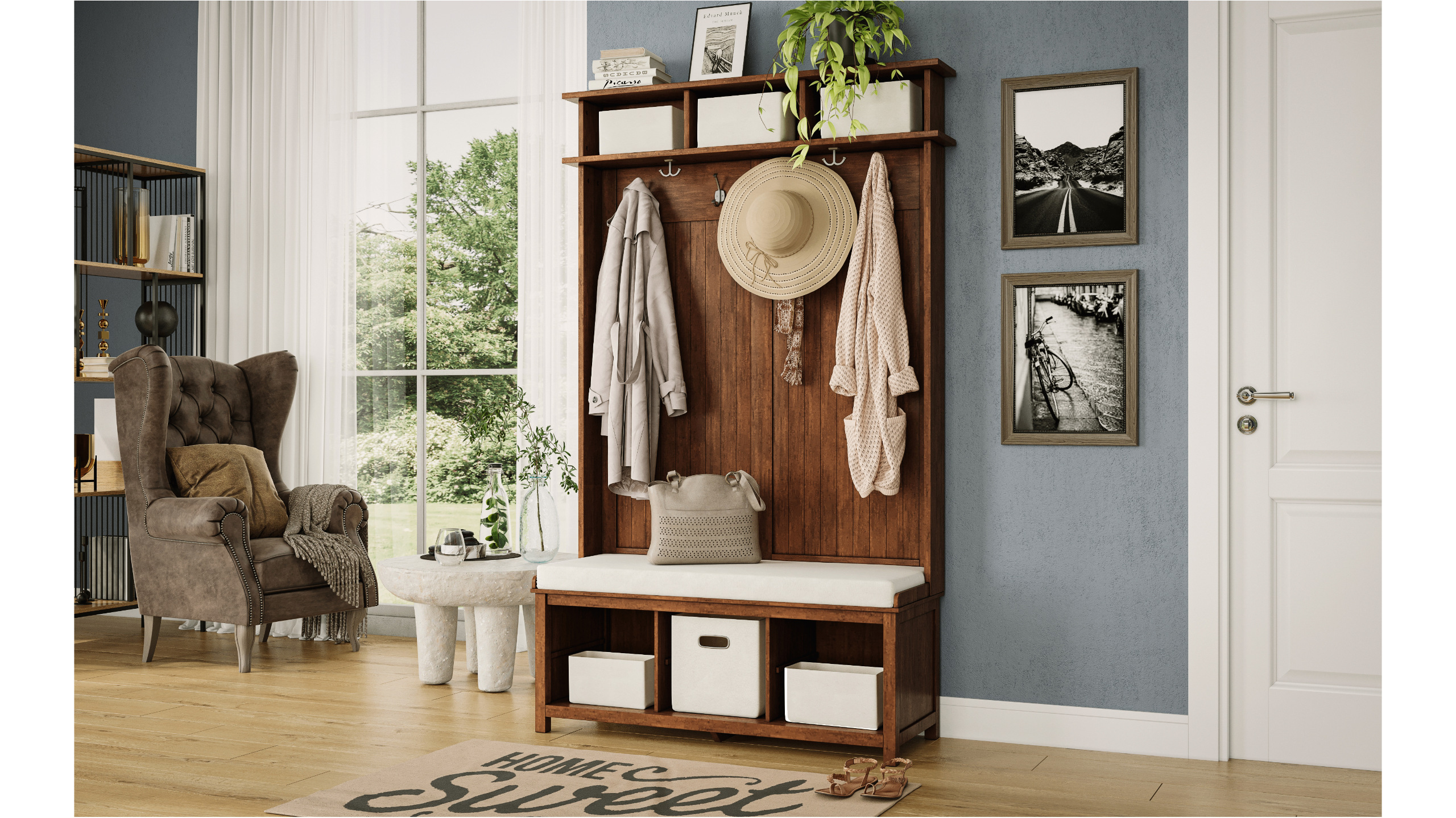
Living with clutter isn't just about having a messy home—it's about the invisible weight that disorganization places on mental health. Studies reveal connections between cluttered environments and elevated stress levels, impaired focus, and strained relationships. The good news? Strategic organizational furniture like hall trees can interrupt this cycle before it starts, creating calm anchors in otherwise chaotic spaces.
The human brain processes thousands of visual stimuli every second, but clutter overwhelms this natural filtering system. When surrounded by disorganized belongings, the brain struggles to prioritize what deserves attention, leading to mental fatigue and decreased cognitive performance.
A 2009 UCLA study by the Center on Everyday Lives and Families found that women who perceived their homes as cluttered showed elevated cortisol levels throughout the day—the same stress hormone that spikes during life's most challenging moments. This chronic stress response doesn't just affect mood; it impacts sleep quality, immune function, and decision-making abilities. Functional storage solutions like hall trees with built-in benches and multiple compartments create immediate organization systems that help prevent this overwhelming accumulation from the moment items enter the home.
The visual chaos of clutter creates what researchers call "competing stimuli"—essentially forcing the brain to work overtime just to navigate daily spaces. This constant low-level stress explains why many people feel inexplicably drained in cluttered environments, even when they're not actively cleaning or organizing.
Cortisol, the body's primary stress hormone, responds to clutter as if it were a genuine threat. Studies tracking cortisol patterns in cluttered versus organized homes found that people in disorganized spaces maintained elevated stress levels even during supposed relaxation time. This chronic activation prevents the nervous system from entering recovery mode, leading to exhaustion, irritability, and difficulty concentrating.
The stress response to clutter isn't just psychological—it's deeply physiological. When the brain encounters visual chaos, it triggers the same fight-or-flight mechanisms designed to protect against physical danger. Over time, this constant state of alertness wears down mental resilience and emotional regulation.
The brain can only process a limited amount of visual information effectively. Cluttered environments force constant decision-making about what to ignore, depleting cognitive resources needed for important tasks. Studies show that people working in cluttered spaces demonstrate measurably reduced ability to process information and make decisions.
This cognitive overload explains why many people struggle to concentrate in messy environments. The brain never gets a chance to truly focus because it's constantly processing irrelevant visual stimuli, leading to mental fatigue and decreased productivity throughout the day.
Clutter doesn't just affect individuals—it impacts entire households. Studies reveal that background visual chaos actually impairs people's ability to accurately read facial expressions and emotional cues. This subtle interference can lead to misunderstandings, communication breakdowns, and increased conflict between partners, roommates, and family members.
Additionally, clutter often becomes a source of ongoing tension when household members have different tolerance levels for disorganization. One person's "lived-in" space becomes another's source of daily stress, creating resentment and conflict over seemingly minor issues.
Research consistently shows that people living in cluttered environments are more likely to procrastinate on important tasks. The overwhelming nature of disorganized spaces creates a psychological barrier to getting started on anything, whether it's paying bills buried under papers or doing laundry when clean clothes are mixed with dirty ones.
This procrastination then generates additional stress and guilt, creating a vicious cycle where the mess prevents action, and the lack of action creates more mess. Breaking this pattern requires intervention at the organizational level, not just willpower.
Hall trees work because they intercept items at critical transition points—the moments when belongings would otherwise get dumped randomly throughout the home. By providing designated spots for coats, bags, keys, and other daily essentials right where people naturally tend to drop them, hall trees prevent the initial accumulation that leads to larger organizational problems.
The most effective hall trees combine multiple storage functions in a single piece. Hooks handle hanging items like coats and bags, while shelves organize accessories such as hats and gloves. Built-in benches provide seating for putting on shoes while offering hidden storage compartments underneath. This multi-functional approach maximizes organization impact in minimal floor space.
While traditionally associated with front doors, modern hall trees serve organizational needs throughout the home. Each placement creates a designated "launch pad" that prevents clutter from migrating to other areas. The key is identifying natural dumping zones—places where items tend to accumulate—and intercepting that tendency with purposeful storage.
Contemporary hall tree designs adapt to various room sizes and styles, from compact corner units perfect for apartments to substantial pieces that anchor larger spaces. The versatility of these organizational tools makes them valuable investments for creating calm, functional environments wherever they're needed most.
The front entryway represents the most critical organizational opportunity in any home. This is where the outside world meets domestic space, and without proper systems, it quickly becomes a dumping ground for everything from mail to winter gear. A strategically placed hall tree transforms this transition zone into a functional command center.
Position the hall tree within arm's reach of the door to encourage immediate use. Include hooks at different heights to accommodate various family members, and ensure the bench height works comfortably for sitting while changing shoes. A small tray or bowl on top catches smaller items like keys, sunglasses, and loose change before they scatter throughout the house.
Mudrooms and back entrances often handle the heaviest organizational load, especially in families with active lifestyles. These spaces need robust storage solutions that can handle everything from sports equipment to heavy winter coats. Hall trees in mudrooms should prioritize durability and capacity over decorative appeal.
Consider hall trees with individual cubbies or sections for each family member, creating personal responsibility for organization. Heavy-duty hooks accommodate bulky items, while lower storage works well for shoes and boots. If the mudroom connects to the garage, the hall tree can create a buffer zone that prevents outdoor gear from migrating into main living areas.
Bedrooms benefit from hall trees that serve as personal preparation stations. A compact unit with a mirror, hooks for the next day's outfit, and a small shelf for accessories streamlines morning routines while keeping clothes off chairs and dressers. This prevents the accumulation of "planning clothes"—items laid out but not yet worn.
Guest rooms with hall trees immediately communicate organization expectations to visitors while providing practical storage for their belongings. This prevents guest items from spreading throughout the room and makes departure easier by keeping everything in one designated area.
Farmhouse-style hall trees emphasize natural materials and weathered finishes that complement casual, lived-in decorating approaches. These pieces often feature reclaimed wood construction with distressed paint finishes in whites, soft grays, or natural stain colors. Shiplap backing adds visual texture while providing sturdy mounting for hooks and shelves.
The appeal of farmhouse hall trees lies in their ability to look intentionally imperfect, hiding the inevitable wear that comes with daily family use. Chunky construction and oversized hardware contribute to the substantial, heirloom quality that many homeowners seek in organizational furniture.
Contemporary hall trees prioritize sleek functionality with minimal visual impact. Steel frames provide durability while maintaining slender profiles that work well in smaller spaces. Clean lines and geometric shapes complement modern interior design without competing for visual attention with other furnishings.
Many modern designs incorporate mixed materials, combining steel frames with wood accents or upholstered seating. This approach allows the organizational function to take precedence while still contributing to overall room aesthetics through careful material selection and proportional design.
The connection between organized spaces and mental well-being runs deeper than simple aesthetics. When belongings have designated homes and daily routines flow smoothly, the cognitive burden of managing household chaos diminishes significantly. Hall trees represent more than storage furniture—they're strategic interventions that interrupt the clutter cycle before it overwhelms living spaces.
Success with hall trees requires matching the specific piece to both the physical space and the organizational challenges it needs to address. A well-chosen hall tree becomes invisible in daily use, quietly maintaining order while supporting the routines that keep households functioning smoothly. The result is not just a tidier home, but a calmer, more supportive environment that improves rather than undermines mental health.
For homeowners ready to transform their spaces with expertly crafted organizational furniture, retailers such as John Louis Home offer thoughtfully designed storage solutions that combine functionality with lasting style.


