Once reserved for clinics and schools, immersive sensory rooms can now be replicated in homes thanks to interactive projection. In this article, we take a look at how these systems can facilitate better learning for your children.
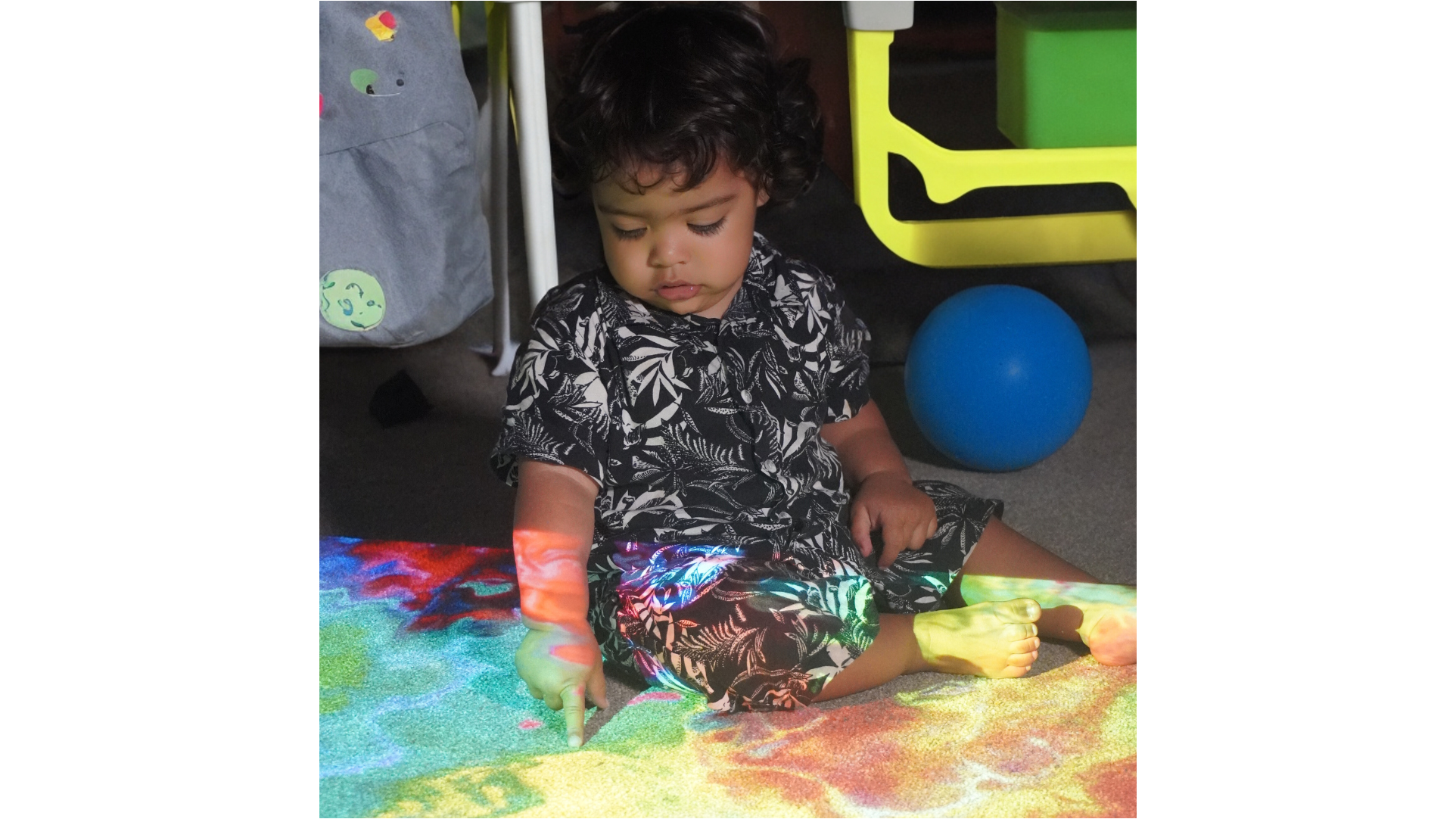
For decades, educators and therapists have emphasized the value of multisensory experiences in childhood development. Interactive sensory rooms, which integrate light, sound, and motion-responsive projections, are a modern extension of this approach.
Originally designed for specialized clinics and schools, these environments are now appearing in classrooms and even in homes, where they are being recognized as powerful tools for learning, engagement, and emotional regulation. By surrounding children with stimuli that respond to their actions, interactive sensory rooms transform bedrooms or living spaces into immersive, memorable learning experiences for the whole family.
Below are five ways these environments enhance learning for young children.
Young children often struggle to manage strong emotions, and overstimulation can lead to frustration or disengagement in the classroom. Interactive sensory rooms provide a controlled setting where soothing visuals, calming soundscapes, and gentle lighting help children regain composure.
When children feel safe and regulated, they are better able to focus on instruction and participate in activities. The ability to self-regulate is not only vital for school readiness but also for long-term life and social success.
A 2022 study involving 41 autistic children aged 4–12 found that when children were able to control aspects of a multisensory environment, such as lights and sounds, they showed greater attention, fewer repetitive behaviors, less stereotyped speech, and fewer unrelated vocalizations compared to when they had no control.
Movement-based learning has long been associated with stronger cognitive outcomes. In another study of children with autism spectrum disorder, preschool and school-aged participants who engaged in three months of sensorimotor room training improved in gross and fine motor skills, sensory integration, and relational behaviors compared to a control group.
Interactive sensory rooms that encourage physical activity--jumping, reaching, tracing shapes--can contribute to coordination and strength while also building confidence and readiness for tasks such as writing or group play.
When projections respond dynamically to a child’s actions, they stimulate flexible thinking and problem-solving. Games that shift patterns, adjust difficulty, or require sequencing steps invite experimentation and strategy adjustment.
These activities support higher-order thinking by teaching children to adapt to change, analyze cause and effect, and work toward solutions in real time.
Interactive sensory rooms are especially effective for children on the autism spectrum or those with sensory processing differences. Their intensity can be tailored, creating individualized experiences that reduce anxiety while promoting engagement.
For neurotypical peers, the inclusive design normalizes diverse learning styles, encouraging empathy and collaboration. Adaptability ensures that every child can participate, reinforcing the principles of inclusive education.
Interactive sensory rooms are no longer confined to schools, hospitals, or therapy centers. A growing number of AV companies are now offering in-home devices that replicate the experience, making it possible for families to integrate immersive sensory environments into everyday routines.
This shift signals an exciting new chapter, one where the benefits of sensory-rich learning are not only accessible to specialists but also woven into the fabric of family life.


