Thinking about resurfacing your cracked concrete driveway? The cost difference between resurfacing and full replacement can be staggering—potentially saving you thousands—but only if your damage meets specific criteria that most homeowners don’t know about.
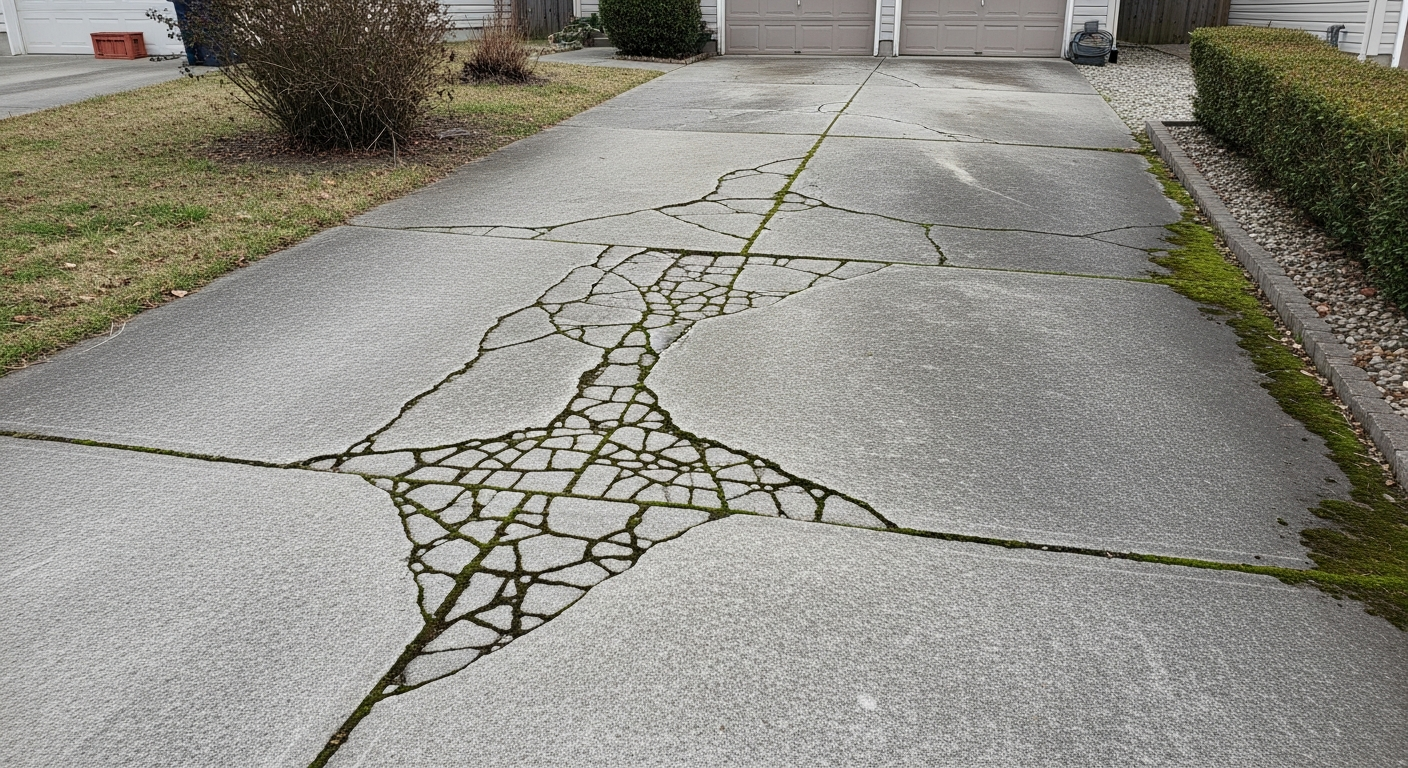
Homeowners facing cracked, worn, or discolored concrete driveways often find themselves weighing repair options against complete replacement costs. Understanding the true financial impact of each choice helps make informed decisions that protect both property value and household budgets over time.
The cost difference between concrete resurfacing and full replacement creates substantial savings for most homeowners. Resurfacing typically costs $3-20 per square foot, while complete driveway replacement ranges from $6.50-54 per square foot depending on local labor rates and material choices. For a standard two-car driveway measuring 400 square feet, resurfacing costs between $1,200-$8,000 compared to $2,600-$21,600 for replacement.
As contractors at the Texas-based Concrete Trends and Innovations explain, these savings become even more pronounced when considering the additional expenses that come with full replacement. Demolition, debris removal, and heavy machinery rental add thousands to replacement projects.
Material costs alone favor resurfacing significantly. A 40-pound bag of concrete resurfacer covers approximately 120 square feet at 1/16-inch depth and costs $30-75. Full replacement requires substantially more concrete, aggregate base materials, and specialized equipment operation that drives up total project expenses.
Understanding when resurfacing provides the best return on investment requires careful evaluation of existing concrete condition and long-term cost projections. Three key assessment areas determine whether resurfacing delivers optimal value for homeowners.
Resurfacing works best for surface-level issues including hairline cracks, minor spalling, discoloration, and general wear patterns. Cracks smaller than 1/4-inch wide typically respond well to resurfacing treatments. However, structural damage like large cracks, settling, or significant elevation changes indicate underlying problems that resurfacing cannot address effectively.
Professional assessment helps identify whether damage stems from surface wear or deeper structural issues. Surface imperfections covering less than 25% of the total driveway area generally make excellent resurfacing candidates, while extensive damage may require replacement for long-term stability.
The financial breaking point depends on various factors, including the extent of damage, desired design, and long-term cost projections. Homeowners should compare detailed quotes for both resurfacing and replacement to determine the most cost-effective option. Factors influencing this calculation include local labor rates, material availability, and project complexity.
Geographic location significantly impacts cost thresholds. Urban areas with higher labor costs may favor DIY resurfacing approaches, while rural locations with lower replacement costs might justify full reconstruction for severely damaged driveways.
Resurfacing can extend driveway life by 8-15 years when properly executed, depending on factors like material quality, climate, and maintenance, while replacement typically lasts 20-30 years. Cost-per-year calculations help homeowners understand true value propositions. A $2,000 resurfacing project lasting 12 years costs approximately $167 annually, while a $5,000 replacement lasting 25 years costs $200 annually.
These calculations become more complex when factoring in maintenance requirements, aesthetic preferences, and potential property value impacts. Resurfaced driveways may require resealing every 3-5 years, adding ongoing maintenance costs to total ownership expenses.
Understanding detailed cost breakdowns helps homeowners make informed decisions about their driveway investment strategies. Both options involve distinct expense categories that impact total project costs.
For professional resurfacing, materials can represent 30-40% of the total project costs, but this percentage can vary depending on the project size, material choices, and labor rates. Professional resurfacing typically includes surface preparation, crack repair, overlay application, and protective sealing. Basic polymer-modified overlays cost less than decorative options featuring stamped patterns or custom colors.
Replacement projects require significantly more materials including aggregate base, reinforcement mesh, concrete, and finishing materials. Labor costs increase due to demolition, excavation, and longer installation timelines. Heavy equipment rental adds $200-500 daily to replacement projects.
Regional material availability affects pricing significantly. Areas with local concrete plants typically offer lower material costs, while remote locations may face premium pricing and delivery charges that favor resurfacing approaches.
Resurfacing hidden costs include extensive surface preparation for heavily damaged concrete, specialized cleaning equipment rental, and potential delays due to weather conditions. Poor surface preparation leads to premature failure, requiring costly repairs within 2-3 years.
Replacement hidden costs may include permit fees, utility location services, and landscape restoration, depending on the project's scope and location. Demolition may reveal underground utilities requiring professional relocation. Disposal fees for old concrete add $50-100 per cubic yard to total expenses. Property access limitations increase labor costs when equipment cannot reach work areas easily.
The cost difference between DIY resurfacing and professional services creates compelling arguments for both approaches depending on homeowner skills, available time, and project complexity.
DIY concrete resurfacing requires specific tools including mud mixers ($150-200), mixing paddle attachments, finishing trowels, and pressure washing equipment. Basic material costs range from $200-400 for small areas but can reach $2,000 or more for larger driveways requiring multiple product bags.
Professional services include all tools, equipment, and expertise in their pricing structure. Contractors own specialized equipment like concrete grinders, shot blasters, and commercial mixers that ensure proper surface preparation and application consistency.
Tool rental represents a significant DIY expense factor. Pressure washer rental costs $90 daily, while concrete mixers rent for $45-75 daily. These expenses quickly accumulate for multi-day projects or when weather delays extend timelines.
Small driveways under 200 square feet favor DIY approaches due to manageable material quantities and shorter work periods. Larger projects benefit from professional efficiency and bulk material pricing that reduces per-square-foot costs significantly.
Professional services can range from $600 for basic small repairs to $13,000 or more for extensive decorative resurfacing projects, depending on project complexity, material choices, and regional labor rates. This wide range reflects project complexity, material choices, and regional labor rates. Commercial-grade materials and specialized techniques justify higher professional costs for demanding applications.
Economies of scale favor professional services on larger projects. Contractors achieve better material pricing, work more efficiently, and provide warranties that protect homeowner investments long-term.
DIY risks include improper surface preparation, incorrect material mixing, and application errors that lead to premature failure. Poor adhesion between old and new concrete creates costly repair situations within months of completion.
Professional services minimize risks through experience, proper equipment, and warranty protection. Established contractors understand local climate conditions, material performance characteristics, and application techniques that maximize longevity.
Weather timing critically impacts project success. Professionals monitor conditions and adjust schedules accordingly, while DIY projects often proceed regardless of optimal conditions due to time constraints and material preparation.
Several factors determine how long resurfaced concrete performs effectively, directly impacting the return on homeowner investments over time.
High-quality polymer-modified overlays and epoxy coatings can offer improved durability and appearance retention compared to basic concrete resurfacers, depending on the specific product and application. Premium materials resist cracking, maintain color stability, and provide superior adhesion to existing concrete surfaces.
Material thickness affects durability substantially. Thicker applications generally offer better protection against wear and freeze-thaw cycles, potentially extending lifespan, but the actual lifespan depends on various factors. Applications at 1/16-inch depth provide basic protection, while 1/4-inch applications may extend service life. Thicker applications resist wear patterns and provide better protection against freeze-thaw cycles.
Polymer modification improves flexibility and bonding strength compared to standard cement-based products. These advanced materials cost 20-40% more initially but often justify the premium through extended service life and reduced maintenance requirements.
Climate conditions significantly influence resurfaced concrete longevity. Factors like freeze-thaw cycles and UV exposure can impact material performance, potentially shortening lifespan in harsh climates. Freeze-thaw cycles, UV exposure, and precipitation patterns create varying stress levels that impact material performance.
Regular maintenance extends resurfaced concrete life significantly. Cleaning removes stains and debris that can cause chemical reactions leading to deterioration. Sealing every 3-5 years provides moisture protection and prevents freeze damage in cold climates.
Traffic patterns affect wear rates considerably. Heavy vehicle use, sharp turns, and concentrated loading areas experience accelerated wear requiring more frequent maintenance or earlier replacement cycles.
Concrete driveway resurfacing can provide a good balance between cost savings and performance extension for many residential applications, provided the existing concrete is structurally sound and the damage is primarily surface-level. With proper material selection, professional installation, and regular maintenance, resurfaced driveways deliver 8-15 years or longer of reliable service at significantly lower costs than full replacement.
Homeowners can save a significant amount by choosing resurfacing over replacement, but the actual savings depend on the size of the driveway, the extent of the damage, and the materials used. These savings allow for other home improvement investments or provide budget flexibility for future maintenance needs.
Success depends on accurate damage assessment, appropriate material selection, and proper installation techniques. Homeowners with surface-level damage, reasonable expectations, and commitment to maintenance find resurfacing delivers exceptional value for their investment.


