Most homeowners don’t realize their Mebane home has termites until serious damage is done. The treatment method that works fastest uses something called a “colony transfer mechanism” that turns termites’ own social behavior against them. Here’s how it actually works.
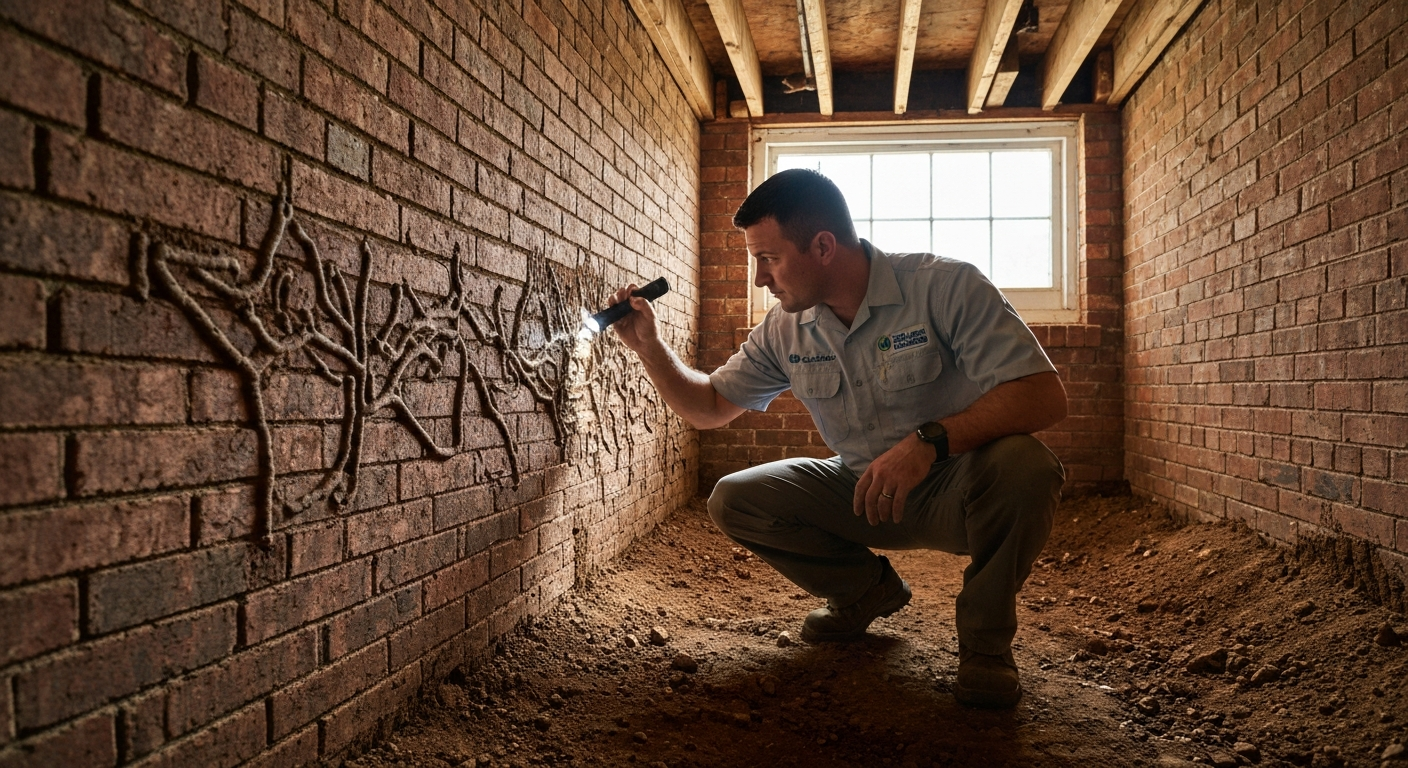
Termites are not a pest that announces itself. There are no droppings on the kitchen counter, no webs in the corner, no noises in the night - at least not at first. By the time most Mebane homeowners realize something is wrong, termites have often been feeding on the home's structural wood for months, sometimes years.
That's the defining characteristic of a termite infestation: the damage happens completely out of sight. Walls stay intact on the surface. Floors look normal. But underneath, inside, and behind - the wood is being systematically hollowed out. Termites earn the label "silent destroyers" precisely because their impact on a home's structural integrity and market value can become severe before a single visible sign appears.
Scott's Turf and Pest Services, which has served the Mebane and greater Triangle area for over 27 years, uses Termidor for termite treatment - a professional-grade solution built around a mechanism that turns the termites' own biology against them. Understanding how that works starts with understanding why Mebane is such a high-risk area to begin with.
Mebane sits squarely in North Carolina's Piedmont region, where warm summers, mild winters, and persistent humidity create near-perfect conditions for termite activity year-round. Termites thrive in temperatures between 75°F and 95°F - a range that describes a North Carolina summer almost exactly. The region's clay-rich Piedmont soils retain moisture exceptionally well, giving subterranean termites the damp underground environment they need to build and sustain large colonies close to homes and structures.
Mebane's abundant wooded surroundings add another layer of risk. Wooded lots mean plenty of natural cellulose - dead trees, stumps, roots - right next to residential foundations. That proximity creates a direct foraging path from established colonies in the soil to the wood inside a home.
The species responsible for the vast majority of termite damage in Mebane and across North Carolina is the Eastern Subterranean Termite (Reticulitermes flavipes). These termites live in underground colonies that can number in the hundreds of thousands, tunneling upward through soil to reach wood at or above ground level. They feed on cellulose - the structural component in wood - and can do so slowly and consistently for years without detection. A secondary concern in the region is the Formosan Subterranean Termite, sometimes called a "super termite" for its ability to form massive colonies and cause extensive damage in a shorter timeframe.
Most older termite treatments were repellent barriers - chemicals placed in the soil that termites could detect and avoid. If a termite found a gap in the barrier, it simply went around it. Termidor operates on a fundamentally different principle.
Termidor's active ingredient is fipronil, at a concentration of 9.1%. Fipronil is a non-repellent insecticide, which means termites have no ability to sense it in the soil. They don't avoid it. They walk through it, tunnel through it, and feed through it - entirely unaware they've been exposed.
This invisibility is by design. A repellent chemical might keep termites away from a treated zone, but it doesn't eliminate a colony - it redirects one. Fipronil's non-repellent nature ensures that termites keep moving through the treated soil, which is exactly what sets up the colony transfer mechanism.
When a termite forager passes through Termidor-treated soil, it picks up fipronil on its body. The termite doesn't die immediately - the dose is calibrated to be slow-acting on purpose. That forager returns to the colony, where it interacts with nestmates through the behaviors that define termite social life: mutual feeding (trophallaxis), grooming, and physical contact. Through each of these interactions, fipronil transfers from the exposed termite to unexposed ones. Those termites then contact more nestmates, extending the reach of the treatment deep into the colony structure without any chemical needing to reach the nest directly.
Scientific research has confirmed this mechanism directly: termites exposed to fipronil-treated soil transfer the chemical to non-exposed nestmates, leading to death within days of contact. The transfer effect is measurable and reproducible under controlled conditions - not merely theoretical.
One important nuance: the transfer effect is most powerful within a relatively close range, typically within a few meters of the treated zone. What it reliably accomplishes is killing a significant proportion of foragers - the termites actively feeding on a home - while simultaneously creating a treated soil barrier that any replacement foragers must also pass through. The result is a two-stage system: the transfer mechanism works inward on the colony, while the treated zone acts as an ongoing filter for any new termite activity.
Field trials have shown Termidor achieves 100% termite control, often within three months of application. A single application provides lasting protection for 8 to 10 years - meaning homeowners aren't facing annual retreatments or constant monitoring costs to maintain coverage.
Baiting systems work by placing cellulose-based bait stations around a property and waiting for termites to find and consume them - a process that depends entirely on termite behavior and foraging patterns. Termidor's transfer effect, by contrast, initiates colony-wide exposure immediately upon contact with treated soil. The result: Termidor eliminates termite colonies 2 to 6 times faster than baiting systems on average. When structural wood is already at risk, that speed difference is significant.
Termidor is applied as a continuous liquid treatment injected into the soil around and beneath a home's foundation. Technicians create an unbroken treated zone that termites foraging from the surrounding ground must pass through to reach the structure. Unlike bait stations - which require termites to actively discover and consume a specific target - the liquid barrier approach means any termite pursuing a path toward the home will encounter the treatment. The treated zone is the barrier, and the barrier covers every path termites need to travel.
The process is completed in a single visit, with minimal disruption to the property, and protection begins working immediately as termite activity contacts the treated soil.
Because termite damage stays hidden for so long, knowing what to look for is genuinely useful. The most telling signs include:
Any one of these signs warrants a professional inspection. Multiple signs together make it urgent.
Scott's Turf and Pest Services is a family-owned, licensed, and fully insured operation run by father Steve Scott and son Davis Scott. Since 1997, the company has provided termite inspections and treatments throughout Mebane, Alamance County, and the broader Triangle region, building a local reputation rooted in repeat clients and direct accountability - not a national franchise model.
Termite treatment is not one-size-fits-all. Soil conditions, construction type, and the extent of existing activity all factor into how a treatment plan should be structured. The approach Scott's takes - starting with a thorough inspection before any treatment is applied - reflects that reality. The goal is eliminating today's colony and building durable protection that holds for the next decade.
For homeowners in Mebane who want to understand their termite risk or schedule an inspection, Scott's Turf and Pest Services provides termite and pest control solutions for the Triangle area.


