Pool deck safety doesn’t have to mean sacrificing style or breaking the bank. Stamped concrete with non-slip coating offers surprising advantages over pavers and natural stone, but there are four critical safety features most homeowners don’t know about.
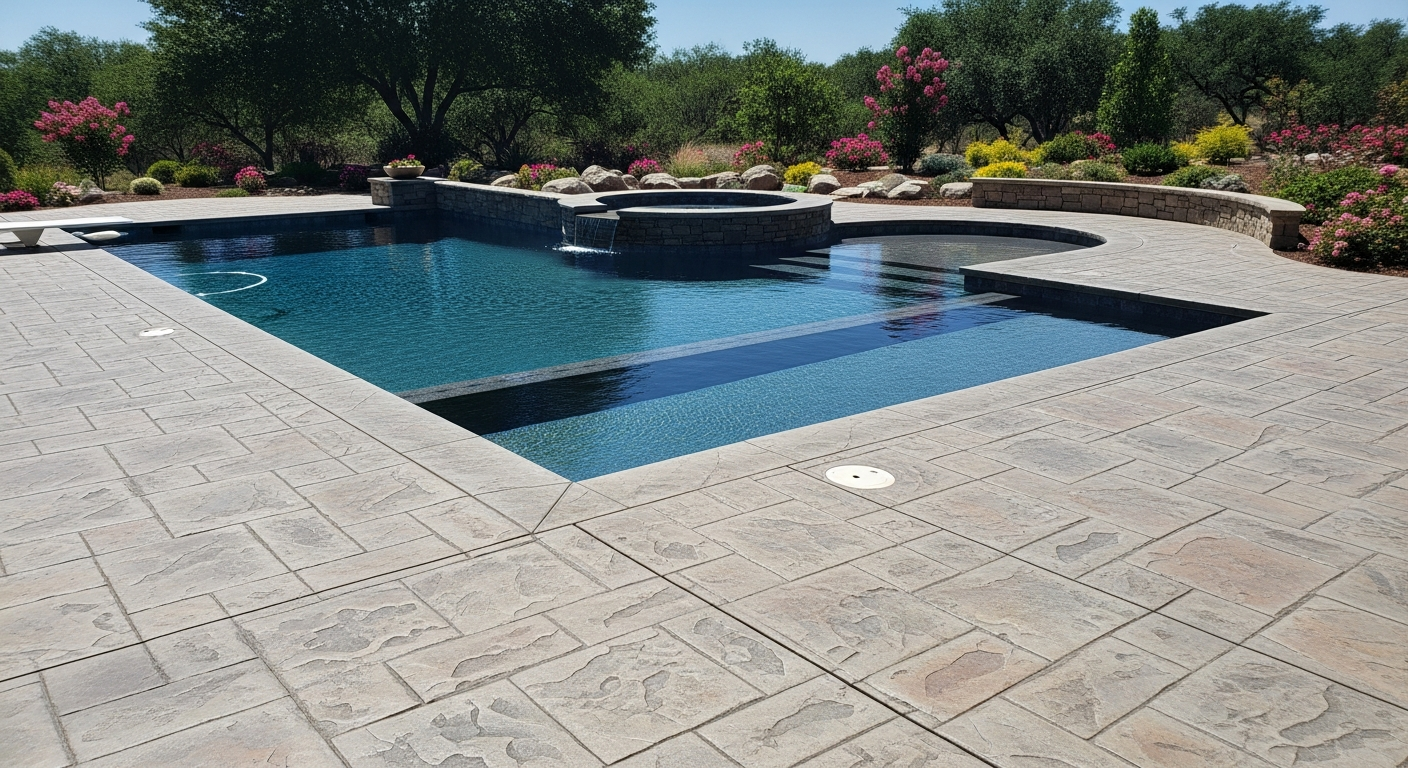
Pool deck material decisions impact both safety and aesthetics for decades. While pavers and natural stone dominate luxury pool installations, stamped concrete with non-slip coating offers a compelling alternative that addresses common pain points without sacrificing visual appeal.
Stamped concrete typically costs $10-$18 per square foot installed, though pricing varies based on design complexity and regional factors. Pavers range from $16-$24 per square foot for standard installations, with natural stone materials commanding significantly higher prices. This price advantage doesn't mean compromising on appearance—modern stamping techniques create remarkably realistic textures that fool even close inspection.
Woodlands Decorative Concrete, a concrete coating specialist operating in The Woodlands and surrounding areas, explains that the differential becomes substantial on larger pool areas. A 500 square foot pool deck in stamped concrete averages $5,000-$9,000, while the same area in pavers runs $8,000-$12,000. These savings allow homeowners to invest in other pool features or landscaping elements.
Safety around pool areas demands specific installation techniques that inexperienced contractors often overlook. Professional installation ensures these four safety elements work together effectively.
Standard concrete sealers create slippery surfaces when wet—a dangerous combination around pools. Professional installers add polymeric substances like Sharkgrip to sealers, creating microscopic texture that provides traction without sacrificing the smooth feel under bare feet. This additive must be mixed at proper ratios; too little offers inadequate grip, while excessive amounts create uncomfortable roughness.
Sand-washed finishes and properly executed stamp patterns naturally improve surface texture. These techniques create subtle variations that channel water away from foot contact points while maintaining comfort for barefoot traffic. The texture depth requires careful calibration—deep enough for safety but shallow enough to prevent debris accumulation that creates cleaning challenges.
Unlike pavers that can shift and create uneven surfaces over time, properly installed stamped concrete maintains consistent elevation across the entire deck area. Control joints are strategically placed to manage thermal expansion while minimizing visible lines that interrupt the aesthetic flow. This seamless approach eliminates the toe-catching hazards common with settling pavers.
Pool environments create constant moisture exposure that promotes biological growth on porous surfaces. Quality sealers create protective barriers that resist mold, mildew, and algae colonization. The sealing process requires proper surface preparation and application timing—factors that distinguish professional installations from amateur attempts.
Stamped concrete's design versatility surpasses traditional pool deck materials through virtually unlimited customization options.
Modern stamping tools and coloring techniques recreate the appearance of premium materials with remarkable accuracy. Popular patterns include seamless stone, slate, flagstone, and even weathered wood planks. The two-color system—base color mixed into concrete and release agent applied during stamping—creates the authentic antiqued look that distinguishes quality installations.
Advanced techniques allow contractors to blend multiple patterns within single installations, creating custom designs impossible with natural materials. Borders, medallions, and geometric patterns add visual interest while maintaining the practical benefits of monolithic construction.
Color options extend far beyond natural stone limitations. Integral colors mixed into concrete provide fade-resistant base tones, while surface-applied stains and dyes create complex color variations. This flexibility enables perfect coordination with existing architecture, landscaping, and outdoor furniture.
Pattern combinations can incorporate multiple stamp designs within single projects. Contractors might use large stone patterns for main deck areas while switching to smaller cobblestone patterns for borders or accent zones. This design freedom allows personalized solutions that reflect individual taste preferences.
Pool deck environments subject materials to harsh conditions that reveal quality differences over time.
Properly installed stamped concrete resists chemical damage from pool maintenance products, chlorine splashing, and salt systems. Quality sealers provide UV protection that prevents color fading and surface degradation common with other materials. The monolithic structure distributes foot traffic loads evenly, preventing the localized wear patterns that affect individual pavers.
Freeze-thaw cycling poses challenges in colder climates, but proper concrete mix design and installation techniques minimize damage risks. Air-entrained concrete and adequate thickness provide thermal expansion accommodation that prevents cracking.
Paver installations rely on sand bases that can wash out or settle unevenly over time, creating maintenance headaches and safety hazards. Stamped concrete's continuous surface eliminates these concerns while preventing weed growth that plagues paver joints. Even polymeric sand between pavers requires periodic replacement and cleaning.
With proper installation and maintenance, stamped concrete can maintain its structural integrity for many years. Paver systems may require repairs or reinstallation within a similar timeframe, although the lifespan of both depends on various factors including climate, usage, and maintenance practices.
Understanding maintenance requirements helps homeowners protect their investment and maintain safety standards.
Routine maintenance involves simple cleaning with mild detergent and water to remove pool chemicals, debris, and organic matter. Pressure washing can be used occasionally, but excessive pressure can damage sealers. The smooth surface resists staining and cleans more easily than textured natural stone or concrete pavers with multiple joints.
Sealer reapplication is typically recommended every 2-3 years, although the frequency can vary depending on specific conditions and traffic levels. High-traffic areas or harsh climate conditions may require more frequent attention. The resealing process is straightforward—surface cleaning, sealer application with a roller, and adequate drying time. Quality sealers cost a few hundred dollars but protect thousands in deck value.
Unlike pavers that require regular joint maintenance, sand replenishment, and individual piece replacement, stamped concrete's monolithic structure eliminates these concerns. Minor crack repairs can be addressed with specialized concrete repair compounds, but major reconstruction is rarely necessary with proper installation.
Several variables influence final project costs beyond basic square footage pricing. Complex patterns with multiple colors and intricate details increase labor requirements and material costs. Geographic location affects both material availability and labor rates, with metropolitan areas typically commanding premium pricing.
Site preparation requirements vary significantly based on existing conditions. Poor soil conditions, drainage issues, or removal of existing surfaces add expense but ensure long-term performance. Quality contractors provide detailed estimates that break down these factors rather than simple per-square-foot pricing.
Optional features like decorative borders, integrated lighting, or specialty finishes increase project scope but may provide better value than post-installation additions. Planning detailed designs upfront often reduces overall costs compared to phased improvements.
Professional installation distinguishes successful stamped concrete projects from problematic ones. Experienced contractors understand concrete chemistry, proper mix designs, and application techniques that ensure long-term performance. They possess specialized tools and knowledge for achieving consistent results that DIY approaches cannot match.
The technical aspects of pool deck installation—from proper substrate preparation to sealer application timing—require expertise that comes from repeated experience. Professional contractors also provide warranties that protect homeowner investments and ensure accountability for quality standards.
Proper installation timing considers weather conditions, concrete curing requirements, and staging with other pool construction activities. Attempting to coordinate these elements without professional guidance often leads to delays, quality compromises, or safety issues that cost more to correct than professional installation would have cost initially.


