When your water bill suddenly spikes or you feel hot spots on your floors, you’re facing a critical decision that could save—or cost—you thousands. Tulsa’s unique clay soil makes one repair method far superior, but most homeowners choose wrong.
Key Takeaways:
When water pipes beneath concrete foundations develop leaks, Tulsa and Broken Arrow homeowners face a critical decision that affects both their wallet and their home's long-term integrity. The choice between rerouting plumbing lines and traditional slab repair often determines whether families deal with recurring problems or enjoy decades of worry-free plumbing.
Rerouting bypasses the damaged underground pipes entirely by installing new water lines through walls, ceilings, or attic spaces. This approach eliminates the need to break through concrete foundations and removes the risk of future leaks in the same location. Professional slab leak specialists in Tulsa increasingly recommend this method for its superior long-term protection and minimal disruption to home foundations.
Traditional repair, while sometimes less expensive upfront, only addresses the immediate problem. The remaining underground plumbing system stays vulnerable to the same conditions that caused the original leak, often leading to repeated repairs and mounting costs over time.
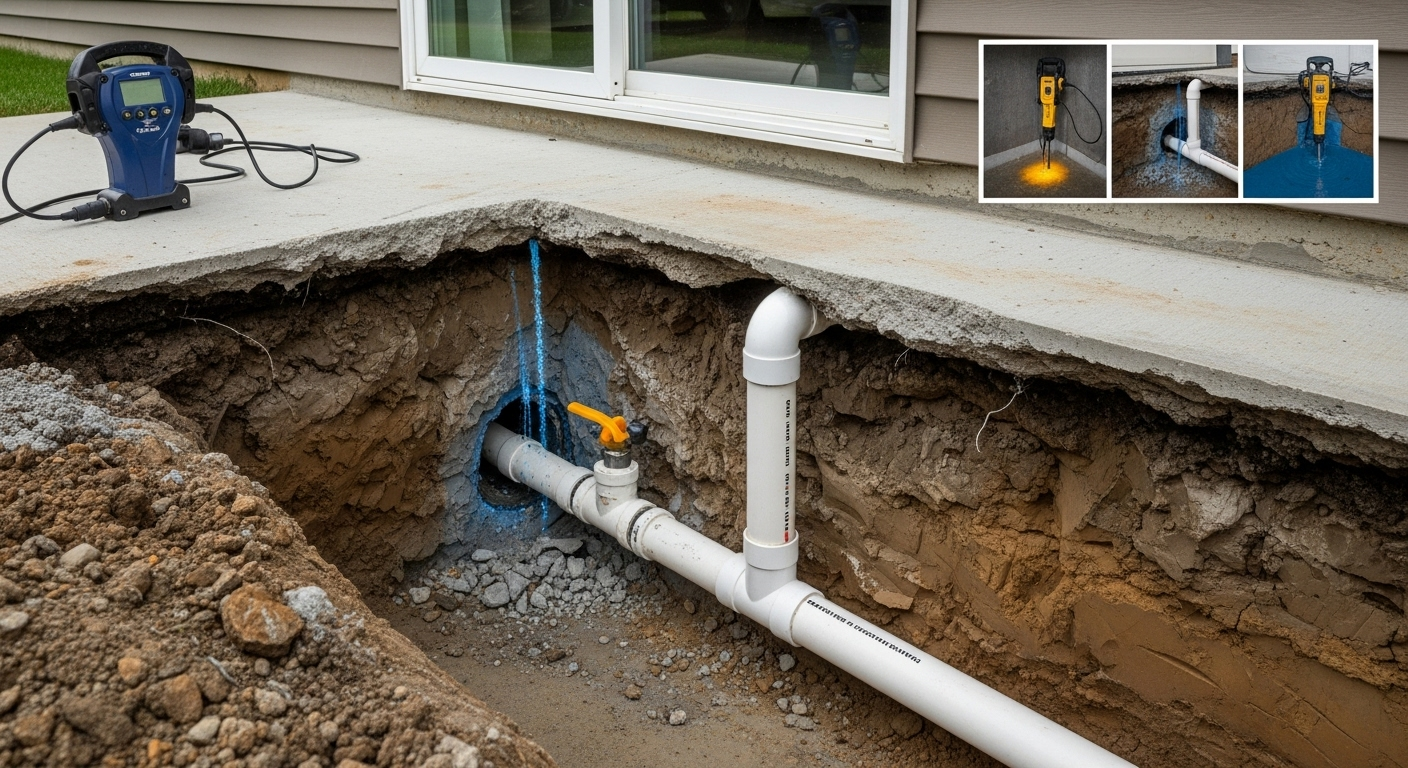
Traditional slab leak repair requires breaking through the concrete foundation to access the damaged pipe directly. Contractors use jackhammers and excavation equipment to create openings large enough for plumbers to reach the leak site. The process involves removing flooring materials, breaking concrete, repairing or replacing the damaged pipe section, and then restoring the foundation and flooring.
This method typically takes several days and creates significant mess and disruption throughout the home. Dust, debris, and noise affect daily routines, while restoration work extends the timeline further. The concrete repair may not perfectly match existing foundation strength, potentially creating weak spots for future problems.
Rerouting involves installing completely new water lines that avoid the slab foundation altogether. Plumbers typically run new pipes through interior walls, ceiling spaces, or attic areas using modern materials like PEX tubing that resist corrosion and provide decades of reliable service.
The process requires strategic planning to determine optimal routes that minimize wall penetrations while maintaining proper water pressure throughout the home. Professional installers seal entry and exit points carefully and insulate pipes in unconditioned spaces to prevent freezing. Most rerouting projects complete within one to two days with minimal disruption to living spaces.
Traditional slab leak repairs in Tulsa typically range from $1,500 to $4,000 for single leak locations. However, these costs multiply quickly when additional leaks develop in the aging underground system. Homeowners often face repeated repairs every few years as different pipe sections fail, creating a cycle of foundation damage and restoration expenses.
Hidden costs include temporary relocation during extensive repairs, replacement of damaged flooring and furnishings, and potential mold remediation if leaks go undetected. Foundation repairs may weaken over time, requiring additional maintenance and reducing home value.
Rerouting investments typically range from $3,500 to $7,000 for most Tulsa homes, with larger properties potentially reaching higher costs; however, prices can vary based on the specific situation and contractor. While the upfront expense exceeds traditional repair, the long-term value proposition proves compelling for most homeowners.
The investment eliminates future slab leak risks for rerouted lines and often comes with long-term warranties on materials and workmanship for the rerouted lines. Homeowners avoid repeated repair cycles, foundation damage, and the stress of recurring plumbing emergencies. Homeowners should check with their insurance providers to see if updating plumbing systems may qualify them for premium reductions.
Traditional repair works best for newer homes with isolated leaks in otherwise healthy plumbing systems. Single pipe failures in recently constructed properties may indicate manufacturing defects rather than systemic problems, making targeted repairs cost-effective.
Homes with easily accessible leak locations near exterior walls or in unfinished basement areas may also benefit from traditional approaches. When the damaged pipe section is small and the surrounding plumbing shows no signs of deterioration, spot repairs can provide adequate solutions at lower costs.
Rerouting becomes the superior choice for homes with aging plumbing systems, multiple leak incidents, or pipes showing signs of widespread corrosion. Homes built before 1990 may benefit from rerouting due to potentially outdated pipe materials and installation methods; however, a professional inspection is recommended to determine the best course of action.
Homes with difficult-to-access leak locations, such as pipes running under kitchen islands or bathroom fixtures, make rerouting more practical than extensive demolition. The method also appeals to homeowners planning long-term residence who want permanent solutions rather than temporary fixes.
Tulsa's expansive clay soil creates unique challenges that strongly favor rerouting solutions. Clay soil expands during wet periods and contracts during dry spells, creating constant ground movement that stresses underground pipes. This soil movement contributes to recurring slab leaks as pipes crack under repeated pressure changes.
Rerouting eliminates exposure to these soil conditions by moving water lines above ground level. The approach proves especially valuable in Tulsa and Broken Arrow where seasonal weather patterns create predictable soil expansion and contraction cycles that traditional repairs cannot address.
A significant and unexplained increase in water bills, especially when consumption habits remain consistent, signals hidden leaks consuming water continuously and deserves immediate investigation. These sudden spikes in water usage without corresponding changes in usage patterns indicate water escaping before reaching its intended destination.
Declining water pressure throughout the home indicates water escaping before reaching fixtures. The pressure drop may be subtle initially but becomes more noticeable as leak damage expands.
Warm or hot spots on concrete floors often indicate hot water line leaks beneath the slab. These temperature differences become most apparent during cooler months when the contrast is greatest. Infrared thermometers can detect temperature variations that confirm suspected leak locations.
Persistent dampness in carpeted areas or water stains on hard flooring suggest ongoing moisture infiltration from below. These signs often accompany musty odors as trapped moisture creates ideal conditions for mold development.
The sound of running or dripping water when all fixtures are turned off indicates active leaks within the plumbing system. These sounds may be subtle but become more noticeable during quiet periods like early morning or late evening hours.
Doors and windows that suddenly stick or refuse to close properly may indicate foundation movement caused by water infiltration. Floors that feel spongy or bounce slightly when walked on suggest structural damage from prolonged moisture exposure.
New cracks appearing in interior walls, especially near plumbing fixtures, often result from foundation settling caused by water damage. These cracks may start small but typically expand over time as underlying damage progresses.
Exterior foundation cracks or separations between foundation and walls indicate serious structural compromise requiring immediate professional assessment. Water infiltration can undermine foundation stability and create expensive repair requirements.
Persistent musty odors or visible mold growth in areas without obvious moisture sources suggest hidden water leaks feeding microbial development. Mold thrives in the warm, humid conditions created by underground water leaks.
Respiratory symptoms or allergic reactions that worsen at home may indicate mold exposure from leak-related moisture problems. Professional mold testing can confirm the presence of problematic species requiring remediation.
Unexplained pools of water around the home's exterior, especially during dry weather, indicate underground leaks surfacing through soil saturation. These wet areas often support unusual plant growth or create muddy conditions.
Continuously running water meters when all household water use stops confirm active leaks somewhere in the system. This simple test provides definitive proof that professional leak detection services are needed to locate and assess damage.
Professional leak detection prevents unnecessary foundation damage by pinpointing exact leak locations before any excavation begins. Modern detection equipment including acoustic listening devices, infrared thermal imaging, and electronic signal tracing can locate leaks precisely without disturbing concrete slabs.
Experienced technicians assess the overall condition of plumbing systems to recommend repair strategies that address current problems while preventing future issues. This thorough evaluation helps homeowners make informed decisions between traditional repair and rerouting based on specific property conditions and long-term goals.
The assessment process typically involves pressure testing isolated pipe sections, video inspection of accessible lines, and moisture detection in walls and floors. These diagnostic methods reveal the extent of damage and help predict the likelihood of additional failures in the existing system.
Contact Big C's Plumbing Services for professional slab leak detection and repair solutions throughout the Tulsa and Broken Arrow area.