With proper care, an Italian leather watch band softens, darkens, and develops a rich patina. In this article, you’ll learn simple tips to ensure your prized strap ages gracefully alongside you.
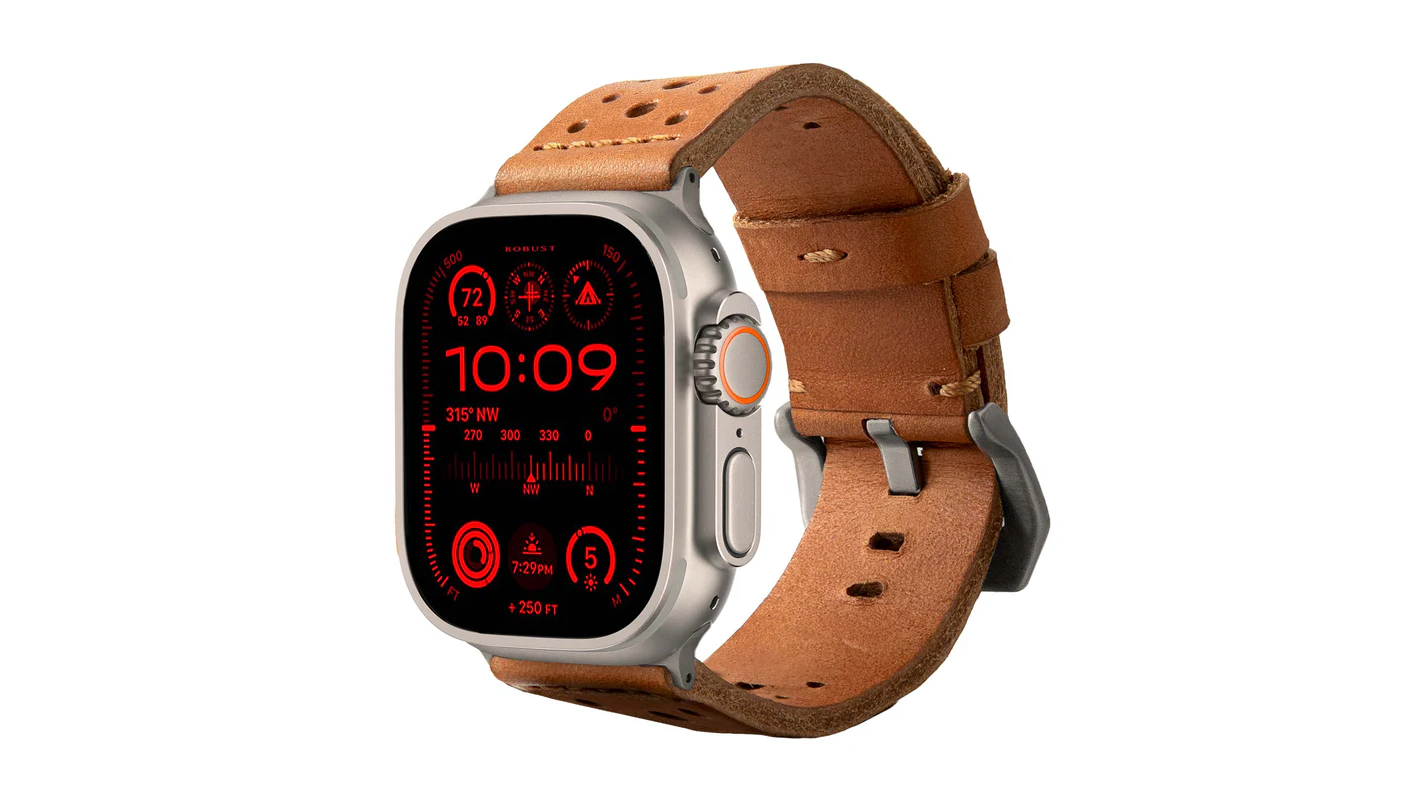
Pairing an Apple Watch with a genuine Italian leather strap introduces a level of refinement that quietly sets itself apart. The appeal isn’t just visual, but tactile. The leather warms to the skin, softens with time, and takes on a character unique to its wearer. Whether it’s a caramel-toned strap against the brushed finish of an Apple Watch Ultra or a darker band adding gravitas to a silver case, Italian leather adds narrative.
“There’s something deeply personal about leather that no synthetic material can really match,” said a product specialist at Robust Goods, a Finnish maker of leather watch accessories. “From day one, it starts changing. And in a year or two, no two bands will look alike.”
Maintaining that beauty, however, requires restraint. The first rule: avoid water. Vegetable-tanned leather is particularly sensitive to moisture. A single downpour won’t ruin it, but repeated exposure to rain, sweat, or steam can cause darkening, warping, and degradation. “It’s best to swap to a synthetic band when exercising or heading into uncertain weather,” product specialists advise.
Second, clean the strap gently. A dry, soft cloth is enough for day-to-day upkeep. For occasional conditioning, use a high-quality leather balm, but sparingly, because excess product can clog the pores of the leather and leave a residue. Additionally, avoid alcohol-based cleaners entirely and never submerge the band in water. When not in use, store the strap flat and out of direct sunlight, ideally in a drawer or cloth pouch.
“People often want to overdo the care, too much conditioner, too much cleaning. But leather wants to be left alone most of the time. Light touch, minimal interference. That’s what helps it last.”
That said, aging isn’t a flaw. Aging is not a flaw but a feature—genuine leather straps are expected to change over time, darkening, softening, and becoming more personal with use. The most valued bands are often those that show their history, rather than those that remain pristine.
A fitting example is the Leather Strap R01, which is made from Italian vegetable-tanned bovine leather specifically chosen for its ability to develop a rich patina. Over time, the strap’s surface shifts in tone, and its edges soften to match the contours of the wrist.
This gradual transformation is often what customers appreciate most, as it turns a leather band into a personal archive—something no digital feature can replicate.


