Large-scale event planners are discovering a surprisingly versatile infrastructure solution that cuts costs by up to 60% compared to traditional temporary structures. But shipping containers can do far more than just store equipment – and one festival’s creative approach proves it.
Event logistics have evolved dramatically in recent years, with planners seeking solutions that combine functionality, sustainability, and cost-effectiveness. Shipping containers have emerged as game-changing assets in large-scale event planning, offering unprecedented versatility that extends far beyond simple storage applications.
The shift toward container-based event solutions represents a fundamental change in how planners approach large-scale logistics. Traditional temporary structures often require extensive setup time, specialized labor, and significant investment in materials that serve single-use purposes. Shipping containers eliminate these pain points by providing ready-to-deploy, weather-resistant structures that arrive fully formed and functional.
Event planners appreciate the mobility and security containers provide, simplifying both planning and execution phases. Unlike traditional temporary buildings, containers can be easily repositioned during setup or relocated between events without structural compromise. Their inherent durability withstands harsh weather conditions, providing reliable protection for equipment, merchandise, and personnel throughout multi-day events.
The standardized dimensions of shipping containers also streamline logistics planning. allow planners to calculate space requirements precisely, knowing that a 20-foot container provides exactly 150 square feet of floor space, while 40-foot units offer 305 square feet. This predictability eliminates guesswork and enables more accurate budgeting and space allocation.
The financial advantages of shipping containers become evident when comparing total project costs against traditional temporary structures. Container rental typically costs substantially less than constructing custom temporary buildings, with additional savings realized through reduced labor requirements and faster deployment times.
Traditional event structures often require specialized construction crews, multiple site visits for assembly, and extensive teardown processes. Containers arrive ready for immediate use, requiring only basic positioning and utility connections. This streamlined approach reduces labor costs substantially while eliminating the material waste associated with temporary construction projects.
The economic benefits compound through reusability, as containers maintain their structural integrity across hundreds of deployments. Event organizers frequently purchase containers for major annual events, then use them for storage between events or lease them to other organizers, creating additional revenue streams that offset initial investment costs.
Container durability ensures consistent performance across multiple events without degradation in weather protection or security capabilities. This reliability contrasts sharply with temporary structures that often show wear after single uses and require replacement components for subsequent deployments.
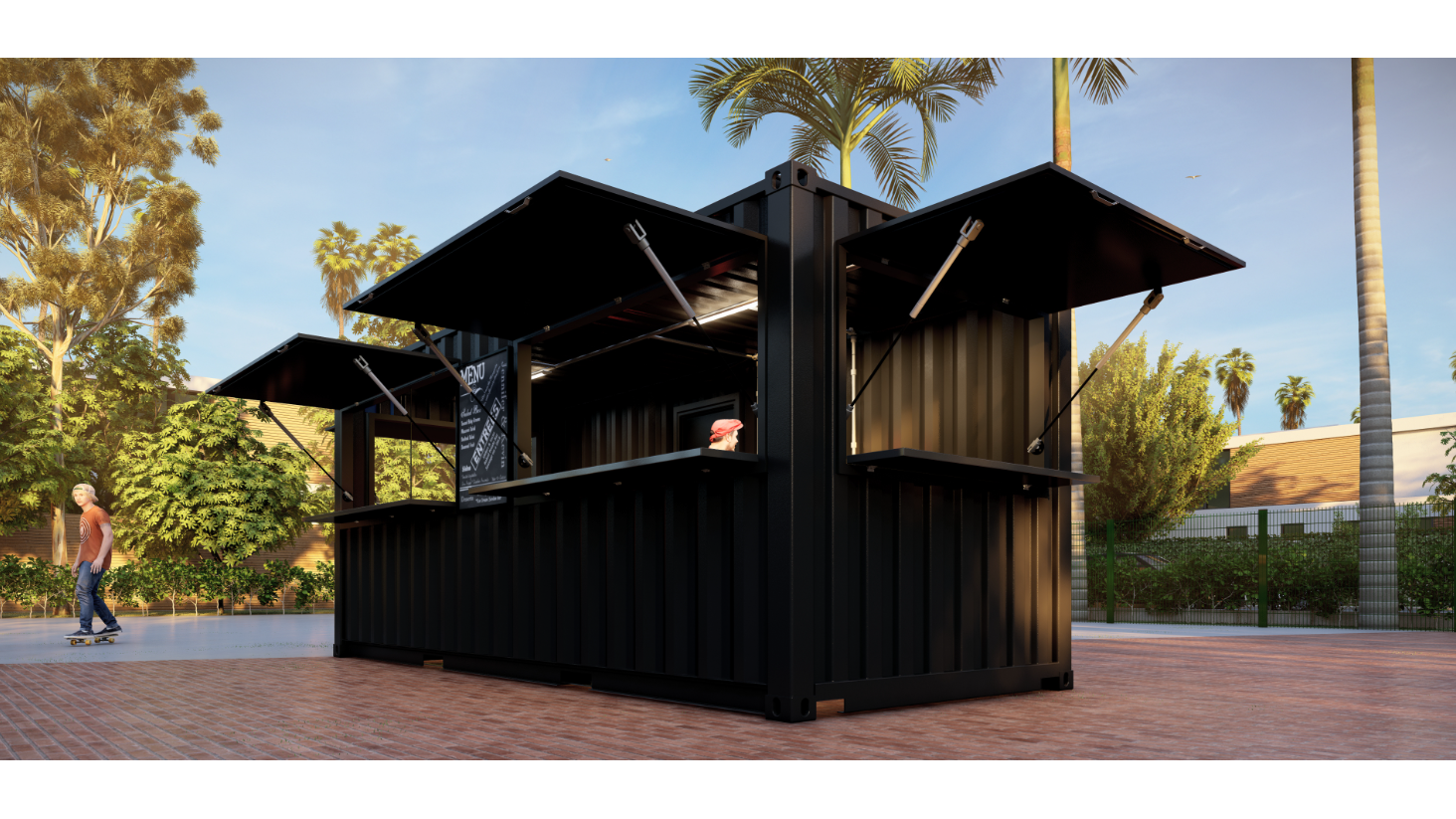
Containers excel as portable retail environments, offering vendors secure, weatherproof spaces that can travel from event to event. The standard 20-foot container provides ample room for merchandise display, point-of-sale systems, and customer interaction areas. Roll-up doors and custom window installations create inviting storefronts that attract attendee attention.
Successful implementations include artisan craft booths at music festivals and branded merchandise stations at sports events. The industrial aesthetic appeals to younger demographics while providing vendors with professional-appearing retail environments that elevate their brand presence.
High cube containers, with their additional foot of exterior height providing approximately 8'10" interior clearance, create comfortable hospitality spaces when equipped with proper climate control and interior finishing. These spaces serve as exclusive areas for sponsors, artists, or premium ticket holders, offering respite from crowded event grounds.
Successful VIP implementations often feature climate control systems, premium flooring, sophisticated lighting, and custom furnishings that transform the industrial container into an upscale hospitality environment. Multiple containers can be connected to create larger spaces while maintaining the modular flexibility that makes containers attractive.
Container-based ticket booths provide secure, weather-resistant environments for staff and cash handling equipment. Custom window installations and service counters create efficient guest processing areas that can handle high-volume ticket sales and credential distribution.
The security features inherent in container construction protect valuable ticketing equipment and cash reserves. Lockable storage areas within the container provide secure spaces for supplies and personal items, while the sturdy construction deters theft attempts common at outdoor events.
The entertainment industry has adopted containers for backstage logistics, using them as equipment storage, artist green rooms, and production offices. Their mobility allows positioning close to performance areas while maintaining security for expensive equipment and providing private spaces for performers.
Climate-controlled containers serve as comfortable green rooms with proper insulation, HVAC systems, and interior finishing. The weather-resistant construction protects sensitive equipment from moisture and temperature fluctuations that can damage musical instruments and electronic gear.
Container bars and food service stations have become signature elements at many large-scale events. The robust construction supports commercial kitchen equipment, while plumbing and electrical modifications enable full-service food preparation and beverage service capabilities.
Popular configurations include rooftop serving areas created by removing container tops, creating unique elevated service experiences. Multiple containers can be arranged to form food courts or connected to create larger kitchen and service areas that accommodate high-volume food service operations.
Container selection depends on intended use and space requirements. The 20-foot container, with external dimensions of 20' x 8' x 8'6" and internal dimensions of approximately 19'4" x 7'8" x 7'10", provides 150 square feet of floor space. This size suits single-purpose applications like ticket booths, small retail spaces, or equipment storage. Its compact size enables positioning in tight spaces while providing adequate room for most single-vendor operations.
The 40-foot container, with external dimensions of 40' x 8' x 8'6" and internal dimensions of approximately 39'5" x 7'8" x 7'10", doubles the floor space to 305 square feet. This accommodates larger operations like multi-vendor retail areas, substantial food service operations, or spacious hospitality areas. Most event setups use 20-foot containers for specialized functions like bars or storage, while 40-foot containers serve larger applications requiring more operational space.
High cube containers provide crucial additional headroom for guest-facing applications. The extra 12 inches of exterior height creates approximately 8'10" of interior clearance, resulting in more comfortable environments for visitors and allowing installation of dropped ceilings to conceal utilities while maintaining adequate headroom.
The additional height proves especially valuable for retail applications where vertical merchandise displays maximize sales opportunities, and for hospitality areas where comfortable ceiling height improves guest experience. High cube options are available in both 20-foot and 40-foot lengths.
Container modifications transform basic shipping units into sophisticated event facilities. Common modifications include roll-up doors for easy access, personnel doors for staff entry, and window installations for natural light and customer interaction capabilities.
Climate control systems ensure guest comfort in all weather conditions. Electrical modifications include outlets, lighting systems, and power distribution panels that support point-of-sale systems, refrigeration, and other event equipment. Professional modification services ensure all electrical work meets local codes and safety standards.
Strategically positioned containers serve dual purposes as functional spaces and crowd management tools. Their substantial mass and secure anchoring create effective barriers that guide attendee movement and prevent access to restricted areas without requiring separate fencing systems.
Container placement helps establish clear traffic patterns, directing crowds toward entry points, emergency exits, and key attractions while creating natural gathering spaces around food service and retail containers. This strategic positioning improves safety by preventing bottlenecks and ensuring emergency vehicle access.
Container stacking capabilities enable creation of multi-level event structures that maximize space usage in compact areas. Properly engineered stacking arrangements can create elevated platforms for DJ booths, VIP viewing areas, or additional operational space without expanding the event footprint.
Professional engineering ensures stacked configurations meet safety requirements and local building codes. The modular nature allows creative configurations like stepped arrangements that provide multiple levels of viewing or operational areas, creating visually striking architectural elements that improve event atmospherics.
The Voodoo Music Festival in New Orleans in 2009 showcased container architecture's potential when production designer Stefan Beese used six 40-foot shipping containers to create an impressive modular event structure. This design served dual functions as both grandstand seating and VIP lounge area while embodying sustainable design principles.
Beese's design demonstrated how containers could be configured to create sophisticated architectural elements that improve both functionality and aesthetics. The modular structure provided elevated viewing positions for VIP guests while incorporating sustainable materials that aligned with growing environmental consciousness among festival attendees.
This implementation proved that containers could transcend their utilitarian origins to become design elements that improve event experiences. The success of this application influenced other large-scale events to consider container architecture as both practical and visually appealing solutions.
New and one-time use containers provide pristine appearance ideal for guest-facing applications where aesthetics matter. These containers feature unmarked surfaces, consistent coloring, and perfect structural integrity that creates professional appearances suitable for premium events and sponsor activations.
While representing the highest cost option, new containers justify their premium pricing through superior appearance and complete weather sealing. They're particularly valuable for applications where containers serve as branded elements or guest interaction spaces where appearance directly impacts attendee experience.
Cargo worthy containers are eligible for CSC certification when independently certified by a third-party CSC inspector, indicating they can meet international shipping standards for structural integrity and weather resistance. These containers show minor wear from shipping use but retain excellent functionality and weather protection at moderate pricing.
The potential for CSC certification ensures containers can meet rigorous safety and structural standards, providing confidence in their reliability for event applications. Minor cosmetic imperfections don't affect functionality, making cargo worthy containers excellent choices for applications where appearance is less critical than performance and cost control.
Wind and water tight containers are structurally sound, free from holes or leaks, and capable of keeping out wind, water, and pests. They offer excellent weather protection at budget-friendly pricing, ideal for storage applications and behind-the-scenes uses where appearance is less critical. While showing more visible wear than premium options, they provide reliable protection for equipment and supplies and are excellent candidates for modifications.
These containers serve effectively for backstage storage, equipment protection, and operational uses where functionality outweighs appearance. The significant cost savings enable event planners to allocate larger portions of their budgets to guest-facing improvements while maintaining excellent protection for valuable equipment and supplies. Note that wind and water tight containers are not eligible for CSC certification.
Planning large-scale events requires reliable partners who understand both container capabilities and event logistics demands. Successful container implementation depends on selecting appropriate sizes and conditions while ensuring timely delivery and professional setup services.
Professional container providers offer complete services including site assessment, container selection guidance, modification coordination, and delivery logistics. These services ensure containers arrive when needed and function properly throughout event duration, allowing planners to focus on other critical event elements.
The growing acceptance of containers in event planning reflects their proven ability to solve multiple logistical challenges while providing cost-effective, sustainable solutions that improve rather than compromise event experiences. As more planners recognize container versatility, these applications will continue expanding across all types of large-scale events.
Conexwest provides complete shipping container solutions for event planners seeking reliable, cost-effective infrastructure for their next large-scale event.


