At a time when many people are feeling overwhelmed, disconnected, and uncertain about the future, new evaluation findings suggest that Shaun Tomson’s Code Method may help participants shift toward a stronger sense of purpose, clarity, hope, and human connection.
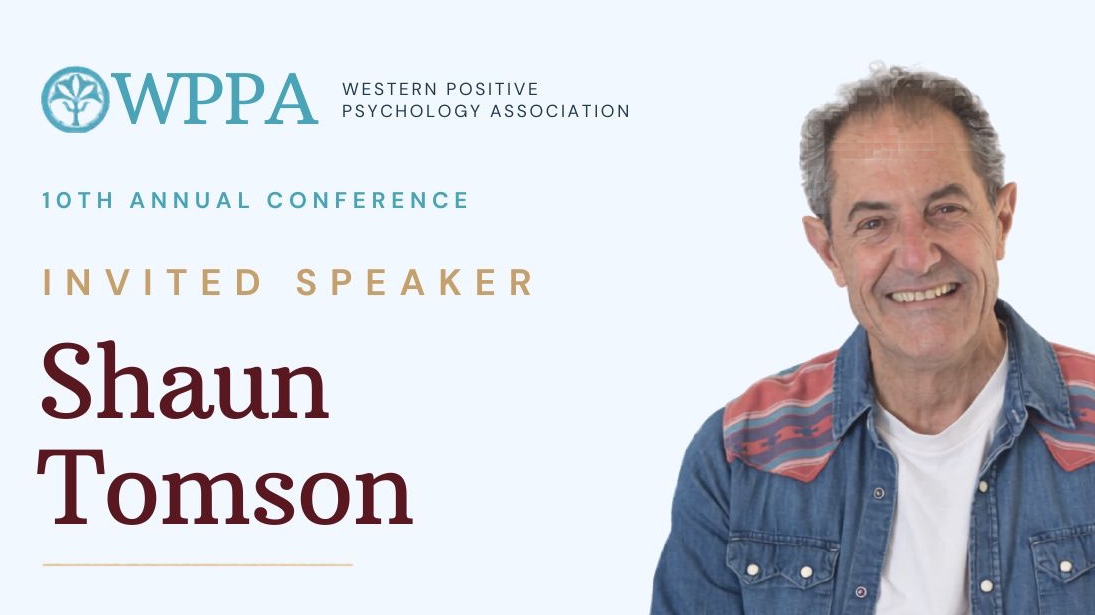
World champion surfer, bestselling author, and keynote speaker Shaun Tomson will present new evaluation findings on The Code Method at the 10th Annual Western Positive Psychology Conference at Claremont Graduate University on Saturday, May 30, from 12:00 to 1:00 PM.
At a time when many people are feeling overwhelmed, disconnected, and uncertain about the future, new evaluation findings suggest that Shaun Tomson’s Code Method may help participants shift toward a stronger sense of purpose, clarity, hope, and human connection.
Tomson, the 1977 World Surfing Champion, bestselling author of Surfer’s Code, and a globally recognized keynote speaker, will present the findings at the 10th Annual Western Positive Psychology Conference at Claremont Graduate University on Saturday, May 30, from 12:00 to 1:00 PM.
The findings are based on an evaluation conducted by Zachary Swanson, an Applied Positive Psychology PhD Scholar at Claremont Graduate University. Swanson reviewed nearly 1,800 cleaned audience responses collected before and after Code Method presentations to better understand how the experience influenced the way participants described their thoughts, emotions, and outlook.
The results suggest a striking shift.
Before experiencing The Code Method, many participants used words associated with stress, exhaustion, overwhelm, and confusion. After the presentations, responses moved strongly toward language connected to purpose, clarity, love, intentionality, optimism, and connection.
According to the evaluation:
Negative-oriented responses decreased from nearly 30% before the presentation to less than 1% afterward.
Positive-oriented responses rose to nearly 100%.
Purpose and clarity-related language increased nearly tenfold.
Relationship and connection-focused responses increased more than eightfold.
Researchers concluded that participants appeared to move away from immediate emotional burdens and toward more future-oriented reflections involving intentionality, love, purpose, hope, openness, and connection.
At the center of the work is The Code Method, a simple reflective exercise in which participants write a personal code beginning with the words “I will.” The process is designed to help people clarify what matters most, connect with their values, and turn purpose into action.
For Tomson, the power of the method lies in its simplicity.
“People don’t just want success anymore, they want meaning,” said Tomson. “The Code Method helps people reconnect with purpose, commitment, and the best version of themselves. When individuals find purpose, teams become stronger, cultures become healthier, and organizations become more human.”
Tomson has shared The Code Method with corporations, universities, schools, and leadership organizations around the world, including audiences at Google, Disney, Cisco, and General Motors. His work draws from his career as a world champion surfer, his personal experiences with resilience and loss, and his academic background in leadership.
The findings arrive at a moment when organizations are placing greater emphasis on employee engagement, mental well-being, leadership development, and workplace culture. While additional long-term research is recommended, the scale and consistency of the observed shifts suggest that The Code Method may offer a meaningful tool for helping individuals and groups reconnect with purpose.
Tomson’s presentation at the Western Positive Psychology Conference will explore how purpose-based reflection can be applied in leadership, education, organizational culture, and personal development.
For anyone looking for a practical way to move from stress and uncertainty toward greater clarity and commitment, the message behind The Code Method is direct: purpose begins with a promise.
That promise starts with two words: “I will.”


