While e-waste headlines focus on smartphones and laptops, millions of Apple Watch bands enter landfills annually. The culprit isn’t wear and tear—it’s planned obsolescence built into materials incompatible with human sweat.
As electronic waste surged past 62 million metric tons globally in 2022, on track to reach 82 million by 2030 according to the Global E-waste Monitor 2024, the fitness accessory market faces a reckoning over planned obsolescence and throwaway design.
While headlines focus on smartphones and laptops driving the global e-waste crisis, a less visible contributor is piling up in landfills: fitness accessories designed to fail. Apple Watch bands, replaced by users every 3-6 months on average, represent a microcosm of the planned obsolescence problem plaguing consumer electronics—but material science may finally offer a sustainable alternative.
The numbers (or lack thereof) suggest there's trouble brewing. Apple does not disclose the active installed base for Apple Watch or the average band replacement frequency. However, given Apple's multi-year leadership in smartwatch shipments and ongoing accessory sales, even conservative scenarios indicate tens of millions of bands are purchased annually. With only 22.3% of global e‑waste formally collected and recycled, small accessories remain an underexamined contributor to waste streams.
The root cause isn't just wear and tear—it's fundamental material incompatibility with human sweat. Standard silicone and nylon bands, the industry standard for workout accessories, are chemically vulnerable to the acids, salts, and oils in perspiration. This isn't accidental; it's a design reality that manufacturers have had little incentive to address when replacement sales drive revenue.
Human sweat contains urea, lactic acid, ammonia, and chloride ions—a corrosive mixture that actively degrades common materials. When silicone bands absorb moisture, it penetrates microscopic pores where bacteria proliferate and produce additional acids. These compounds break down the polymer chains that give silicone its flexibility, causing cracking, discoloration, and odor within months.
Nylon faces a different assault. Salt crystals in dried sweat act as abrasives, physically wearing down fibers with each movement, while sweat's acidic pH (typically 4.5-7.0) weakens hydrogen bonds in the polymer structure. The result: bands that stretch, fray, and lose structural integrity on a predictable timeline.
For manufacturers operating on accessory sales margins, this degradation cycle is a feature, not a bug. But as sustainability concerns intensify and consumers become more educated about the total cost of ownership, the market for waterproof sports bands is beginning to shift.
Fluoroelastomer technology—specifically FKM rubber—represents a departure from the throwaway accessory model. Originally developed for aerospace and automotive applications requiring extreme chemical resistance, FKM is now appearing in premium fitness accessories designed for longevity rather than replacement.
FKM's molecular structure features carbon-fluorine bonds, among the strongest in organic chemistry. This gives the material exceptional resistance to acids, oils, and salts—precisely the compounds in sweat that destroy conventional bands. Independent material testing shows FKM maintains its physical properties even after prolonged exposure to corrosive substances, with minimal degradation in flexibility, appearance, or structural integrity.
The performance gap is substantial. While standard silicone bands show visible degradation after 3-6 months of daily workout use, FKM-based alternatives demonstrate resistance to discoloration, odor retention, and breakdown over periods measured in years rather than months.
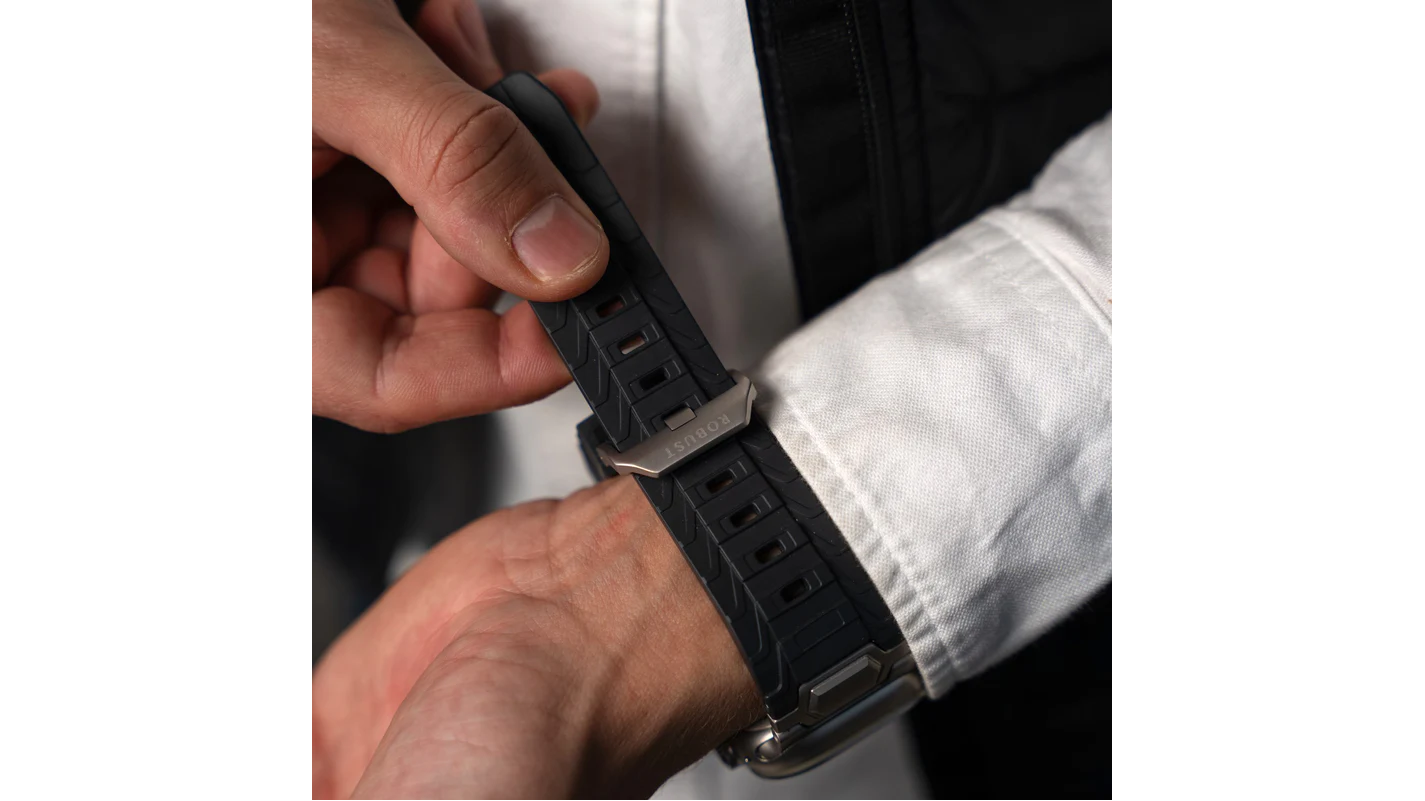
The Rugged Sports Watch Band from sustainability-focused brands like Robust Goods exemplifies this shift toward durability-first design. Constructed from FKM rubber with a stainless steel clasp, the band is engineered specifically to withstand the chemical environment of athletic activity. Its waterproof design and sweat-resistant properties directly address the degradation mechanisms that create the replacement cycle.
For users prioritizing flexibility, the Elastic Band offers breathable nylon with enhanced moisture-wicking properties for activities requiring maximum ventilation—though even advanced nylon formulations require more frequent replacement than fluoroelastomer alternatives.
The environmental implications extend beyond individual purchasing decisions. Reducing replacement frequency from twice yearly to once every several years could eliminate tens of millions of discarded bands from waste streams annually. When multiplied across the broader wearable accessories market—fitness trackers, smartwatches, and activity monitors—the potential impact becomes significant.
This aligns with growing consumer interest in sustainable purchasing and total cost of ownership calculations. A band that costs more initially but lasts three times longer represents both economic and environmental value—a proposition that resonates with the same consumers driving demand for repairable electronics and right-to-repair legislation.
The shift toward durable materials challenges the accessory business model that many manufacturers rely on. As consumers become more educated about material chemistry and degradation timelines, marketing claims about "premium" silicone or "advanced" nylon face increased scrutiny.
Material scientists are unequivocal: not all polymers perform equally under sweat exposure. The question for manufacturers is whether they'll lead the transition to sustainable materials or be forced into it by consumer demand and potential regulation around planned obsolescence.
For the fitness wearable market, this represents an inflection point. The same sustainability pressures reshaping consumer electronics—extended warranties, repairability scores, material transparency—are beginning to apply to accessories that were previously considered disposable.
For anyone using an Apple Watch during workouts, band material is no longer just about comfort or aesthetics. It's a decision affecting device performance, hygiene, replacement costs, and environmental impact.
The degradation of conventional materials isn't a mystery—it's predictable chemistry. The question is whether consumers will continue accepting planned obsolescence in fitness accessories, or demand the same durability standards they're beginning to expect from the devices themselves.
As the e-waste crisis intensifies and sustainability becomes a purchasing priority, the market for throwaway fitness accessories faces the same reckoning that's already transforming consumer electronics. Advanced materials like FKM rubber offer a path forward—one where performance and sustainability align rather than conflict.
The choice is increasingly clear: invest in materials engineered to last, or continue feeding the replacement cycle that's turning gym bags into e-waste pipelines.
This content is provided in partnership with Robust Goods and is intended for informational purposes only. The views, opinions, and advice expressed in this article are solely those of Robust Goods and do not necessarily reflect the views or policies of any other individual, organization, or entity.


