Most renters overpay for storage by making two early mistakes: wrong location, wrong size. Here’s how to avoid both and save hundreds.
Self-storage should be simple: pick a unit, move your stuff in, done. But most renters end up paying way more than expected because of two early decisions—where they rent and how big they go.
Here's the good news: these mistakes are completely avoidable. With some upfront planning, you can keep monthly costs under control and still get the space you need.
The biggest shock for renters? How wildly inconsistent pricing can be. Two identical units—same size, same features—can have completely different price tags even within the same city.
This happens because storage pricing follows demand, not quality. Facilities near dense neighborhoods or popular areas charge more simply because they can. You're paying for proximity, not better storage.
That "small" monthly difference compounds fast. What looks like $30 or $40 extra becomes $360 to $480 over a year—just because you didn't want to drive ten extra minutes.
Most people assume climate control or 24/7 access are the big price drivers. While those add to your bill, they're usually secondary to broader market factors.
Location is everything. Areas with limited land, high population density, or fewer storage options command higher prices. It's basic supply and demand—when storage is scarce, facilities can charge whatever they want.
Occupancy levels matter. When facilities are nearly full, pricing becomes less flexible and discounts disappear. You lose negotiating power, and rates creep up even though the unit itself hasn't changed.
Availability creates leverage—or kills it. When open units are limited across an area, you've got fewer choices and less ability to shop around. This is why prices can spike in high-demand neighborhoods even when nothing about the actual storage has improved.
Overspending usually starts with choosing the wrong size. The classic mistake? Renting bigger than necessary "just to be safe."
Look, nobody wants to run out of space. But paying for unused square footage every month is just burning money. And here's what most people don't realize: you can fit way more in a storage unit than you think—if you pack strategically.
Many renters think in terms of apartment size instead of actual volume. Storage units are designed to stack vertically, but people treat them like one-level rooms. All that ceiling space goes wasted, which means you're renting way more square footage than necessary.
There's also a tendency to overestimate what needs storing in the first place. Items that could be sold, donated, or tossed often end up inflating space requirements—and your monthly bill.
Choosing the right unit starts with a realistic inventory. Stop thinking about how many bedrooms you're moving from. Start thinking in categories: boxes, large furniture, appliances, and bulky items.
5×5 units handle boxes, seasonal gear, and small furniture—that's it. Think closet-sized.
5×10 units fit a studio or small one-bedroom when items are stacked properly. This is where packing efficiency really matters.
10×10 units work for one-bedroom apartments or partial household storage, but only if you're organized and stacking vertically.
Here's the money-saving secret: use uniform boxes, disassemble furniture wherever possible, and build up instead of out. Do this right and you'll need a smaller unit than you thought—saving you money every single month.
For help determining what size you actually need, check out storage unit size guides that show exactly what fits in each unit.
Avoiding high storage costs comes down to comparison and timing—but most people skip both.
Expand your search radius. Looking only at facilities closest to home limits your options and inflates costs. Check neighboring areas and you'll often find the same unit for 20-40% less. Unless you're visiting your storage unit daily, your stuff can handle the commute.
Check availability in real-time. Rates fluctuate based on occupancy. Sometimes waiting a week gets you better pricing. Sometimes booking early locks in lower rates. Either way, don't assume prices are static.
Stop equating price with quality. Higher monthly rates usually reflect demand and location, not cleaner facilities or better security. You're paying for geography, not premium storage.
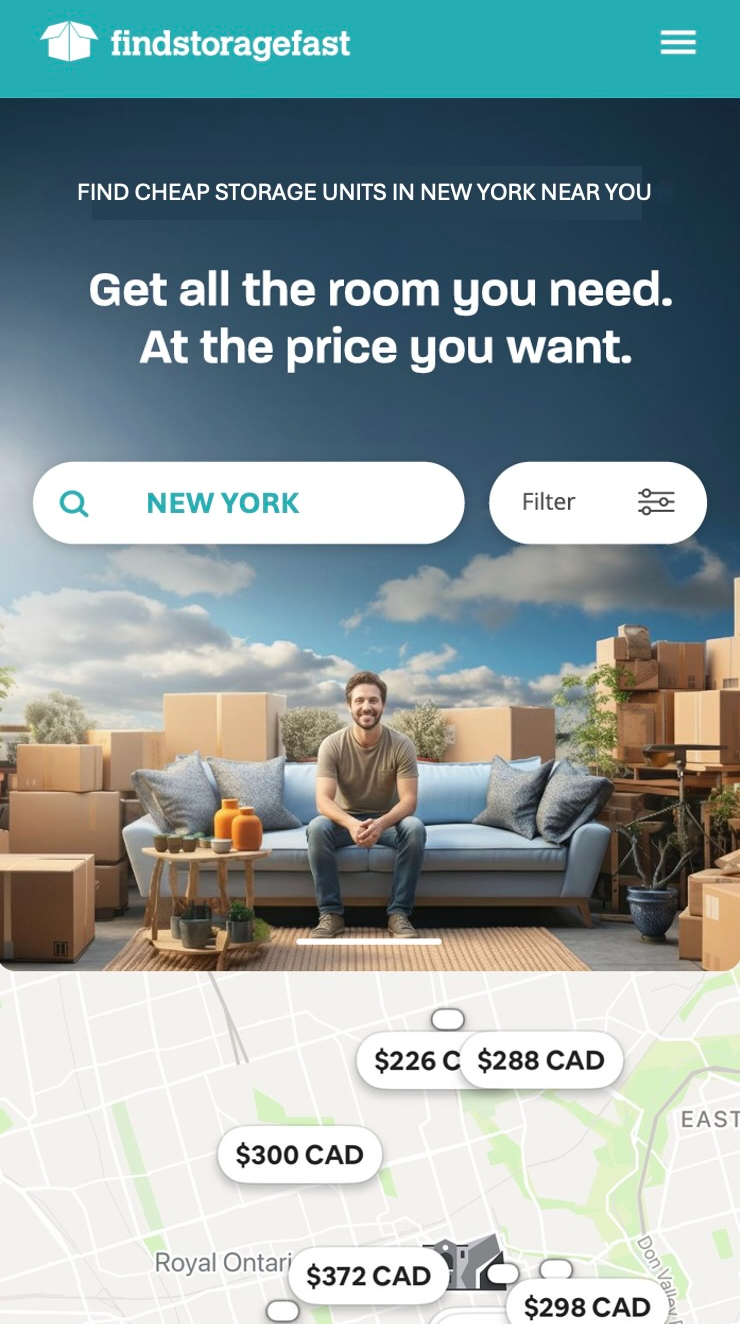
Use comparison tools like FindStorageFast to see pricing across multiple facilities instantly instead of calling around for hours.
Let's be real: convenience isn't always overrated.
Short-term storage during a move? Pay for proximity. You're accessing it constantly.
Need to grab items multiple times a week? Stay close. The time savings matter.
Tight timeline with zero flexibility? Do what works.
But for long-term storage where you're barely visiting? Stop paying extra for convenience you're not using. If you're accessing items once a month or less, traveling farther can save you hundreds over time. Your holiday decorations don't need prime real estate.
Storage costs aren't random—they're predictable. The renters who save the most are the ones who plan ahead, compare options across neighborhoods, and size correctly from the start.
Take time to inventory what you're actually storing. Compare prices in nearby areas, not just the closest facility. Choose the smallest unit that fits your needs when packed efficiently.
Do this right and you'll keep costs manageable without sacrificing the space you need to store belongings safely.


