When your trailer starts swaying dangerously at highway speeds, the culprit is often poor hitch installation. But there’s a specific weight distribution technology that can prevent this life-threatening situation—and one critical installation mistake that makes it completely ineffective.
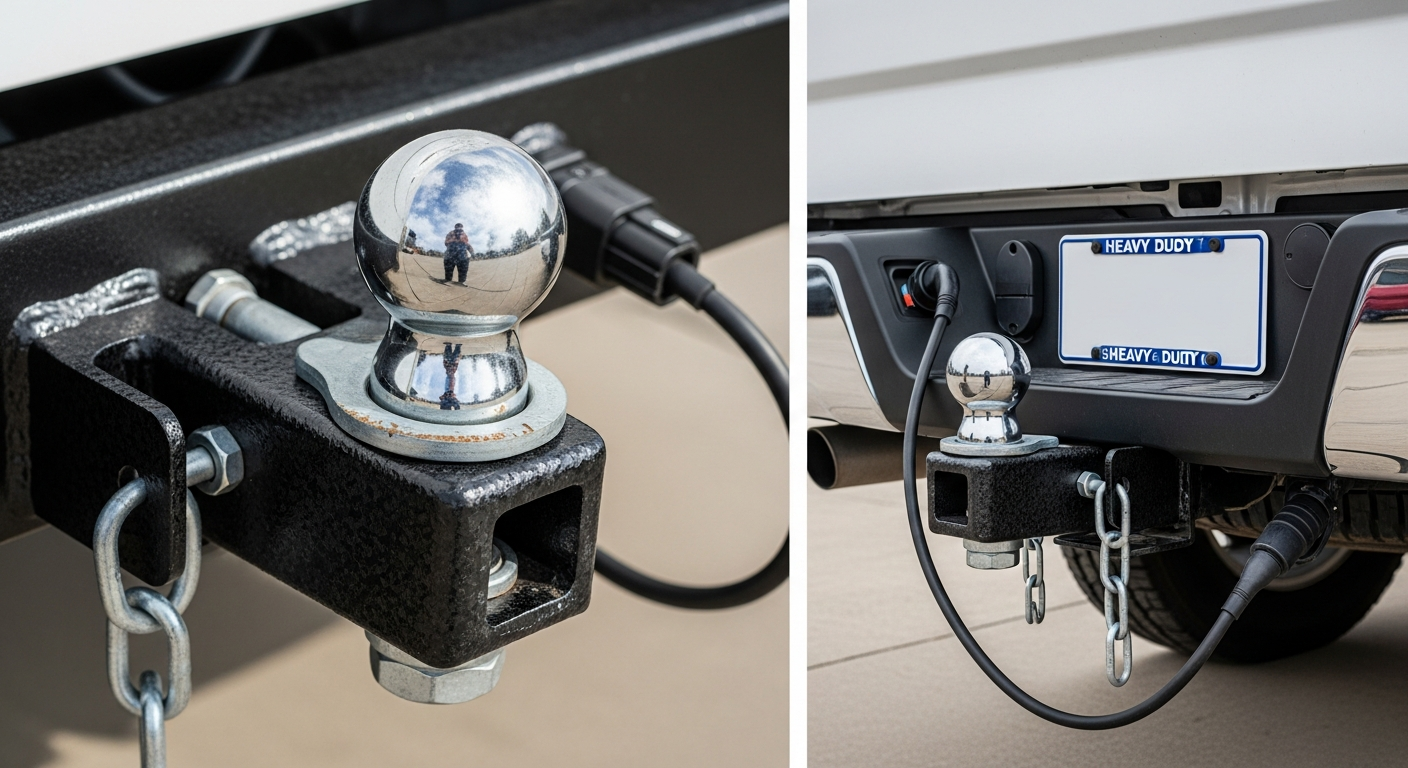
When towing a trailer, boat, or RV, the difference between a safe journey and a dangerous situation often comes down to one critical factor: proper hitch installation. The precision required for secure mounting, correct weight distribution, and appropriate hardware selection makes professional installation necessary for both safety and peace of mind.
Mobile hitch installation eliminates the traditional hassles of automotive service appointments, though weather conditions and adequate workspace at your location may occasionally affect scheduling. Instead of taking time off work, arranging transportation, or waiting in service centers, professional installers come directly to homes, offices, or other convenient locations. This approach saves valuable time while ensuring expert installation quality.
The mobile service model particularly benefits busy professionals, fleet managers, and anyone who values convenience without compromising safety standards. R&B Hitch of Ocala specializes in mobile trailer hitch installations, bringing professional expertise directly to customers throughout Central Florida.
Mobile installers arrive equipped with professional tools, proper torque specifications, and detailed knowledge of vehicle-specific requirements. This ensures installations meet manufacturer standards while providing the convenience of on-site service.
Proper hitch selection requires matching the hitch class to both the vehicle's capabilities and the intended towing load. Each class designation corresponds to specific weight limits and receiver sizes, making accurate selection critical for safe operation. Always consult your vehicle's owner's manual and specific hitch manufacturer specifications for exact weight ratings, as these can vary.
Class 1 hitches typically handle up to 2,000 pounds gross trailer weight and 200 pounds tongue weight, making them ideal for small trailers, bike racks, and cargo carriers on cars and crossovers. The compact 1-1/4" receiver accommodates lighter accessories while maintaining vehicle aesthetics.
Class 2 hitches generally increase capacity to 3,500 pounds gross trailer weight with tongue weights ranging from 300-350 pounds depending on the manufacturer. These work well for small boats, utility trailers, and pop-up campers when mounted on cars, minivans, and crossovers with adequate towing capacity.
Class 3 represents the most versatile hitch category, typically handling up to 5,000-8,000 pounds gross trailer weight and 500-800 pounds tongue weight, depending on the specific manufacturer and vehicle application. The standard 2" receiver size accommodates a wide range of accessories and provides substantial towing capability for mid-size boats, travel trailers, and equipment haulers.
Most SUVs and pickup trucks can accommodate Class 3 hitches, though proper installation requires careful attention to mounting points and frame reinforcement. The increased capacity makes these hitches suitable for family camping trips and recreational towing needs.
Class 4 hitches typically handle up to 10,000-12,000 pounds gross trailer weight, while Class 5 systems can manage up to 20,000 pounds depending on the specific application and manufacturer specifications. These heavy-duty systems require robust mounting systems and are typically installed on full-size trucks and commercial vehicles.
The distinction between Class 5 Xtra Duty and Commercial Duty versions relates to intended use patterns and mounting requirements. Commercial duty systems often require frame modifications and specialized mounting hardware for maximum strength and durability.
Weight distribution hitches address one of towing's most dangerous phenomena: trailer sway. When a trailer's tongue weight exceeds the rear axle's ability to maintain control, the entire combination becomes unstable, potentially leading to accidents.
Weight distribution systems use spring bars and specialized brackets to transfer tongue weight from the rear axle to the front axle and trailer axles. This redistribution maintains proper vehicle balance, preserving steering control and braking performance during towing operations.
The spring bars create tension that lifts the rear of the towing vehicle while pressing down on the trailer's axles. This balanced approach keeps all tires in proper contact with the road surface, dramatically improving stability and control during cornering, braking, and emergency maneuvers.
Proper weight distribution system installation requires precise adherence to manufacturer torque specifications. Each mounting bolt, bracket, and connection point has specific torque requirements that ensure structural integrity under load.
Professional installers understand that torque specifications vary based on bolt size, material composition, and mounting location. Under-torqued connections can loosen during operation, while over-torquing can damage threads or create stress concentrations that lead to failure.
Common installation errors can transform a properly designed hitch into a dangerous liability. Choosing incorrect hitch classes, using improper hardware, or failing to follow torque specifications creates situations where hitches can separate from vehicles during operation.
Inadequate wiring installation represents another frequent mistake that compromises safety. Trailer lights must function reliably to communicate intentions to other drivers, and improper electrical connections can lead to intermittent operation or complete failure during critical moments.
Neglecting rust protection during installation creates long-term structural concerns. Exposed metal surfaces in mounting areas become corrosion points that weaken the entire system over time. Professional installers apply appropriate protective coatings and use corrosion-resistant hardware to prevent these issues.
Frame damage from incorrect drilling or mounting procedures cannot be easily repaired and may compromise the vehicle's structural integrity. Professional installers understand vehicle-specific mounting requirements and avoid modifications that could weaken critical structural components.
Different towing applications require specialized hitch designs optimized for specific load types and operating conditions. Understanding these variations helps ensure proper equipment selection for intended use.
Receiver hitches provide versatility through interchangeable ball mounts, allowing quick adjustment for different trailer heights and tongue weights. The standardized receiver sizes (1-1/4", 2", and 2-1/2") accommodate various accessories while maintaining secure connections.
Bumper hitches integrate directly into vehicle bumper structures, offering compact installations for lighter towing applications. While limited in capacity compared to frame-mounted systems, they provide adequate strength for small trailers and recreational equipment.
Fifth wheel hitches mount in pickup truck beds, providing superior weight distribution and maneuverability for large RVs and travel trailers. The pivot point location above the rear axle improves stability and reduces the turning radius compared to conventional hitches.
Gooseneck hitches offer maximum towing capacity for agricultural equipment, livestock trailers, and heavy cargo applications. The ball-and-coupler connection provides reliability while allowing significant articulation for navigating uneven terrain.
Pintle hooks excel in demanding commercial and military applications where extreme durability and reliability are required. The robust design handles heavy loads while providing secure connections that resist separation under severe operating conditions.
These systems accommodate trailers with lunette rings and can handle significant vertical and horizontal forces during operation. The simple, proven design minimizes maintenance requirements while maximizing operational reliability in challenging environments.
Professional hitch installation services extend throughout Central Florida, covering communities from Ocala and Gainesville to The Villages and Crystal River. This extensive service area ensures convenient access to expert installation regardless of location.
Free quotations help customers understand installation requirements and costs before committing to service. Experienced installers assess vehicle specifications, intended towing applications, and site conditions to provide accurate estimates for complete installations.
The consultation process includes hitch class recommendations, accessory suggestions, and timeline estimates for completion. This approach ensures customers receive appropriate equipment while understanding the installation process and requirements.
Service areas include rural communities, suburban neighborhoods, and commercial locations throughout Marion County and surrounding regions. Mobile installation capabilities mean professional service reaches customers wherever convenient, eliminating travel requirements and scheduling complications.
For expert trailer hitch installation services that prioritize safety and precision, contact R&B Hitch of Ocala for professional mobile installation throughout Central Florida.


