Modern hotel phone systems should connect directly with your property management software to automate guest communications, room status updates, and emergency services. Manual coordination between these systems wastes staff time and creates opportunities for errors that affect guest experience.
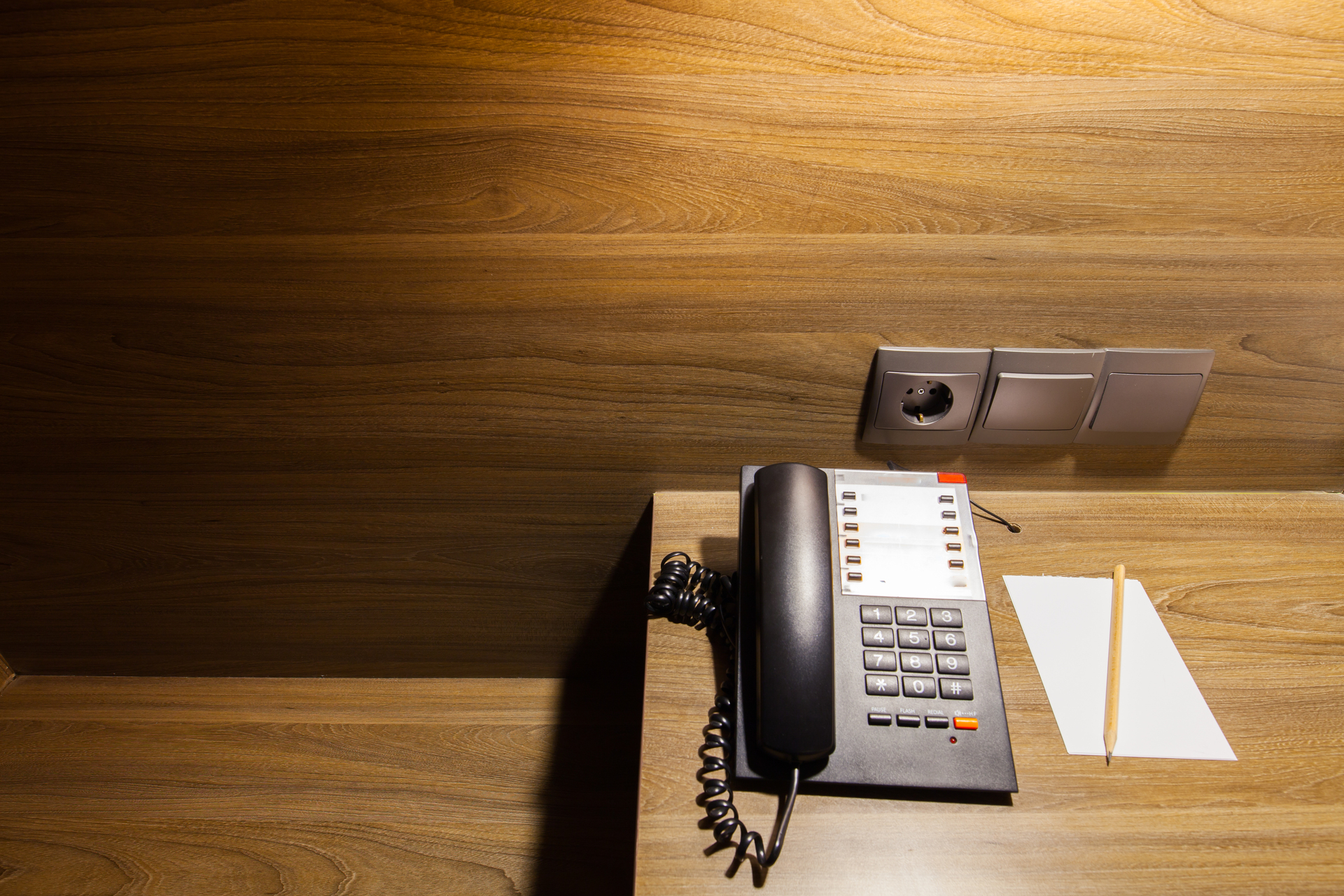
Your front desk agent just checked in a guest to room 304, and now she updates the room status in your property management system before picking up the phone to activate the room's outbound calling. Meanwhile, another staff member manually enters a 6:30 AM wake-up call request into a separate system while a third employee updates the housekeeping board.
Sound familiar? You're paying three people to do what one integrated system should handle automatically.
Most hotels still operate with phone systems that exist in their own universe, completely disconnected from the software running their daily operations, which creates redundant work, slows down service, and opens the door for mistakes that frustrate guests and cost you money.
You probably think about your phone system when something breaks—a guest complains their phone doesn't work, the wake-up call never came through, or emergency services couldn't locate the caller.
What you might not notice is the daily time drain where your staff toggles between screens, re-enters the same information multiple times, and double-checks details that should sync automatically. A front desk agent spends 30 seconds per check-in just activating phone features, and when you multiply that by 50 daily check-ins across a 150-room property, you're losing over four hours of productivity every week.
Disconnected systems also create gaps in your emergency response—when a guest dials 911 from room 217, does your phone system automatically tell emergency responders the exact location? Federal law requires it, yet many older systems don't deliver this information without manual configuration for every single room.
Real integration means your phone system and property management software talk to each other constantly, updating information the moment changes occur so you're not running two separate platforms that require human translation.
When housekeeping marks a room clean in your PMS, the phone system should immediately enable outbound calling and update the room's features without anyone touching a phone to flip a switch. The guest walks into a room that works exactly as expected, experiencing the seamless service they paid for.
Check-out triggers the reverse process where the system restricts outbound calls, clears personalized settings, and prepares the line for the next arrival while your staff focuses on guests instead of telecom administration.
Guests request wake-up calls at the front desk or through their in-room phone, and the request flows directly into your PMS calendar where the system places the call at the scheduled time, logs the completion, and flags any failures for follow-up.
You're not maintaining a separate wake-up call log or hoping someone remembered to set it manually—the integration handles the entire process from request to delivery, with documentation your staff can reference if questions arise.
Every phone charge—whether it's a long-distance call or a premium service—posts to the correct guest folio in real time, which means you're not reconciling phone bills against room numbers at month's end, hoping to catch charges before guests depart.
This matters more than you might think since hotels using separate phone billing systems lose revenue every single day because charges post too slowly or get assigned to the wrong rooms, leaving guests to check out before the fees appear while you eat the cost.
A guest presses the DND button on their room phone, and your PMS immediately sees this status change so housekeeping staff checking their tablets know not to knock while the front desk sees the indicator before transferring calls.
Simple? Yes—but standard? Not even close, as most hotel phone systems still require staff to manually update DND status in multiple locations, which means it often doesn't happen consistently.
Kari's Law and Ray Baum's Act changed what hotels must provide during 911 calls, requiring your phone system to automatically deliver the specific room number or physical location to emergency dispatchers because "We're at the Hampton Inn" doesn't cut it anymore.
Integrated systems assign each phone a unique, addressable location that transmits during emergency calls so Room 304 shows up on the dispatcher's screen as "Hampton Inn, Room 304, 123 Main Street" without anyone needing to relay this information verbally or look it up. The technology handles it the moment someone dials 911, which isn't just about compliance (though the fines for violations are steep)—it's about getting help to your guests faster when seconds actually matter.
Not every VoIP provider understands hospitality operations, so you need a system built specifically for hotels, with pre-existing connections to major property management platforms.
Look for providers who can demonstrate active integrations with your specific PMS while asking about the data points that sync automatically and requesting a demonstration showing how room status changes flow between systems. Generic business phone systems require custom programming that rarely works smoothly in hotel environments, leaving you with half-functional features and frustrated staff.
Your phone provider should also understand the migration process since you can't shut down guest services for two days while technicians rewire your property—the transition needs to happen gradually, often room by room or floor by floor, maintaining full operations throughout.
Calculate your current manual processes by counting how many times your team touches phone-related tasks each day: activating rooms, entering wake-up calls, updating DND status, reconciling billing, and managing emergency location data.
An integrated system eliminates most of these touches entirely so your front desk can handle more guests with the same staffing levels, housekeeping sees accurate room status without playing phone tag with the desk, and night audit closes faster because billing is already reconciled.
One property manager reported saving approximately 90 minutes of front desk time per day after implementing full PMS integration, which translates to 45 hours monthly—more than a full work week—redirected toward guest service instead of administrative tasks.
Your morning arrives with 30 checkouts and 40 new arrivals, and the system automatically restricts outbound calling as guests check out while clearing their personalized settings. Housekeeping receives their assignment list through the PMS, updates room status as they complete each space, and the phone system responds by activating features for arriving guests without any manual intervention.
A guest in room 512 requests a 5:30 AM wake-up call that the front desk enters once in the PMS, then the system places the call, logs the completion, and the guest wakes up on time. Another guest presses their panic button, which immediately alerts your security team and provides the exact room location so emergency services arrive within minutes with precise information.
This isn't futuristic technology—it's how hotel communications should function right now.
Start by auditing your current setup and documenting every manual process involving both your phone system and PMS while counting the daily touches and calculating the time spent.
Then talk to providers who specialize in hospitality VoIP with proven PMS integration experience, asking about their installation process for properties similar to yours while requesting references from hotels using your same property management software. Verify their emergency location compliance and support availability before making any decisions.
Your phone system should work for you rather than creating more work, as integration turns your communication infrastructure into an automated asset that supports operations instead of complicating them. The question isn't whether you need this functionality—it's how soon you can implement it.
Most hospitality-focused VoIP providers connect with major platforms including Opera, OnQ, Maestro, RoomKey, and other widely-used property management systems, though the integration depth varies by provider, so verify that your specific PMS version supports the automation features you need. Some older PMS versions may require updates before full integration works properly, while newer cloud-based platforms typically connect more easily with minimal configuration required.
The technical connection between your phone system and property management software usually takes one to three days, depending on your PMS complexity and the number of rooms, though testing and verification add extra time to ensure all automated functions work correctly. Most hotels complete full integration within a week while maintaining normal operations, with the provider handling the technical setup while your team continues serving guests without disruption.
Modern cloud-based VoIP systems work with enterprise-grade IP phones that connect through your existing network infrastructure, so you don't need specialized equipment beyond quality VoIP handsets that support the features your property requires. The integration happens at the software level, where your phone system and PMS exchange data through secure connections, though some providers offer phones with additional hospitality features like dedicated service buttons or simplified guest interfaces.
Look for providers who specialize in hospitality communications rather than general business phone systems, as these companies understand hotel operations, maintain existing relationships with PMS vendors, and have completed similar installations at properties like yours. Research providers who publish case studies from hotels, offer 24/7 support, and demonstrate familiarity with hospitality compliance requirements including emergency location services and guest privacy standards.


